TASK: Production of a video project that incorporates at least some still or moving image from the appropriation of diverse sources of free access (photography, cinema, television, etc.), applying the technique of editing, assembly, juxtaposition, and / or cutting as a critical and deconstructive tool that causes the displacement of the original meaning of the reused images.
The resulting project will be able to apply the logic of the file as a building element. It can also structurally move away from the classical idea of narration (verisimilitude and continuity in time); rather, it is considered from an anti-narrative perspective. The video must include credits (at least at the end of the video). The total duration of the resulting video may not exceed 3 minutes (credits apart).
Among its objectives: Learn to be suspicious of visual products, seeking to understand the metanarratives that build them. Understand that artistic practice connects with different realities, with micro-narratives that affect not only production but must also affect the interpretation of works and the system that surrounds them. Develop and incorporate interdisciplinary work methodologies, approaching cultural studies, postcolonial, feminisms, queer theories, sociology, etc.
RESEARCH
Aby Warburg – Mnemosyne Atlas (1928-29)

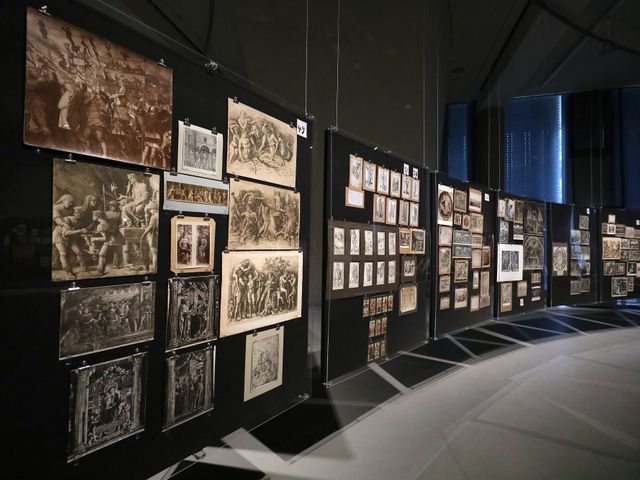
Kuleshov Effect
Kuleshov Effect / Effetto Kuleshov
Kuleshov Effect: Everything You Need to Know
The Kuleshov effect is the idea that two shots in a sequence are more impactful than a single shot by itself. This effect is a cognitive event that allows viewers to derive meaning from the interaction of two shots in sequence. Kuleshov believed that the interaction of shots in filmmaking was what differentiated cinema from photography, as photographs are single shots in isolation that don’t allow viewers to derive the same meaning.
The Kuleshov Effect – Everything You Need To Know
Who Is Kuleshov?
Lev Kuleshov was a Russian filmmaker who wanted to create a distinction between the various artistic mediums, including cinema, literature, theater, and photography. He was fascinated by the power film editors had to manipulate the emotions of the audience. The question he posed is, “what differentiated cinema from other mediums?” and he believed the answer was how the materials presented were organized. Thus, the Kuleshov effect was born and continues to influence modern filmmaking more than a century later.
In addition to working as a filmmaker, Kuleshov is also considered to be one of the earliest theorists who focused on film. He posed his question about differentiating forms of artistic mediums in 1910, defining the effect he would have on film. Kuleshov directed his first film in 1917, worked alongside a documentary crew that covered the Russian Civil War, and taught early Soviet film courses at the National Film School.
How Did Kuleshov Prove His Effect?
More than a decade after proposing his question, Kule shov demonstrated the effect by setting up a series of demonstrations where he cut between the same shot of a man and a shot of something else to determine what emotions each would convey. The first was the man followed by a shot of a child in a casket, the second was the man and a bowl of soup, and the third was man followed by a woman lying on a couch. Respectively, these corresponding shots conveyed sadness, hunger, and lust.
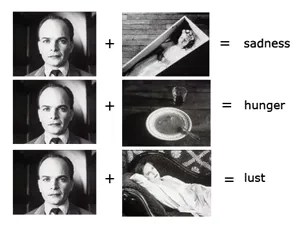
In creating this demonstration , Kuleshov implied that the man in the shot was looking at what was juxtaposed with it, even if that was not actually the case. Even in his earliest demonstration, Kuleshov used the same shot of a man with his facial expression unchanged. What changed was the perception of his expression when paired with another shot that generated emotion in the audience.
This effect transformed the process of creating films, as those involved in the process found they could elicit just about any reaction by editing and piecing shots together. They found that shots sewn together in the editing phase of filmmaking can manipulate time, space, and the viewer’s reaction.
Why the Kuleshov Effect Still Matters
The effect has continued to influence the cinema industry far beyond Kuleshov’s initial proposal and even his lifespan. From what Kuleshov proved in his demonstrations, new editing techniques and camera angles were born.
Article contiunues at https://www.nfi.edu/kuleshov-effect/
Bernd y Hilla Becher – Cooling Towers (1976), Widing Towers, Pitheads
Repetition
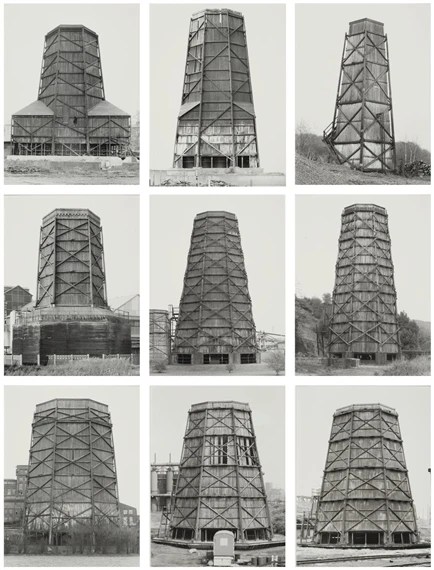
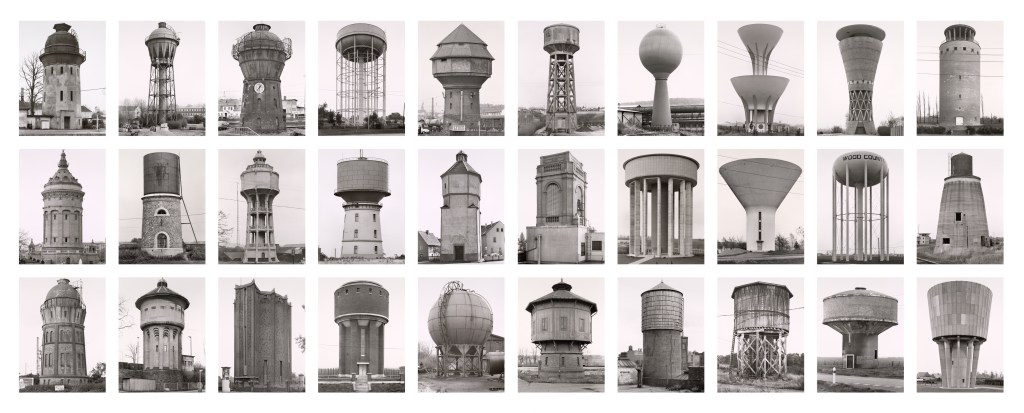
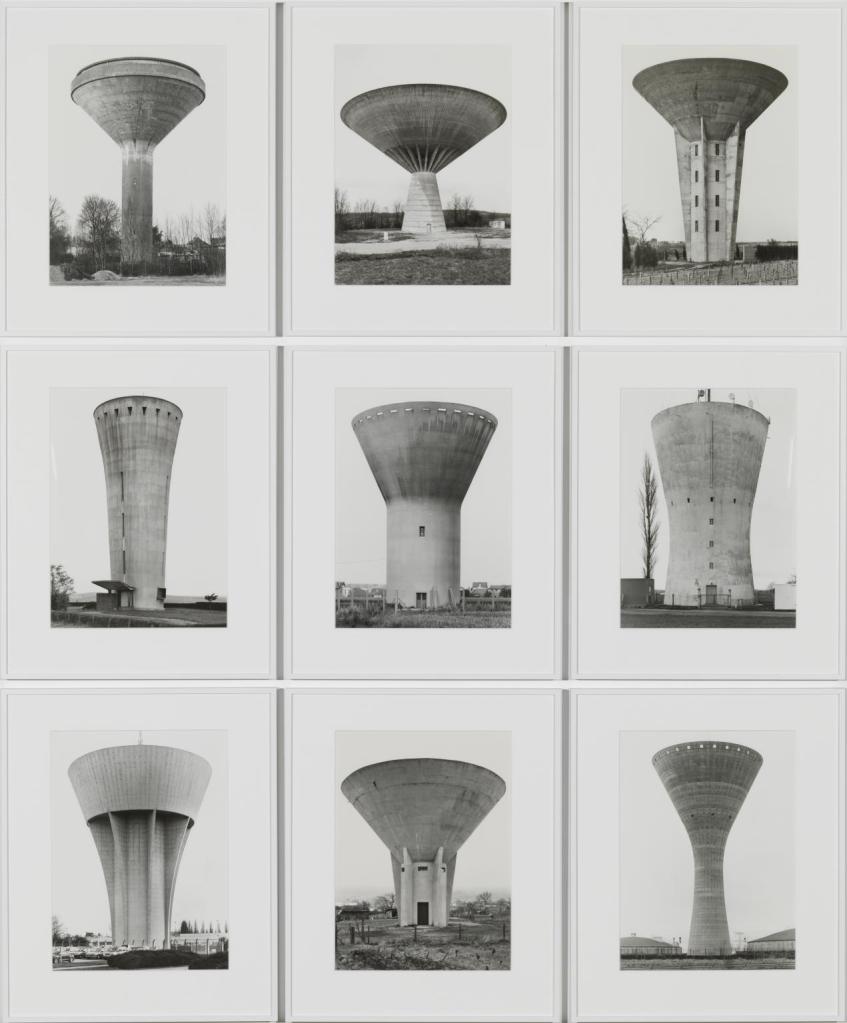
Bernhard “Bernd” Becher and Hilla Becher, née Wobeser were German conceptual artists and photographers working as a collaborative duo. They are best known for their extensive series of photographic images, or typologies, of industrial buildings and structures, often organised in grids. As the founders of what has come to be known as the ‘Becher school’ or the ‘Düsseldorf School’ they influenced generations of documentary photographers and artists.
Thomas Ruff – Portrait (’99)
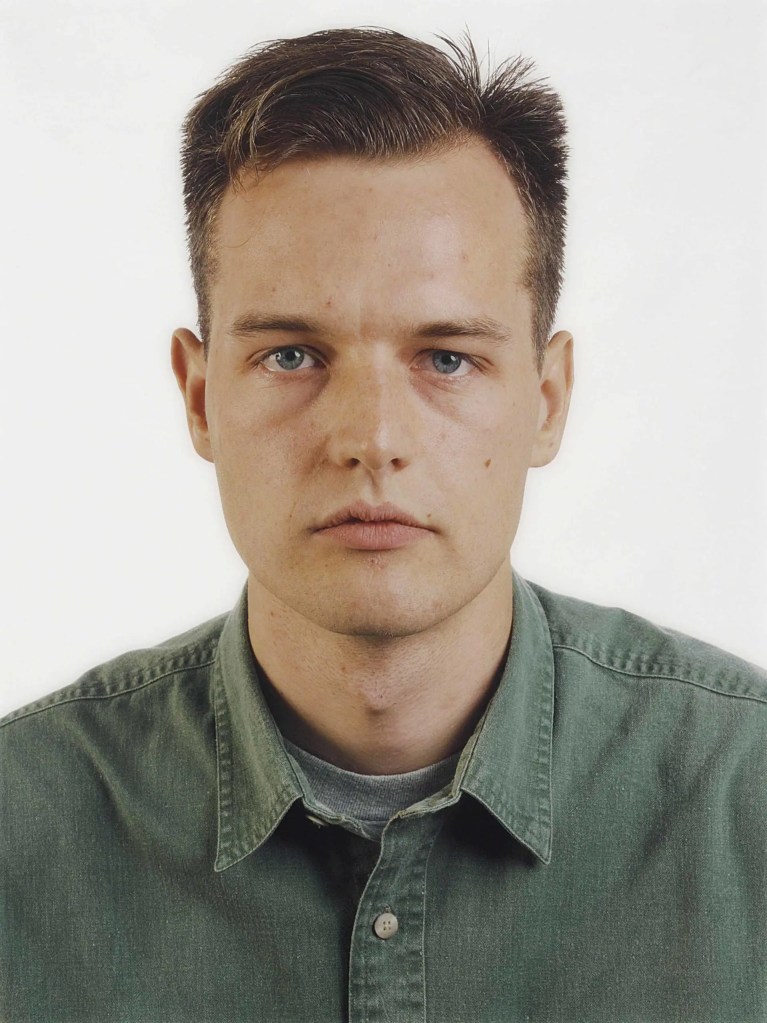
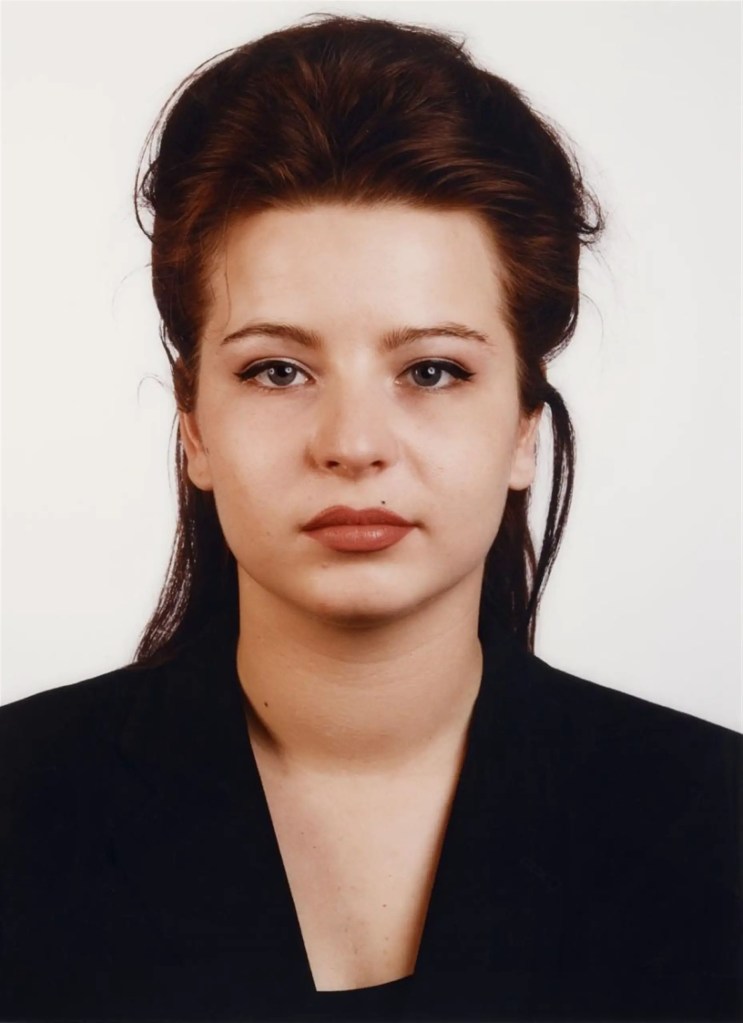
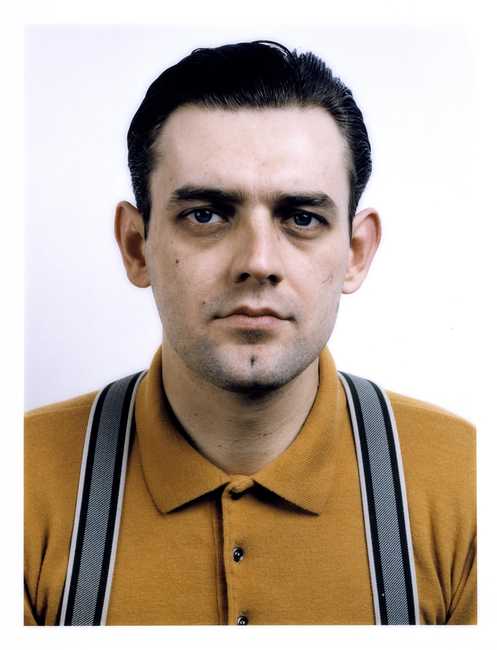
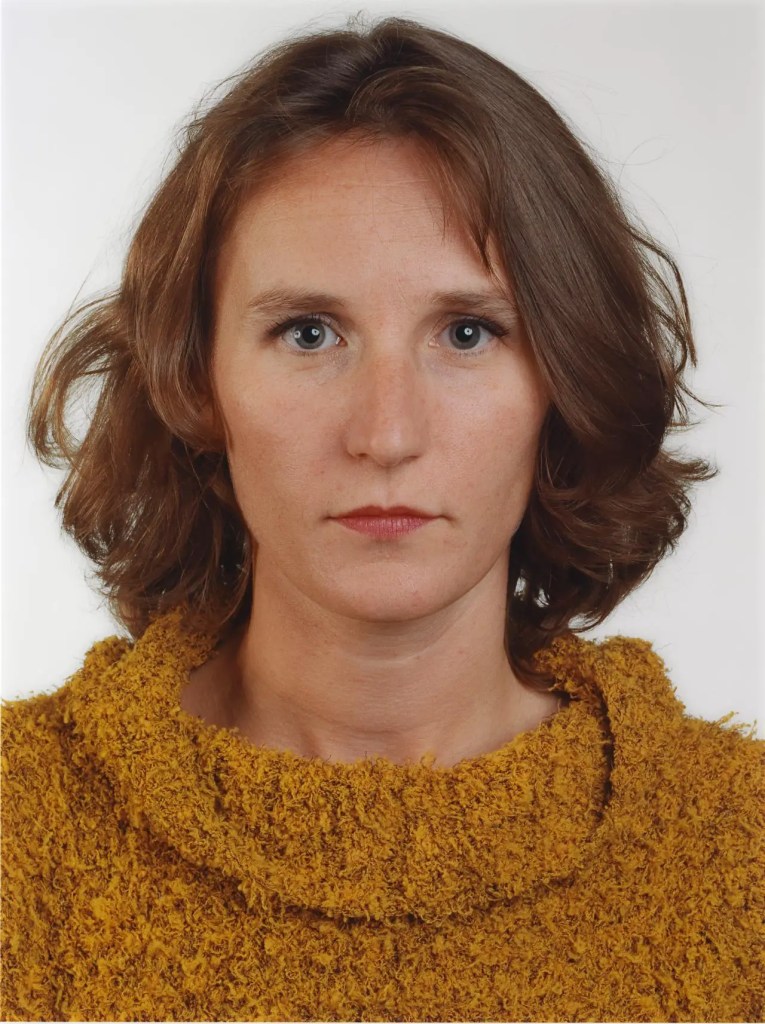
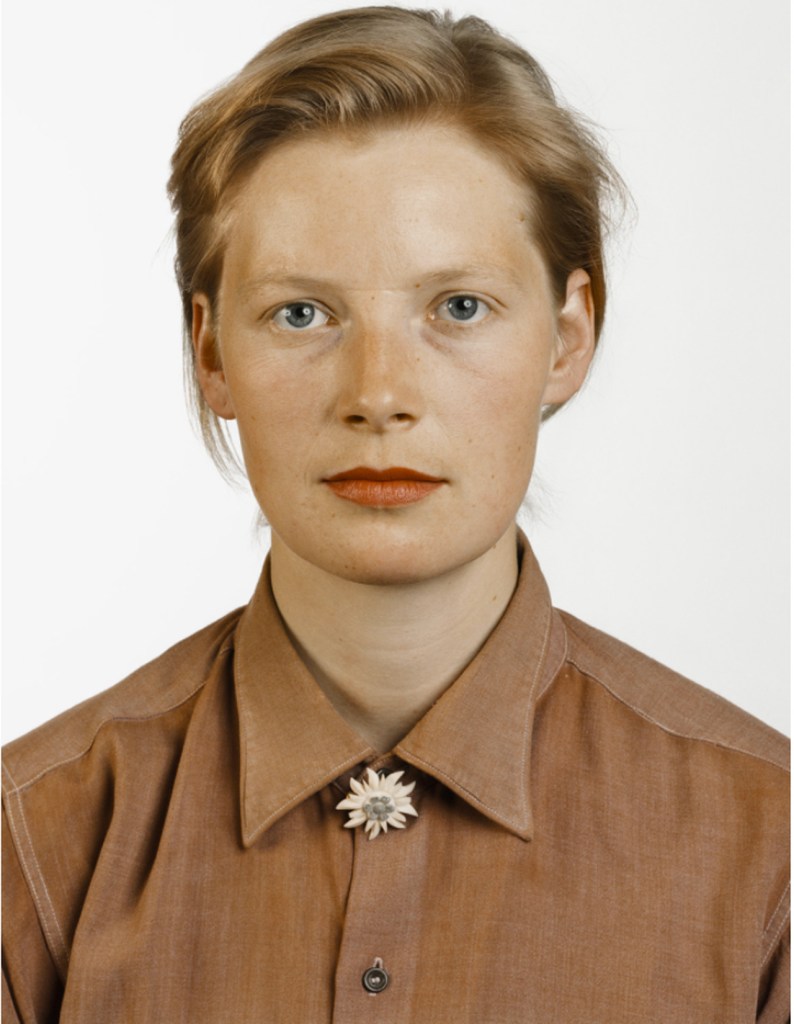
During the late 1980s Ruff photographed his fellow students at the Düsseldorf Academy of Art, combining the typological mode of his teacher Bernd Becher with the serial progressions and primary structures of Minimalism. The large scale and technical perfection of Ruff’s portraits refer to both the museum and the street—to billboards and heroic painting—while elevating the anonymous sitter to the stature and visibility of a public figure. Instead of presuming to depict the transcendent, individual essence of the sitter, however, Ruff’s portraits deliberately assume the neutrality of the mug shot, physiognomic study, and identity card, and, by extension, the entire brightly lit world of surveillance in which his subjects were raised. The age and milieu of his sitters are crucial to the pictures’ meaning: these young media-savvy people are not threatened by the camera eye but adjust themselves comfortably yet firmly to its probing vision. The results are both seductive and subtly disquieting, like studying a human specimen whose every pore and hair is available for careful study, yet whose thoughts and feelings are always just out of reach.
Thomas Struth – Museum Photographs
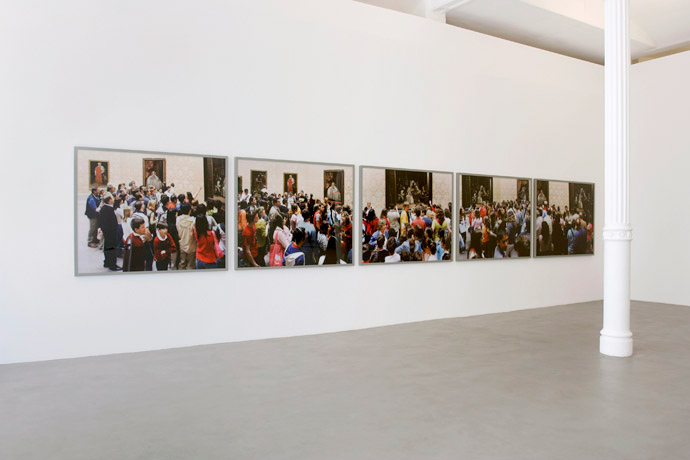
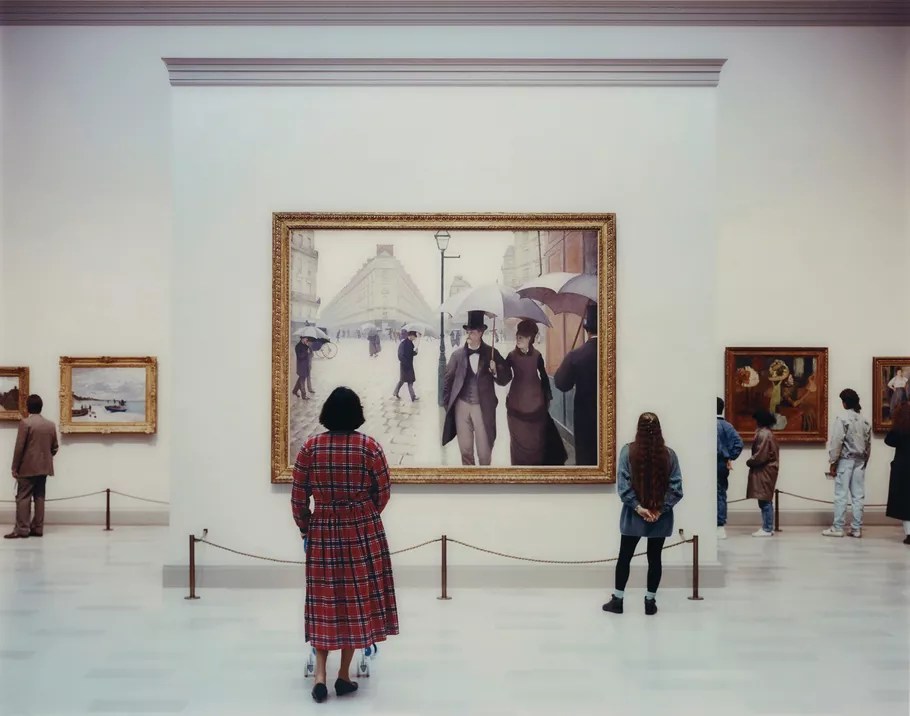
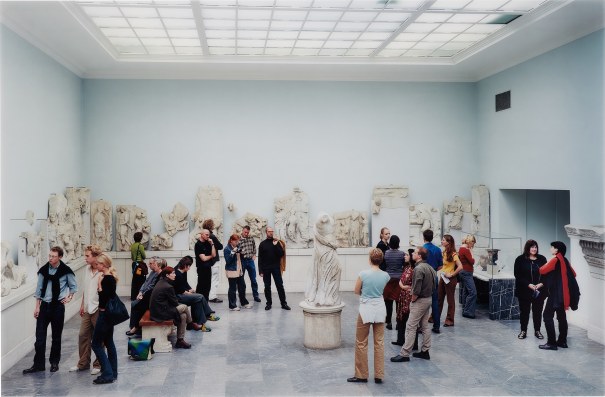
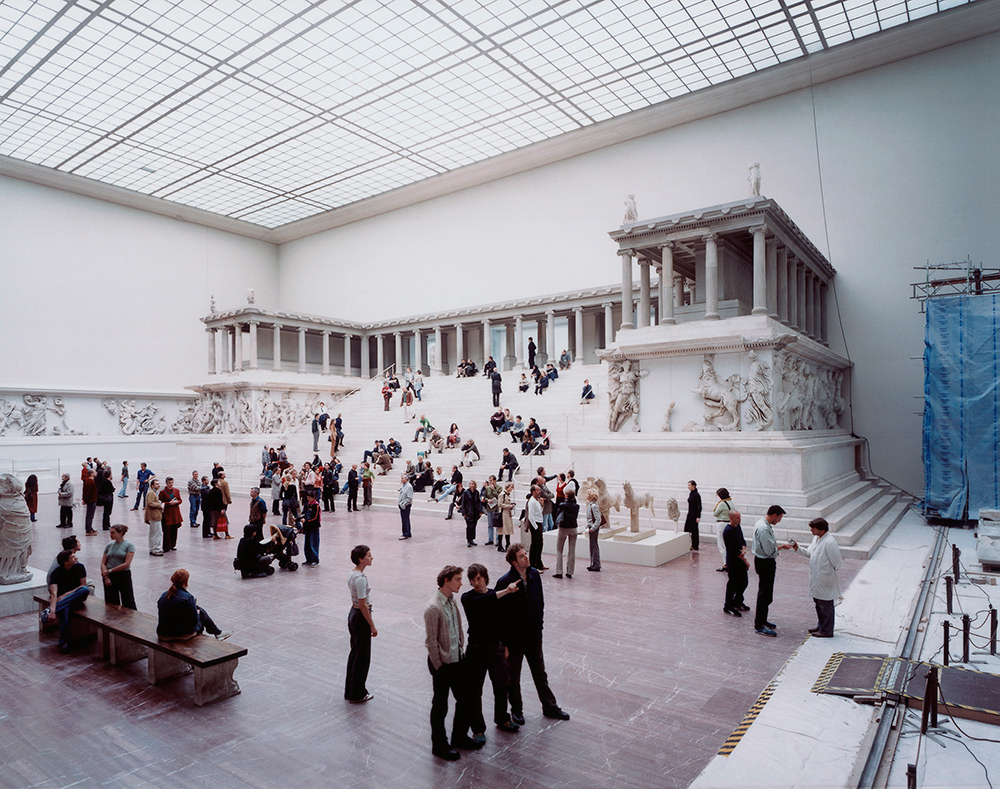
In investigating the act of viewing within a museum context, Struth photographed the art and the visitors – the viewer looking at art and the viewer looking at other viewers. Through the multiple layers of viewing, Struth in turn examines the museum’s means of control and representation, what they exhibit and how, as well as what narrative the museum provides for the work in relation to its setting. In his words, “the idea behind the museum photographs was to retrieve masterpieces from the fate of fame, to recover them from their status as iconic paintings, to remind us that these were works which were created in a contemporary moment, by artists who have everyday lives.” By illustrating this through the photographic medium, Struth recalls the history of photography in relation to representation, and by viewing his work in a gallery setting, we are reminded of the photograph as a work of art.
Struth’s museum photographs ushered in a new visual language in photography. Along with fellow exponents of the Düsseldorf School of Photography, including Andreas Gursky, Candida Höfer and Thomas Ruff, Struth created new oversized colour photographs – monumental in scale and precision – that rivalled contemporary paintings. Applying new technical possibilities to create their work, these practitioners collaborated with leading photographic laboratory Grieger in Düsseldorf to make their oversized prints and to frame them using the patented Diasec technique. Diasec face-mounting, whereby a photograph is bonded directly to acrylic glazing, enabled these artists to present their large-scale photographs as contemporary art.
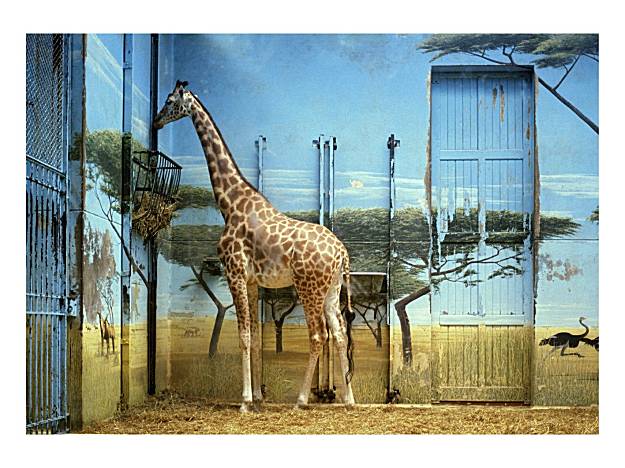
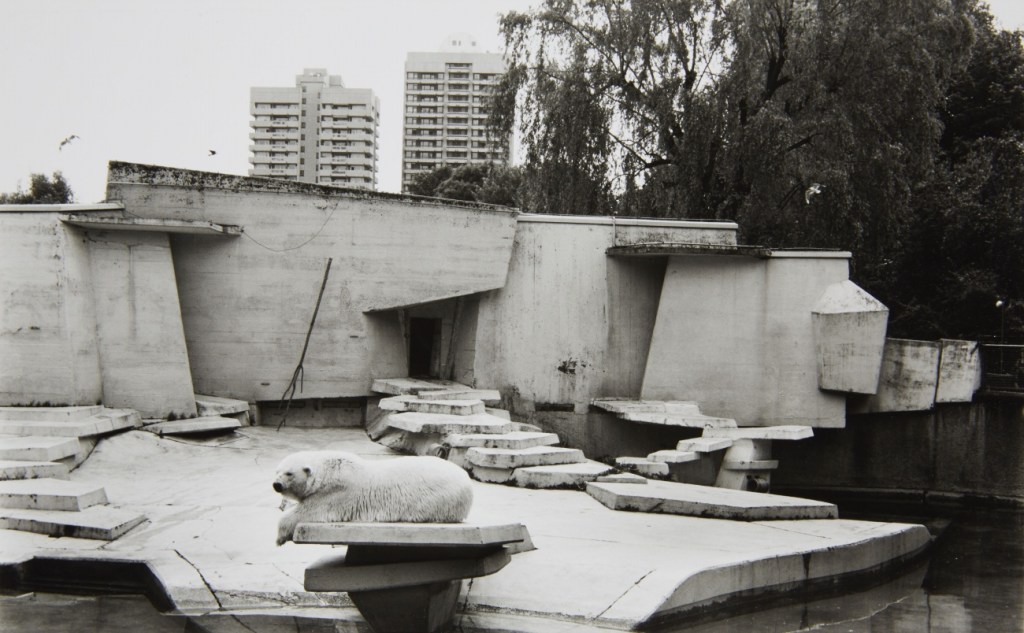
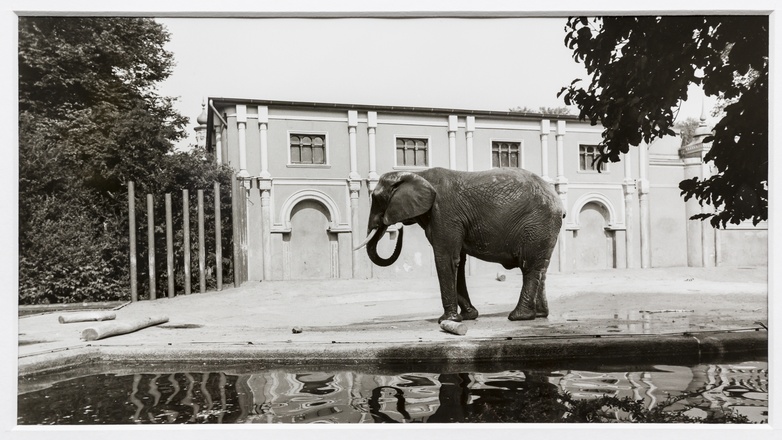
Candida Höfer – Zoologischer Garten (Paris, Rotterdam, Koln and other cities)

Andreas Gursky https://www.andreasgursky.com/en
You never notice arbitrary details in my work. On a formal level, countless interrelated micro and macrostructures are woven together, determined by an overall organizational principle.
—Andreas Gursky
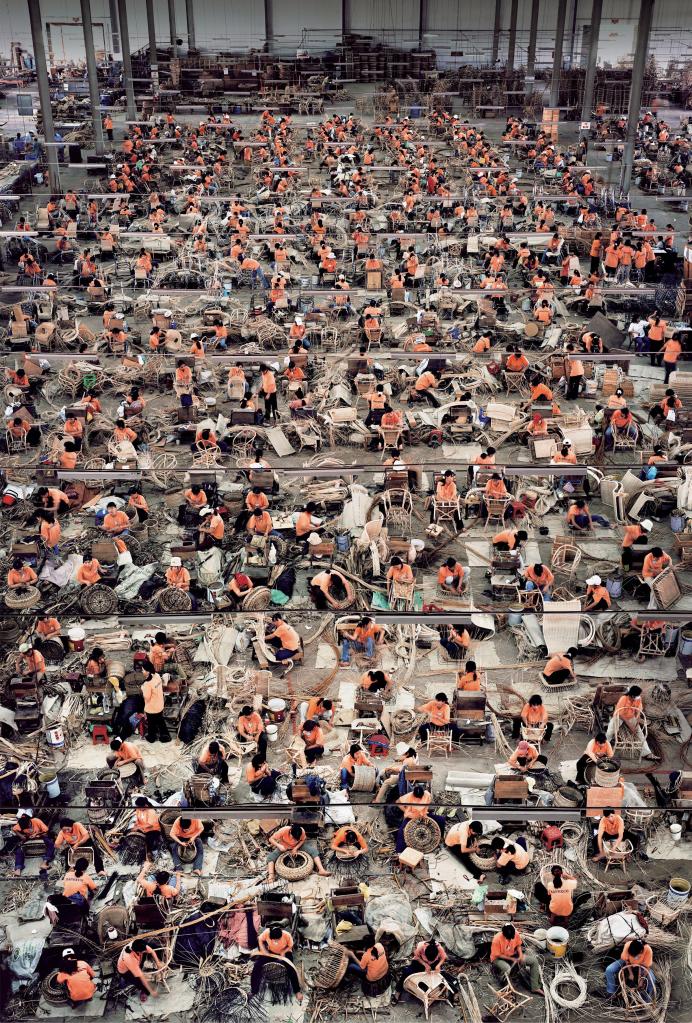
From images of nature to photographs of cities, crowds, and commercial products, Andreas Gursky invents new worlds from existing elements, constructing tableaux based on his methodical observations. In his large-format, high-definition photographs, he presents hyperfocused scenes that privilege neither foreground nor background.
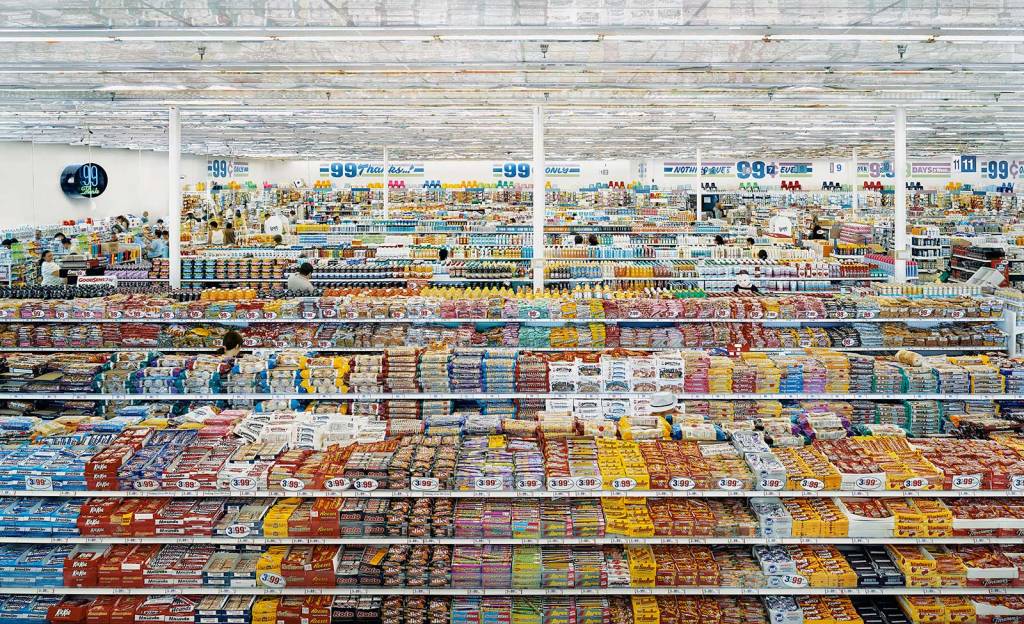
Gursky studied visual communication at the Folkwang Universität der Künste in Essen, Germany, from 1977 to 1980. He then continued his studies at the Kunstakademie Düsseldorf, where he was a master-class student of Bernd and Hilla Becher, the artist duo known for their series of photographs of selected types of industrial structures, or “typologies.” While the Bechers used a standardized, documentary style to underscore the commonality inherent in variation, Gursky’s studies propelled him to expand the idea of the photographic document by using digital manipulation and montage to record specific scenes, moments, and events. His works from the early 1990s depict factories, stock exchanges, airports, golf courses, highways, and buildings, often from aerial viewpoints that reveal the patterns of crowds and infrastructure. In 1996 he moved away from this perspective in favor of deadpan frontal views, as in the Prada series (1996–98), depicting the minimalist altars of luxury fashion, or, as in Prada II (1997), showing the empty shelves lit with fluorescent lights.
In the early 2000s Gursky began arranging his photographic montages according to classical patterns of representation. The Pyongyang photographs (2007), in particular—which show colorful, kaleidoscopic crowds of performers in North Korea—recall compositional methods used during the Renaissance. Gursky followed this series with photographs of more informal crowds, such as those at Cocoon, a famous German nightclub designed by his friend DJ Sven Väth. The club, with its perforated metallic walls, resembles a futuristic hive, and Gursky used its cavernous scale to produce hypnotic scenes that envelop the viewer in their repeated patterns.
In addition to his work focusing on social phenomena, entertainment, and urban planning, Gursky is interested in capturing the realities of the planet, often narrowing in on bodies of water, from the Rhine in Germany to the Chao Phraya in Thailand. The Bangkok series (2011) depicts the flickering, often littered, surface of this fast-flowing river at close range. For the Ocean works (2010), Gursky sourced high-definition satellite photography to generate his own interpretations of sea and land, constructing scenes of oceanic expanses with coastlines visible at the images’ outermost edges. From environmental threats to growing crowds and infrastructural development, Gursky’s photographs capture the extremes of the present moment.
Andreas Gursky – 99 Cent (’99)
Andreas Gursky – China Men (’09)
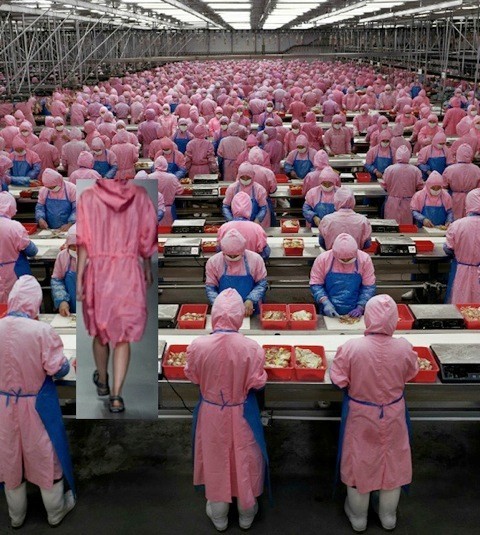
Andreas Gursky – Stock Exchange series
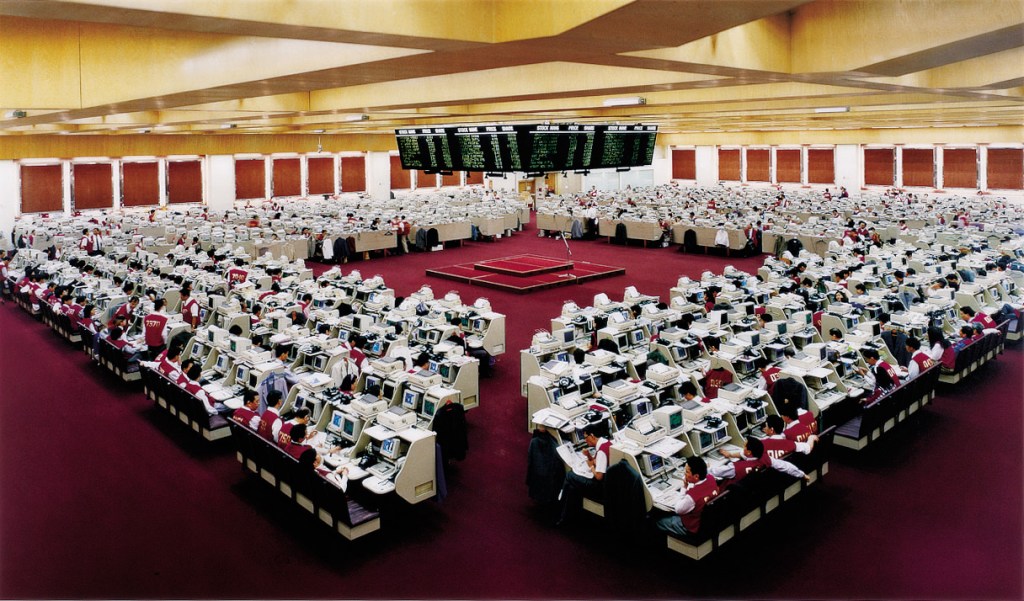
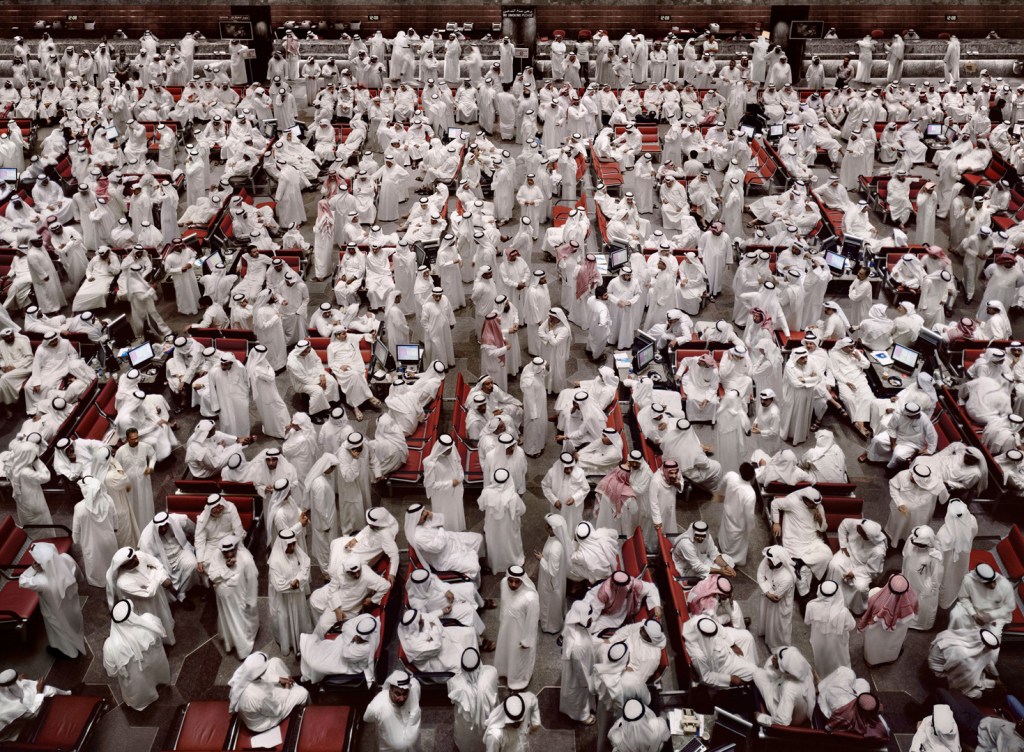
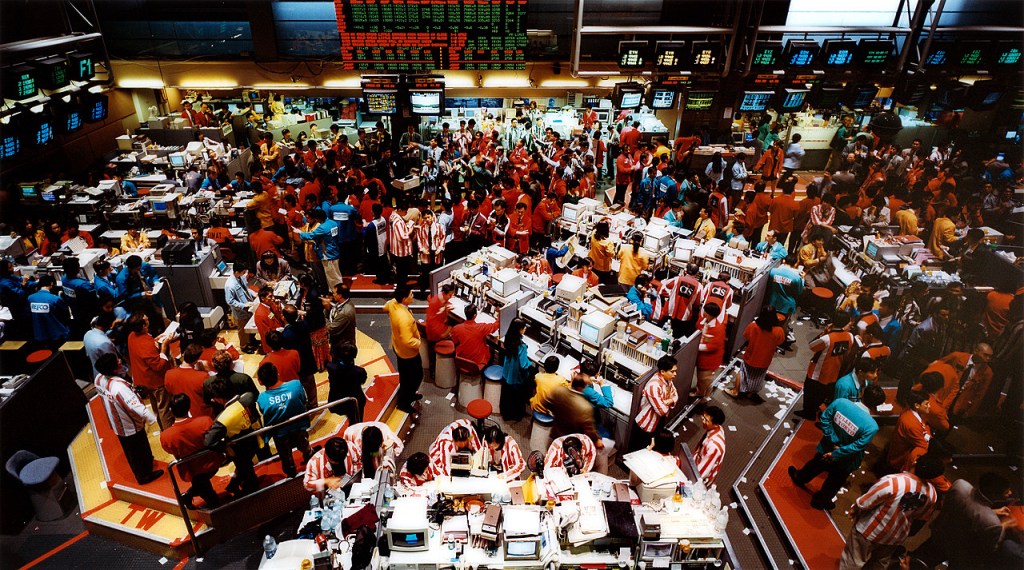
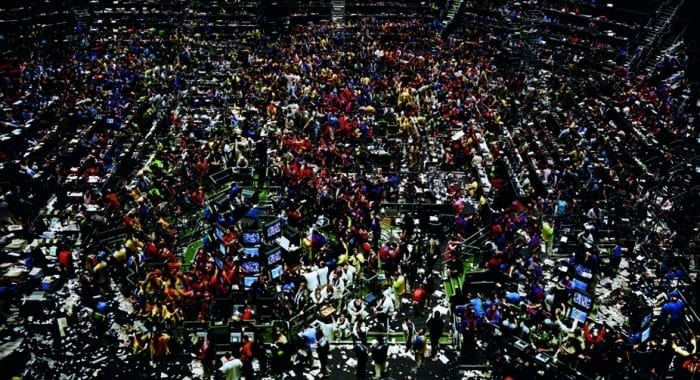
About the Stock Exchange series
More than any artist of his generation, Andreas Gursky’s photographic eye identifies the subjects of our contemporary landscape, which most acutely defines the way we live today. His Stock Exchange series, ten images made over 20 years on three continents, charts the history of our modern age of globalization. The activities of his traders link the entire globe through an invisible matrix of trades and economic dependency. Reduced in scale to the size of ants, they force the viewer to critically reappraise the very nature of human activity.
Contemporary Art Evening Auction Highlights — Andreas Gursky
Martha Rosler – The Bowery in two inadequate descriptive systems (1974–75)
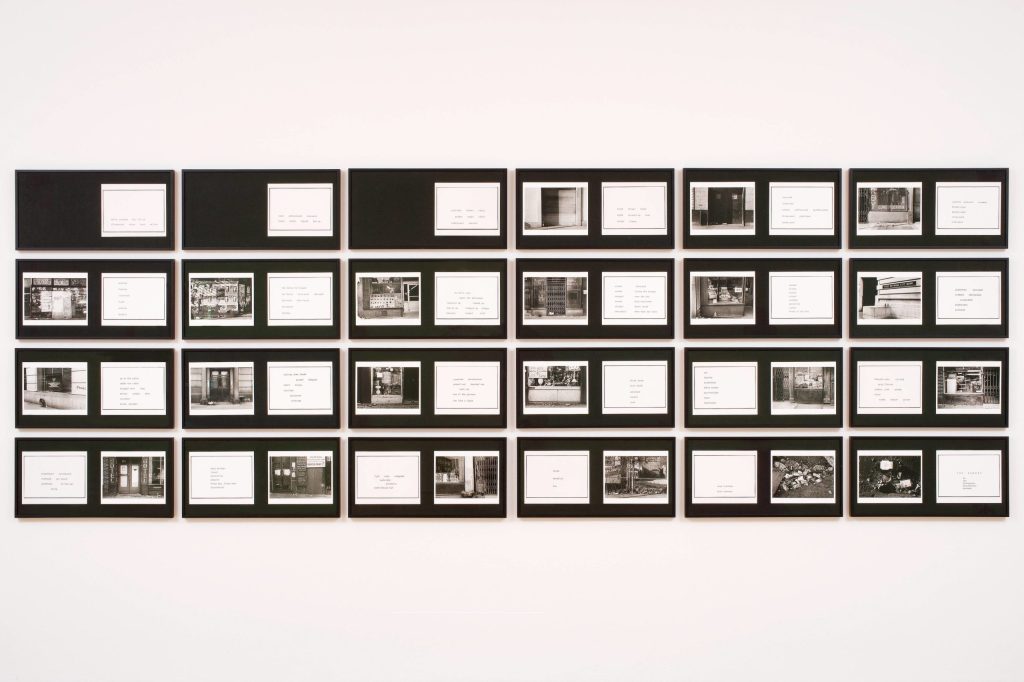
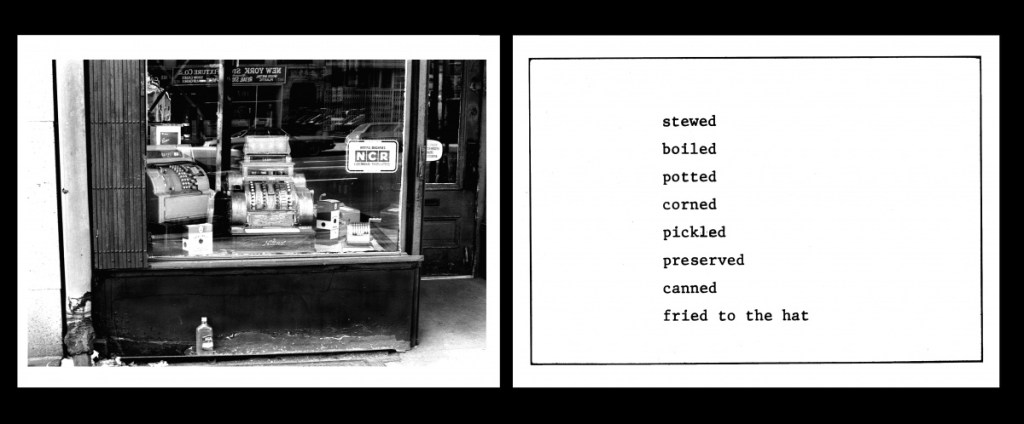
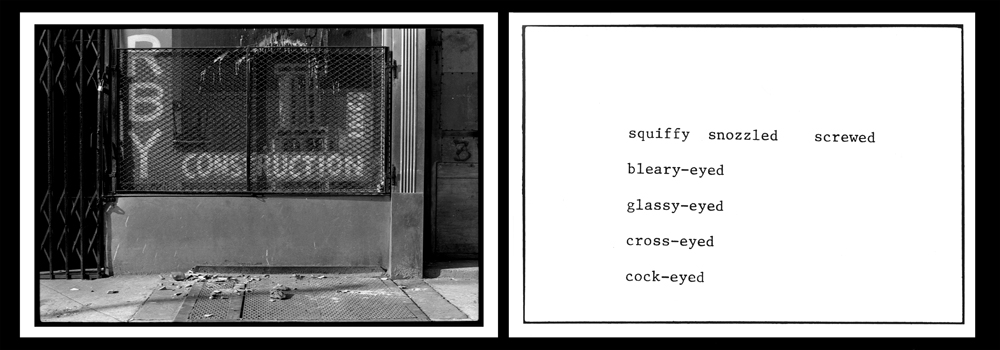
The Bowery in two inadequate descriptive systems forms part of Rosler’s ongoing exploration of urban life and the representation of poor and disenfranchised groups. The work consists of 24 framed panels, each juxtaposing a photograph of a loosely covered typewritten page with a photograph of a storefront, entrance, or façade (the first three panels lack the urban scenes). The pictures were taken by Rosler along the Bowery, a famous street in the lower part of Manhattan. The neighborhood had for decades been widely identified with alcoholism and transiency, but also for lofts rented by artists, as well as clubs and small theaters. The typewritten words refer to intoxicated states and intoxicated people and are taken from journals kept by Rosler in 1974 prior to making the work. But the words neither describe the photographs (as the rigorous serial pairings might seem to suggest) nor, conversely, do the photographs offer any illustrative explanation of the texts. By not relating text and image in a functional way, Rosler opens up an unoccupied field of association between the two systems. It has often been mentioned that her views of the Bowery (with no people, concentrating on the traces of street life) are strikingly different from the way this area and other so-called “trouble spots” usually appear in documentary photography. In this way, the artist breaks through the problem of conventional reportage, which commonly equates the subjects depicted with the underlying social problem—a issue often encountered in the relationship between photographer and subject, and which can be observed in American documentary photography in the tradition of street photography.
Mary Kelly – Post-Partum Document (73-79)
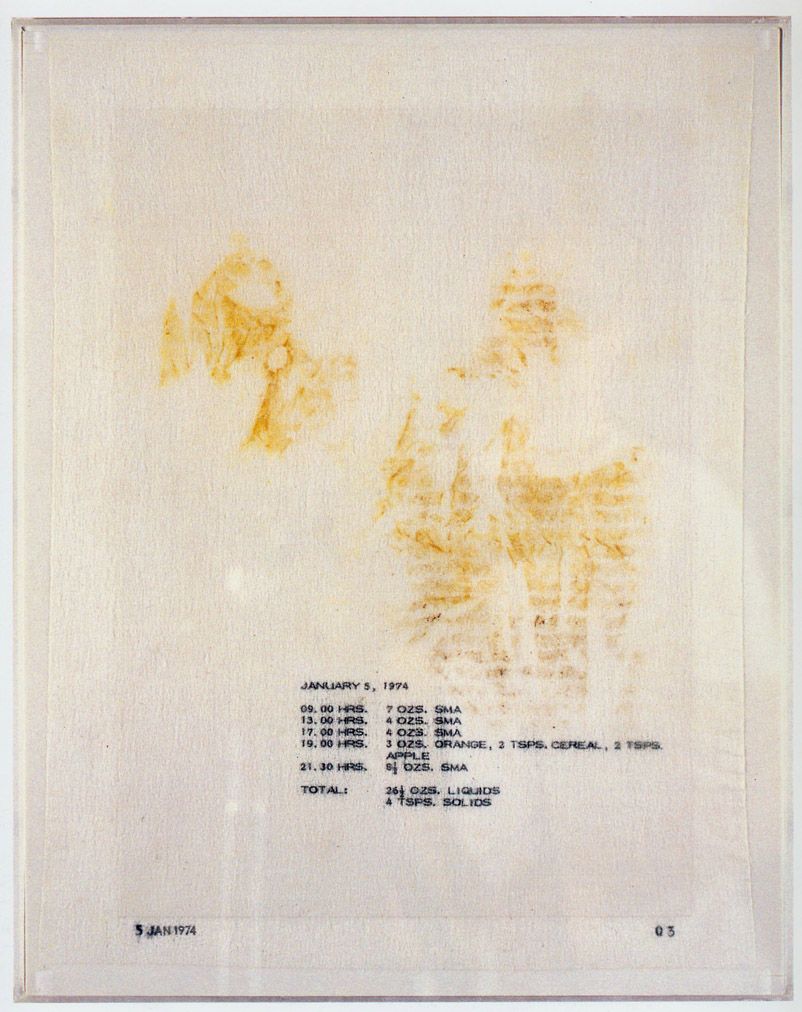
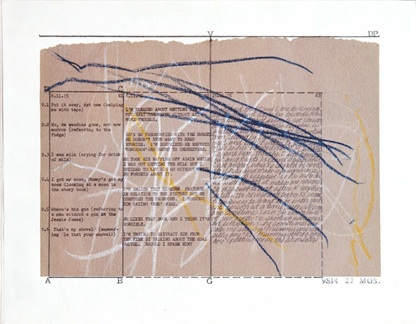
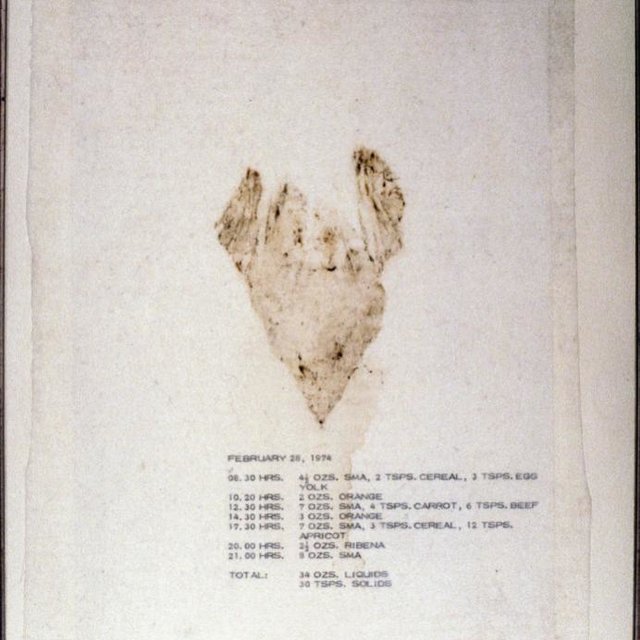
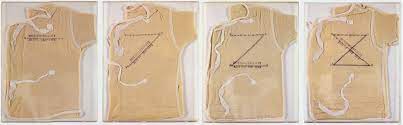
Post-Partum Document is a six-year exploration of the mother-child relationship. When it was first shown at the ICA in London in 1976, the work provoked tabloid outrage because Documentation I incorporated stained nappy liners. Each of the six-part series concentrates on a formative moment in her son’s mastery of language and her own sense of loss, moving between the voices of the mother, child and analytic observer. Informed by feminism and psychoanalysis, the work has had a profound influence on the development and critique of conceptual art.
Eleanor Antin – Carving: A Traditional Sculpture (’72)
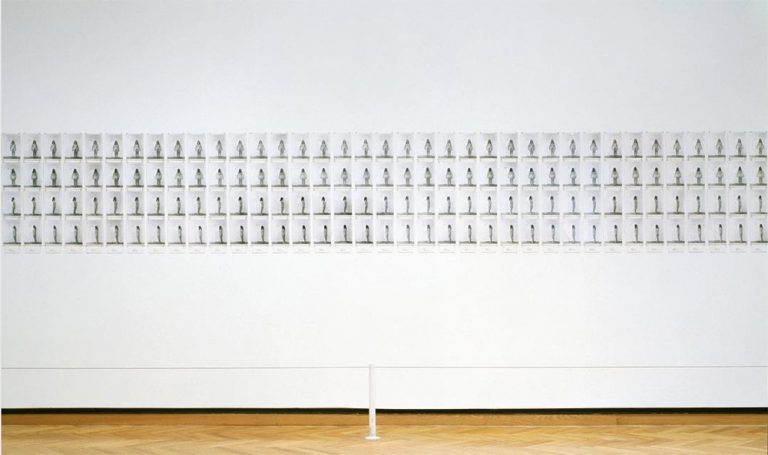
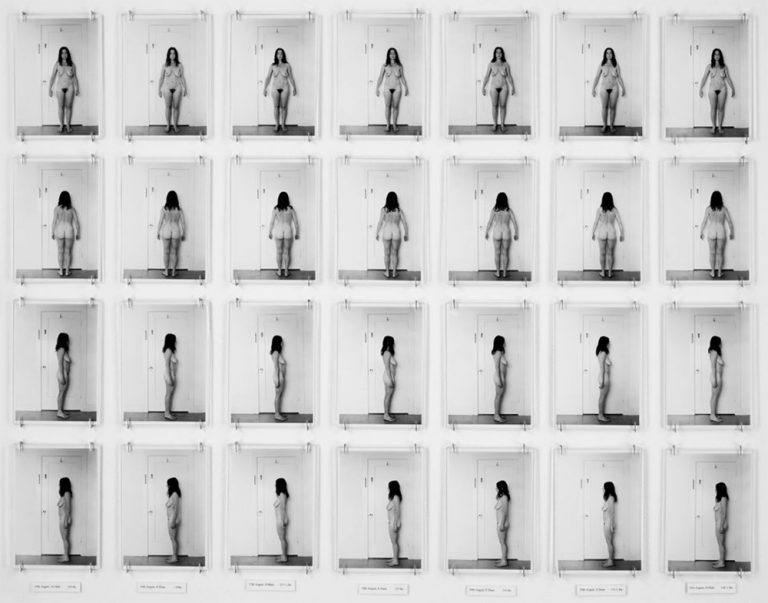
Eleanor Antin is an American artist who specializes in conceptual art, performance art, and feminist art. Though she began her career as a painter, she transitioned to more experimental art forms in the 1960s, as she started to create multimedia portraits, performances, films, and photo series. Much of her work centers the theme of identity and explores issues of age, race, sex, and class. She often plays with different personas in order to express her identity as it relates to her own heritage and culture, and she pays special attention to how these histories affect her present state of being.
In 1972, Antin created a photo series entitled Carving: A Traditional Sculpture. Over the course of five weeks, she followed a diet plan from a popular women’s magazine and documented the changes in her body that resulted from it. She took photos of her naked body in the same four poses (from the front, back, left, and right) each day, and in the exhibition, she arranged them in chronological order to allow the audience to trace the changes as she lost about twelve pounds. The title of her piece is a bit misleading — how can a photo series be considered a traditional sculpture? In naming her piece, Antin relates her creation to classic Greek sculpture: just as a sculptor carves off layers of marble to reach a form that is aesthetically ideal, Antin continually loses weight to make her body conform to certain standards of appearance.
Carving is very well-known in the world of feminist art, and it challenges the patriarchy in ways that coincide with Laura Mulvey’s theories about art and the male gaze. Laura Mulvey is a British feminist film theorist whose piece entitled “Visual Pleasure and Narrative Cinema” touches on the oppressive nature of the male gaze and how it takes effect in the film industry. Filmmakers often portray women in ways that contribute to their objectification in society, thus reinforcing modes of thought that lead to sexual violence and other forms of sex-based oppression. They do this in order to appeal to the male gaze and profit off of the aesthetic pleasure that audiences gain from seeing women portrayed as sexual objects. This practice dehumanizes women and assigns them values based solely on their appearances.
Antin’s piece draws attention to the strain that women subject themselves to in order to appeal to the male gaze. The amount of labor that was put into creating this piece parallels the painstaking efforts made by women to follow conventions of femininity. Antin critiques the notion that women should have to perform this labor in order to become valuable within patriarchal societies, especially as she highlights the relationship between femininity and thinness. Beauty standards are just another poisonous byproduct of the male gaze, and Carving successfully challenges such oppressive patriarchal ideas.
Hans-Peter Feldmann – 100 Jahre (’01)
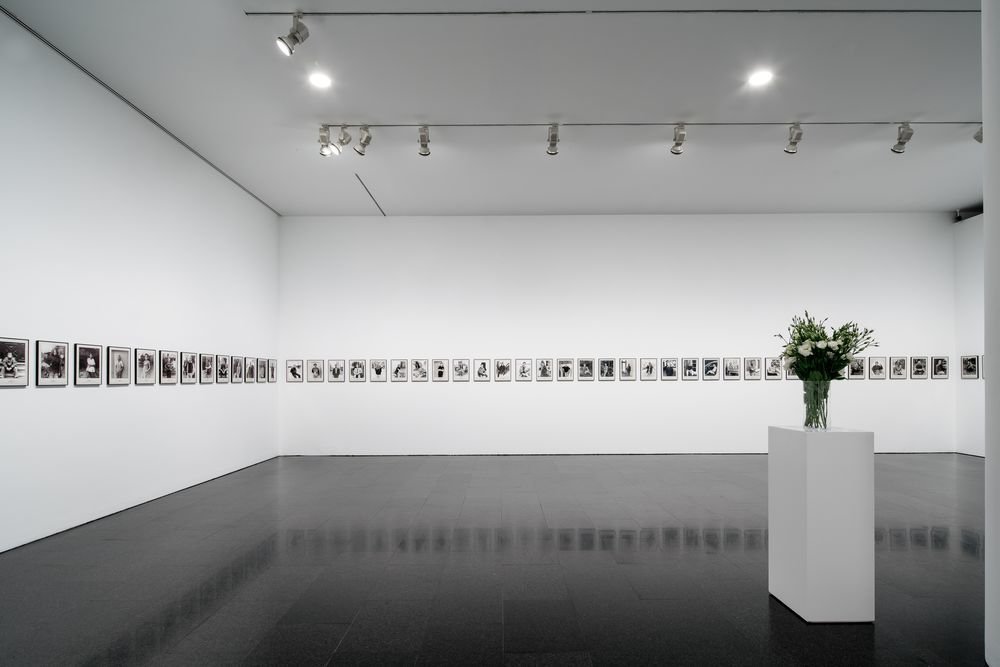
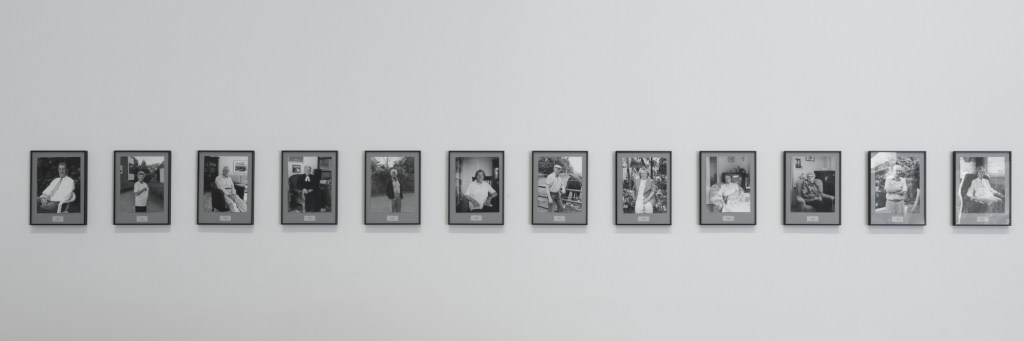
This series consists of 101 portraits of people aged between eight weeks and one hundred years old. All the people photographed belong to Feldmann’s family or circle of friends. They are clear, black and white photos, highly contrasted and full of half-tones, in which the subjects are centred in the photo, posing for the photographer. Underneath each photo is the first name and the age of the subject: Elisa, 17; Boris, 18; Nora, 19; Tim, 20; Barbara, 21; etc. Each person represents an age and so a moment in life which opens up before us like a whole world. And at the same time each of them is a story, his or her own story, which we can play at deciphering.
This series continues Feldmann’s questioning of the passing of time, but does so by looking at his emotive and friendship circles. The artist has ordered, in a linear time sequence, the images of a network of relationships concerning both family and friends. The images are points that mark a time sequence, a year, two, three, etc., up to one hundred. Exhibited as a series, they mark a long continuous line of 101 portraits which we walk past. As our age approaches the age of the portrait we look more attentively, we also look at previous and later years, asking ourselves about the person whose portrait has been taken and comparing our own status in time. Walking past the line of portraits evokes the passing of time for us. Lacan explains, when talking about paintings of still lives, how these both show and hide “that which they contain of menace, finality, layout and decomposition”. In the same way, this series of images which evokes the passage of time also points to its end.
Gillian Wearing – ‘Signs that Say What You Want Them To Say and Not Signs that Say What Someone Else Wants You To Say (1992-3)

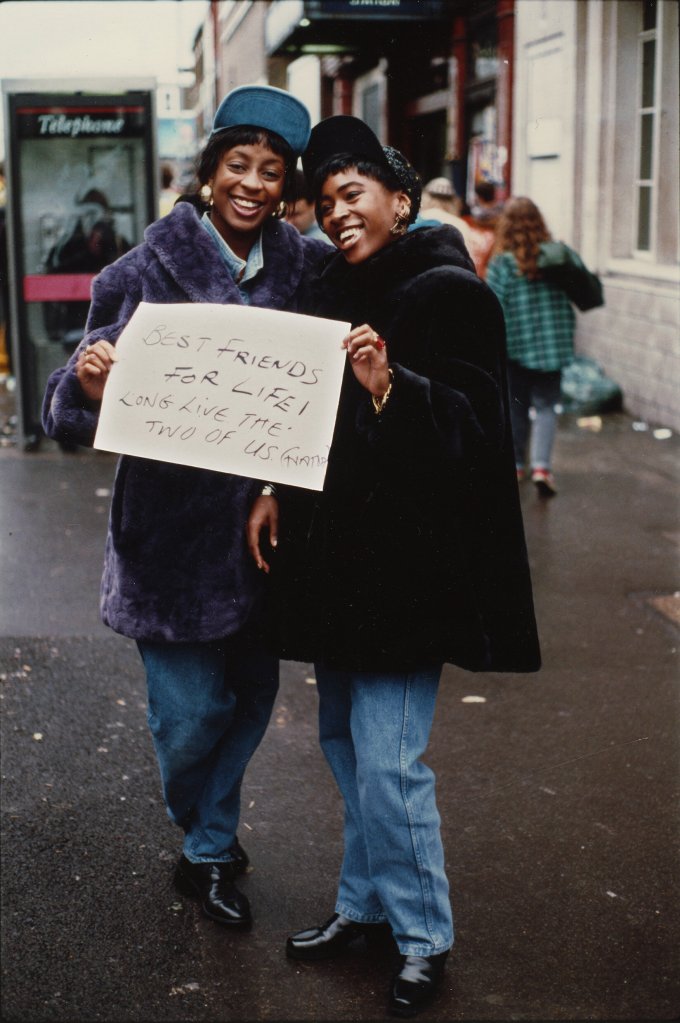
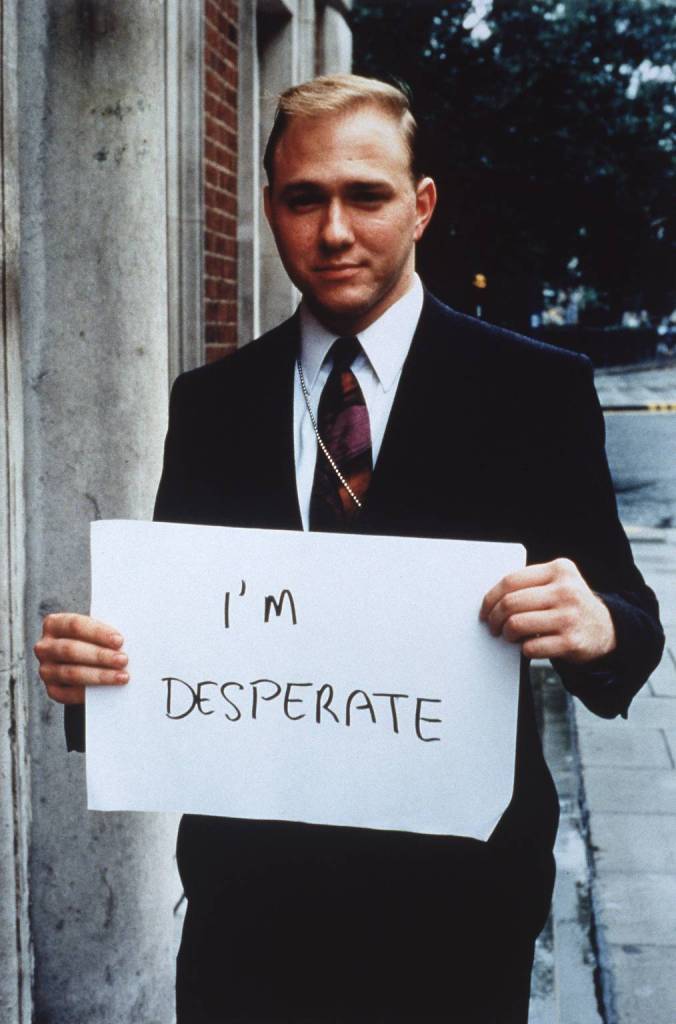
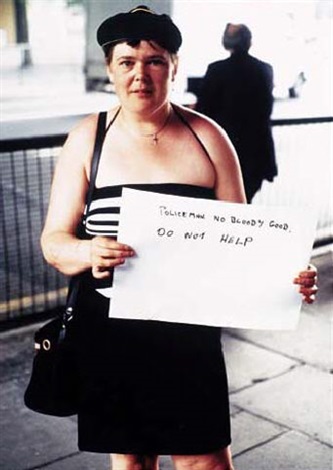
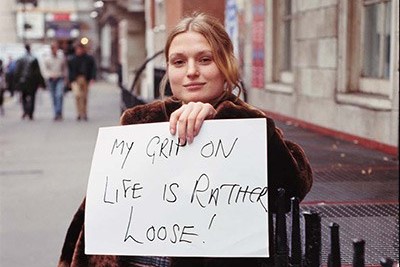
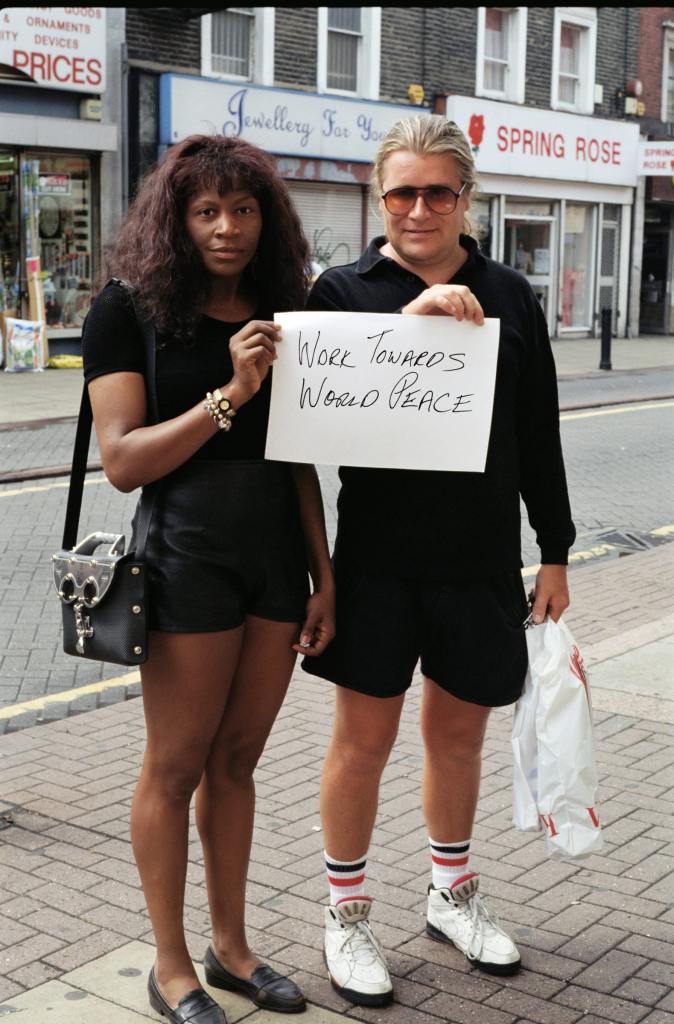
Gillian interviewed over 500 participants
In total, Gillian interviewed and photographed over 500 participants that she had encountered in the streets of London. Though this project was not her first photographic venture, it was the first time that she featured complete strangers as her subject matter.
Analysis
Because Gillian confronted a series of strangers to create Signs, the opinions that she received were brutally honest and real, and even funny in some instances. Basically, Gillian undertook the project to demonstrate that if you approached a bunch of strangers on the street and asked them to share their thoughts, each one of them would have something interesting and unique to say.
Curator Introduction to Gillian Wearing
Conclusion
With this project, Gillian was hoping to prove the stereotype that British people are typically cold and unapproachable. Although several individuals did not respond favorably, Gillian was surprised, and pleasantly so, by the number of people who were willing to participate. The project did a great job of celebrating the nuances and idiosyncrasies that make individuals who they really are.
Rineke Dijkstra – The Buzz Club, Liverpool, UK/Mystery World, Zaandam, NL, 1996-1997
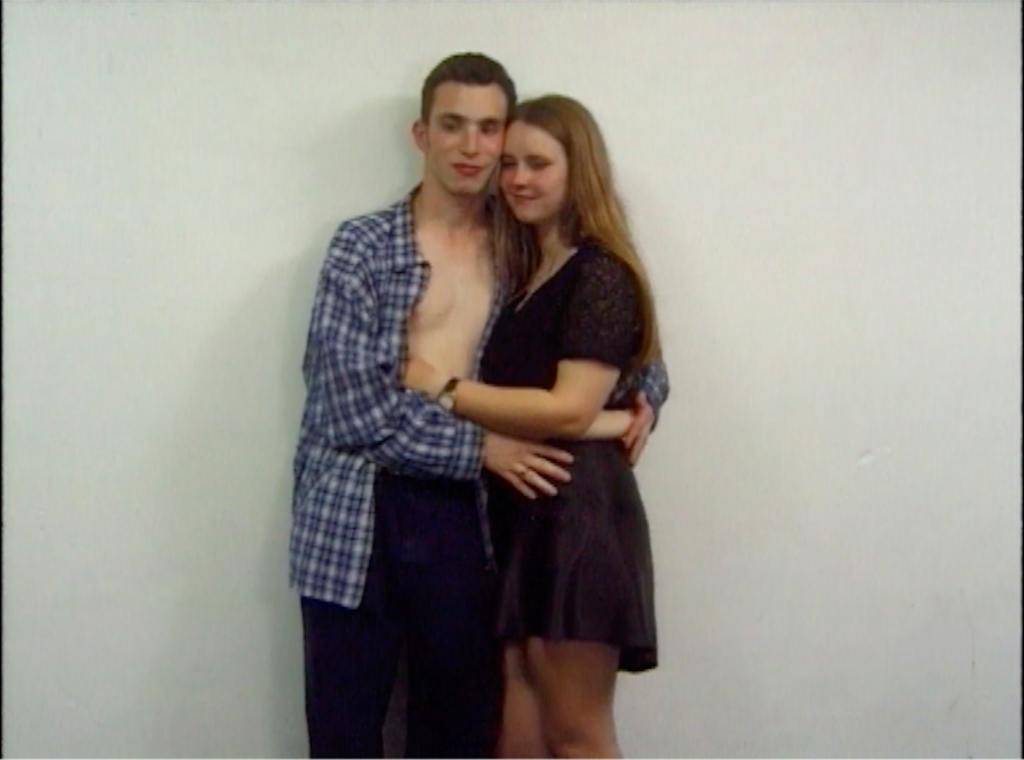
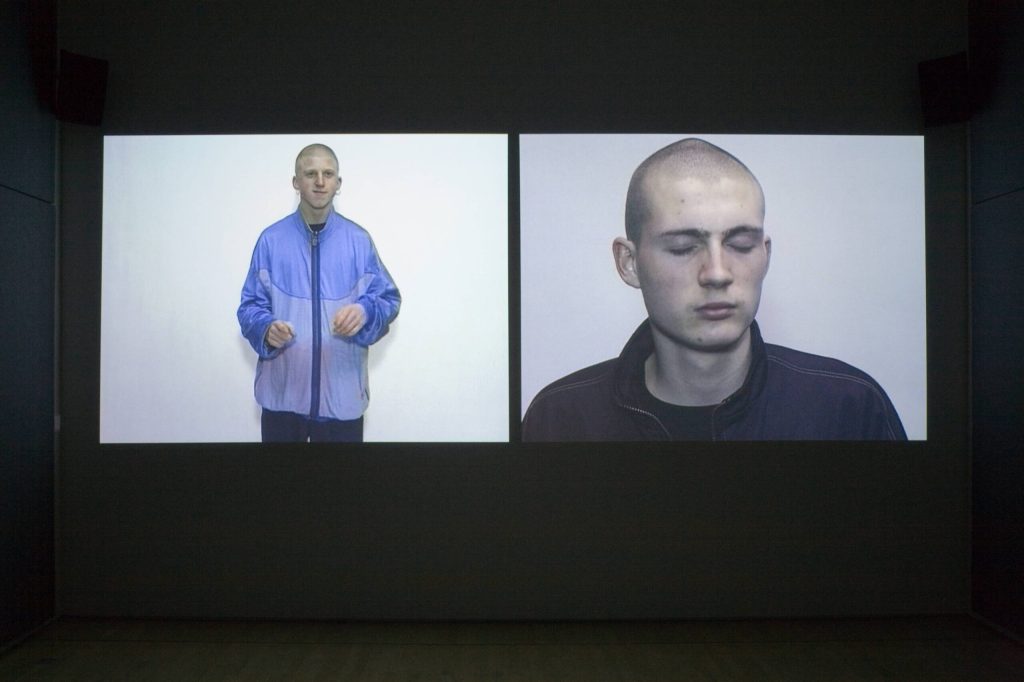
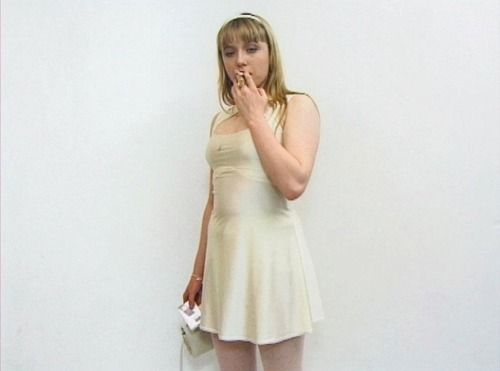
Rineke Dijkstra is best known for a series of beach portraits, candid shots of individual bathers at the water’s edge, which she took while traveling through the United States, England, Poland, and Belgium. In 1996 she photographed street children in Ghana for UNICEF, and the following year her work was exhibited at the Museum of Modern Art in New York as part of its New Photography series. Her recent video portraits of teenagers at schools and nightclubs in England and in the Netherlands–including The Buzz Club/Mystery World (1996-1997)–have been shown at various venues, including the Stedelijk Museum, Amsterdam, and the 1998 São Paulo Bienal. Isolated from their peers, her adolescent subjects seem visibly hyperaware of their bodies and their vulnerability as the object of the camera’s gaze. The artist describes these pieces as “not really about specific persons but about a psychological encounter in a more general sense.” The Buzz Club/Mystery World, the artist’s first video piece, was made at dance clubs in Liverpool and Zaandam. Dijkstra videotaped young clubbers in a makeshift studio right off the main dance floor. While never giving precise direction, she did offer them certain scenarios: “Imagine you want to dance, you are at the edge of the dance floor, and you move a bit, but not really…” Not much happens: her subjects confront or avoid the camera’s gaze, sway to the beat, blow smoke rings, or suddenly let loose with frenetic dancing. It is a spectacle of the ordinary. Entirely mesmerizing, the large-scale projection envelops us in the world of teenagers struggling to define themselves and project a certain self-image, seeking conformity with their friends but simultaneously aiming for the distinctly individual.
Pièce Touchée (Martin Arnold, 1989)
Based on a single, 18-second shot from a relatively unknown 1950’s hollywood movie, this classic film constructs a new narrative out of the choreographies and emotions that lay hidden in the source material. Using the optical printer as a microscope, Arnold re-animates the individual frames from the original film and amplifies the inadvertent movements and hesitations of the actors. By insisting on these cracks that appear in the hyperscripted world on the screen, Arnold acts out an almost physical excorcism of gender codes.
Christian Marclay – Telephones (’95)
Christian Marclay – Telephones, 1995
Christian Marclay’s Telephones, created in 1995, was a skilfully edited arrangement of black-and-white, as well as color film clips that highlighted different subjects utilizing an array of telephones, all designed before the smartphone era that we live in today. At the time of its release, technology was just reaching its peak, which is why Telephones became a breakthrough piece that is often celebrated today for its pioneering role in the history of video art.
Composition
Telephones utilized the story arc of the telephone call that featured a cast of popular TV and movie characters. These deconstructed film clips were sourced by Marclay from more than one hundred and thirty classic Hollywood films. For the series, he carefully combined a 7-minute-long montage of clips that featured the Hollywood cast using telephones. Telephone’s acoustic and graphic repetitions partly helped to make the stock scenes included more familiar and friendly.
Telephones starts with various scenes portraying the movie characters dialing the telephone. In the process of dialing, each of the telephone’s mechanics, rhythms, and other sound properties, which have all changed significantly with the growth of technology and the rise of the smartphone, is highlighted.
Analysis
Marclay weaved the archetype of the human experience with the phone by using a varied arena of familiar images. When the phone rings, each cast member has a different reaction consisting of boredom, anxiety, anger, desire, and so on. Consequently, it makes it appear as though all the cast members are taking part in one long cohesive conversation.
The visual experience of the different cast members was made even more profound by the sound editing done by Marclay. The editing helped to create a wonderful collage that highlighted the mechanics of the telephones being utilized.
Conclusion
With Telephones, Christian Marclay managed to not only come up with a completely new narrative that offered audiences a perceptive observation on cinematic devices but also one that highlighted old-fashioned and outdated social behaviors and habits that are often experienced in the society.
In relation to today’s mobile-first and internet-prone contemporary world, the telephone has a different effect on society than it did all those years ago. The telephone, though a lot smaller, has grown to occupy every fabric of social existence. As technology continued to advance, the telephone will continue to take on a different role in society. It appears that the telephone no longer has the same impact – physical, social or emotional – that it once did.
Franco Fernando – The End (’07)
The end
Antonio Muntadas – Video is television? (’89)
Video is television?, 1989. Muntadas, Antonio
In a collision of media images and images of the media, Muntadas fuses films, video and television as a hall of mirrors that reflects contemporary culture. Seen in close-up fragments, television and video images from cinematic sources — Poltergeist, Videodrome, Network, The Candidate — and video art tapes are rendered as illegible, abstracted fields. Against this ground of scanlines and shadowy images, a series of isolated words — “manipulation,” “context,” “audience,” “fragment” — comprise an index of the tactics of the television apparatus, as well as Muntadas’ (video’s) reflexive strategies of critiquing the media. As Glenn Branca’s tense musical score accelerates to a climax, the final video image, which depicts television sets in a consumer display, fragments and disintegrates.
Yosua Okon – Presenta (1998-2017)
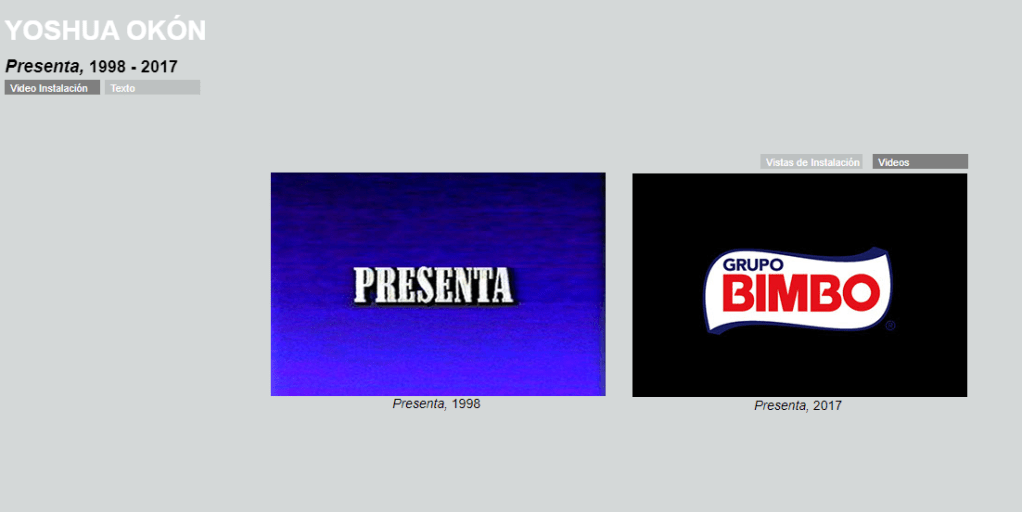
Presenta is a video installation of a channel where a series of logos of the best-known institutions and companies in Mexico parade, introduced by the familiar voices of official announcers. The list of sponsors is endless, so the high expectations created by the multiple logos and the official tone of the video are never met.
WATCH ON: http://www.yoshuaokon.com/esp/presenta_videos.html
Maria Canas – Fuera de Serie (’12)
An attempt to recreate a visual memory, a kind of tower of Babel made of macabre, emotional, romantic, raw, hypercomic visions, black humor and white humor, all that fucking spectrum that has possessed our exhausted retinas and routines with impunity for decades. There are many hours watching series, many sleepless and serial nights. So, let us open ourselves to the charms of this gallery of mirrors, where each series is a face that reflects –and in which we see ourselves reflected– our kaleidoscopic psyche.
WATCH ON: https://www.filmin.es/corto/fuera-de-serie
CONCEPTING IDEA
Bjork Teardown of Sony Trinitron TV & PCB (1988) 4K A.I. Remaster Upscale HD
This video became the foundation for my archival appropriation video.
I always adored this video, so I decided to focus on it and see what happens. I had no plan or idea what I wanted to create – everything happened very organically.
I spent a few hours listening and watching closely, picking it apart, observing what caught my attention and constructing as I went.
Some sort of electrical light – Ela Skorska (2023)
Elzbieta Skorska Some sort of Electrical Light (2023) DV, colour, sound, 3’15’’
My lifelong fascination and inspiration for the art of Bjork was the basis for this project, as well as her experience with this medium, the kind of stimulation, excitement and adventure it can bring to one’s life but also the dangers of misunderstanding and deception that one might experience through the TV.
Building on my previous projects ARTificial and Pareodolia, I further discuss the relationship between the creator and spectator.
Inspired by ancient stoic philosophers, 19th-century American writer and the contemporary music prodigy, I analysed that relationship, drawing conclusions.
The ‘home theatre’ like the real theatre, mimics life in order to deliver entertainment to the people, but one must not forget that the essence of the stories told is imitative. The poet’s job is to tell us the beautiful, dramatic, amusing, heartwarming lies we want to hear, but it is their profession to do so.
An image is just a story.
A manipulation of an image is just means to an end.
“Everything we hear is an opinion, not a fact. Everything we see is a

perspective, not the truth.”

                                                                                                                        - Marcus Aurelius
REFERENCES
Bjork Teardown of Sony Trinitron TV & PCB (1988) 4K A.I. Remaster Upscale HD. Retro Recipes. [Online video] Available through YouTube [Accessed on 01/03/23] https://youtu.be/SNQtQWjX-sA
Christian Marclay – Telephones, 1995. Iván Candeo. [Online video] Available through YouTube [Accessed on 01/03/23] https://youtu.be/-fCXtxDhv4k?si=rZR_UdJ5UFGR4BNl
Contemporary Art Evening Auction Highlights — Andreas Gursky’. Sotheby’s. [Online video] Available through YouTube [Accessed on 26/02/23] https://youtu.be/F2E68Jz6gPY
Curator Introduction to Gillian Wearing. Whitechapel Gallery. [Online video] Available through YouTube [Accessed on 26/02/23] https://youtu.be/qv02v3aOrC8
Film Affinity. Fuera de serie. [Online] [Accessed on 28/2/23] https://www.filmaffinity.com/cl/film134973.html
Gagosian. Andreas Gursky. [Online] [Accessed on 28/2/23] https://gagosian.com/artists/andreas-gursky/
Kuleshov Effect / Effetto Kuleshov. esteticaCC. [Online video] Available through YouTube [Accessed on 25/02/23] https://youtu.be/_gGl3LJ7vHc
Lightcone. Piece Touchee. [Online] [Accessed on 28/2/23] https://lightcone.org/en/film-59-piece-touchee
Martha Rosler. The Bowery in two inadequate descriptive systems
1974–75. [Online] [Accessed on 28/2/23] https://www.martharosler.net/the-bowery-in-two-inadequate-descriptive-systems
Mary Kelly Artist. Post Partum Document 1973-79. [Online] [Accessed on 28/2/23] https://www.marykellyartist.com/post-partum-document-1973-79
NFI. Kuleshov Effect: Everything You Need to Know. [Online] [Accessed on 29/02/23] ttps://www.nfi.edu/kuleshov-effect/
Pièce Touchée (Martin Arnold, 1989). Jujyfruits. [Online video] Available through YouTube [Accessed on 25/02/23] https://youtu.be/AnDagpv4kUk
Phillips. Thomeas Struth: Museum Photographs.[Online] [Accessed on 29/02/23] https://www.phillips.com/article/6911584/thomas-struth-museum-photographs
Public Delivery. Andreas Gursky’s Stock Exchanges – Humans Reduced To A Blob Of Color. [Online] [Accessed on 28/2/23] https://publicdelivery.org/andreas-gursky-stock-exchanges/
Public Delivery. What Did Gillian Wearing’s Signs Say?. [Online] [Accessed on 28/2/23]. https://publicdelivery.org/gillian-wearing-signs/
Public Delivery. What Is The Meaning Of Christian Marclay’s Telephones?. [Online] [Accessed on 28/2/23] https://publicdelivery.org/christian-marclay-telephones/
Some sort of electrical light – Ela Skorska (2023). Ela Skorska. [Online video] Available through Vimeo [Accessed on 15/03/23] https://vimeo.com/808369551
Tatay, H. (2001) ‘Hans-Peter Feldmann 100 Jare’. Macba. [Online] [Accessed on 28/2/23]. https://www.macba.cat/en/art-artists/artists/feldmann-hans-peter/100-jahre
Telephones, 1995 – Christian Marclay. Video Art Resource. [Online video] Available through Vimeo [Accessed on 25/02/23] https://vimeo.com/176259496
The End. fernando franco / ferdydurke. [Online video] Available through Vimeo [Accessed on 25/02/23] https://vimeo.com/1209174
The Kuleshov Effect – Everything You Need To Know. No Film School. [Online video] Available through YouTube [Accessed on 25/02/23] https://youtu.be/OVwKItbgd3s?si=XEvh648G1CcA6Fql
The MET. Portrait (A. Siekmann). [Online] [Accessed on 28/02/23] https://www.metmuseum.org/art/collection/search/282757
Video is television?, 1989. Muntadas, Antonio. GVA IVAM. [Online video] Available through YouTube [Accessed on 27/02/23] https://youtu.be/N439EuEv-xg
Walkerart. Rineke Dijkstra. [Online] [Accessed on 28/02/23] https://walkerart.org/collections/artists/rineke-dijkstra
Wikipedia. Bernd and Hilla Becher. [Online] [Accessed on 28/02/23] https://en.wikipedia.org/wiki/Bernd_and_Hilla_Becher
Yoshua Okon. Presenta, 1998 – 2017. [Online] [Accessed on 29/02/23] http://www.yoshuaokon.com/esp/presenta_videos.html
 Ela Skorska