Expanded film work (performance with projection, film installation, interventions or paracinema) that revolves around the idea of LEAVING THE SCREEN.
RESEARCH
Firstly, I researched the definition of PARACINEMA/EXPANDED CINEMA and VIDEO INSTALLATION in different sources.
DEFINITION:
Paracinema is the mutation of high and low art: conjoining exploitation and academia, and boiling with energy, individuality and fun. Not just ‘genre’ cinema, Paracinema embraces all forms of transgressive media culture. As put by academic Jeffrey Sconce, back in 1995, in his seminal writings on the matter:
“As a most elastic textual category, paracinema would include entries from such seemingly disparate subgenres as ‘badfilm’, splatter-punk, ‘mondo’ films, sword and sandal epics, Elvis flicks, government hygiene films, Japanese monster movies, beach-party musicals, and just about every other historical manifestation of exploitation cinema from juvenile delinquent documentaries to soft-core pornography.” – Jeffrey Sconce in ‘Trashing’ the Academy: Taste, Excess and an Emerging Politics of Cinematic Style (1995)
Perhaps director and film historian Frank Henenlotter, (Basket Case, Boiled Angels: The Trial of Mike Diana) said it best when he said:
“Often, through bad direction, misdirection, inept direction, a film starts assuming surrealistic overtones, taking a dreadfully clichéd story into new frontiers – you’re sitting there shaking your head, totally excited, totally unable to guess where this is going to head to next, or what loony line out of somebody’s mouth is going to be. Just as long as it isn’t stuff you don’t regularly see”.
Paracinema is the cinema of parties. It’s also the cinema through which many of us engage with the darker aspects of life. It can help us confront social ills, trauma, and mental health issues – thriving on the complexities that mirror those which troubles us. Transgression is the beating heart of Paracinema, but it’s not entirely about violence and disgust. Sometimes this conflict or disruption comes solely in the dismantling of a narrative convention, or sometimes simply in the complete refusal to give into irony and cynicism.
Paracinema is the realm of the explorer, looking for lost wonders, and pushing the known map of our culture into uncharted territory! This is a field of pluralities, of intersecting and divergent paths.
DEFINITION:
In terms of taste and attitude in cinema practice, paracinema is similar to camp, and both are conceptually linked to trash and kitsch in the world of cult cinema. The term was first defined by cultural historian Jeffrey Sconce, who described paracinema as ‘an extremely elastic textual category’.
In addition to art film, horror, and science fiction films, “paracinema” catalogues “include entries from such seemingly disparate genres” as badfilm, splatterpunk, mondo films, sword-and-sandal epics, Elvis flicks, government hygiene films, Japanese monster movies, beach party musicals, and “just about every other historical manifestation of exploitation cinema from juvenile delinquency documentaries to … pornography.
Paracinema denotes an opposition to mainstream that, unlike other cult genres, specifically attacks the “reigning notions of ‘quality’.” Sconce also referred to paracinema as a particular film reading strategy aimed at performing a cultural leveling between the praised high culture and discarded low culture.
STRUCTURE
The term “paracinema” is also used in the context of avant-garde or experimental film studies to denote works identified by their makers as films but that lack one or more material/mechanical elements of the film medium. Such works began to appear in the 1960s in the wake of Conceptual art‘s rejection of standard artistic media like painting and embrace of much more ephemeral, transient materials and forms (including concepts themselves, independent of realization in any concrete material form). In exploring the fundamental nature and purpose of their medium, experimental filmmakers in the 1960s and 1970s began to question the necessity of film technology for the creation of cinema, and began making works without film that were nonetheless still considered part of the avant-garde film tradition.
Such works include Ken Jacobs‘s “Nervous System” works and live shadowplays, the latter made with no film, camera, or projectors, only shadows cast by flickering lights onto a screen. Anthony McCall’s “solid light” films, such as Line Describing a Cone (1973) and Long Film for Ambient Light (1975), are other examples; Long Film for Ambient Light, despite its title, employed no film at all. It consisted simply of an empty artists’ space lit over a 24-hour period by sunlight during the day and electric light at night. Tony Conrad‘s Yellow Movies (1972–1975), rectangular pieces of paper coated with house paint and allowed to turn yellow from exposure over many years, are yet another example of film makers’ investigation of the fundamental properties and effects of cinema outside the physical boundaries of the film medium. In many cases, “paracinematic” works came out of a sense among radical filmmakers that the film medium posed overly restrictive and unnecessary constraints (e.g. material and economic limitations) on their search for new kinds of cinematic experience. “Cinema”, in this context, is understood as a much more varied art form than among most other kinds of filmmakers, who assume that “film” cannot be disconnected from the film medium.
DEFINITION:
VIDEO INSTALLATION is a contemporary art form that combines video technology with installation art, making use of all aspects of the surrounding environment to affect the audience. Tracing its origins to the birth of video art in the 1970s, it has increased in popularity as digital video production technology has become more readily accessible. Today, video installation is ubiquitous and visible in a range of environments—from galleries and museums to an expanded field that includes site-specific work in urban or industrial landscapes. Popular formats include monitor work, projection, and performance. The only requirements are electricity and darkness.
One of the main strategies used by video-installation artists is the incorporation of the space as a key element in the narrative structure. This way, the well-known linear cinematic narrative is spread throughout the space creating an immersive ambient. In this situation, the viewer plays an active role as he/she creates the narrative sequence by evolving in the space. Sometimes, the idea of a participatory audience is stretched further in interactive video installation. Some other times, the video is displayed in such a way that the viewer becomes part of the plot as a character in a film.
A pioneer of video installation was Korean/American Nam June Paik whose work from the mid-sixties used multiple television monitors in sculptural arrangements. Paik went on to work with video walls and projectors to create large immersive environments. Wolf Vostell is another pioneer of video installation. He showed his 6 TV Dé-coll/age in 1963 at the Smolin Gallery in New York.
Other Americans include Bill Viola, Gary Hill and Tony Oursler. Bill Viola is considered a master of the medium. His 1997 Survey at the Whitney Museum in NY, along with the 1994-95 Gary Hill survey created by the Henry Art Gallery, Seattle, and traveling to Philadelphia, New York, Los Angeles and Kansas City, amounted to a watershed mark in the history of video installation art marking both a period on the sentence of the first generation and a beginning of the next. Gary Hill, another master of the medium, has created quite complex and innovative video installations using combinations of stripped down monitors, projections and a range of technologies (from laser disk to DVD and new digital devices) so that the spectator can interact with the work. For instance in the 1992 piece Tall Ships, commissioned by Jan Hoet for Documenta 9, the audience enters a dark hall-like space where ghostly images of seated figures are projected onto a wall. The approach of a viewer causes a seated figure to stand up and move forward toward the viewer, creating an eerie effect of the dead in the underworld (rather suggestive of Odysseus’ descent into the Underworld in The Odyssey). Tony Oursler’s work exploited the technology developed in the early 1990s of very small video projectors that could be built into sculptures and structures as well as improvements in image brightness so that images could be placed on surfaces other than a flat screen.
David Hall and Tony Sinden exhibited the first multi-screen installation in Britain, 60 TV Sets, at Gallery House, London in 1972. Subsequently British video installation developed a distinctive pattern following the seminal international Video Show at the Serpentine Gallery, London in 1975, and later thanks in part to the existence of regular festivals in Liverpool and Hull and public galleries such as the Museum of Modern Art, Oxford that routinely showcased the work. Sam Taylor-Wood‘s early installation pieces are good examples where specially filmed elements are shown as a series of serial projections. Iranian born Shirin Neshat combines cinematic sensibility to her video installations.
DEFINITION:
EXPANDED CINEMA is used to describe a film, video, multi-media performance or an immersive environment that pushes the boundaries of cinema and rejects the traditional one-way relationship between the audience and the screen

The term was coined in the mid-1960s by the US filmmaker Stan Van Der Beek, when artists and filmmakers started to challenge the conventions of spectatorship, creating more participatory roles for the viewer. They chose to show their works, not in cinemas, but in art galleries, warehouses and in the open air, and invented different ways of experiencing film through multi-screen projections.
Light Music 1975 by Lis Rhodes, comprised of two films projected into a hazy room and an intense soundtrack created from the flickering patterns on the screen.
Other proponents of expanded cinema are Carolee Schneeman, William Raban, Malcolm Le Grice, Annabel Nicolson and Gill Eatherley and more recently Mark Leckey.
What is Expanded Cinema?
”Artis making expanded cinema want to make a relationship between the screen and audience active, not passive, with the aim to make you think about the relationship between the screen and yourself a s a viewer” – think this is the essence and the best description in a nutshell of Expanded Cinema.
PARACINEMA FEST is giving a home to the ridiculous, the shocking, the thoughtful, the horrifying, the forgotten. Emerging out of underground fan cultures, Paracinematic principles are rapidly spreading into the cinema landscape as we collectively begin to read between the lines of media – holding aloft unappreciated or unusual art, and pushing at the boundaries of “acceptable” culture. Our festival builds upon these rich traditions of cinematic love – a love that expands beyond conventional scaffolds into the mind-melding possibilities of an empathetic approach to film. Forget looking to ‘forgive’ a film’s faults, this is how we learned to stop worrying and love a bomb!
LECTURE 17.11.22
Today we talked more about structural cinema and watched a few films presented by students. We also continued learning about a new subject – PARACINEMA idea, body, and dematerialisation.
ARTIST covered in lecture:
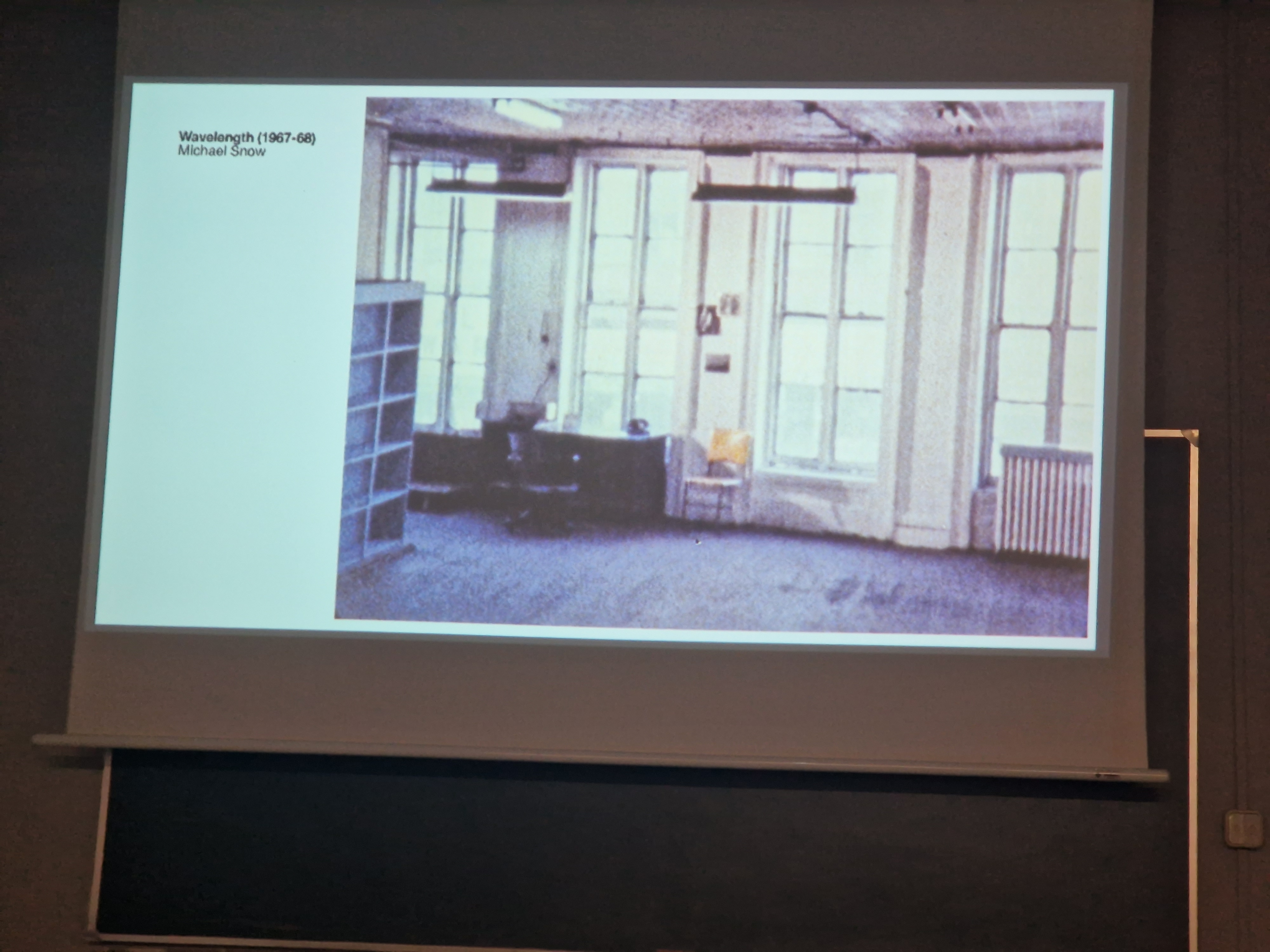
Wavelength (1967. Michael Snow)
Peter Gidal – Room Film 1973
Jonathan Walley is a film scholar specializing in avant-garde or experimental film, a form of cinema radically opposed to the aesthetics and politics of mainstream cinema, and more closely aligned with avant-garde and modern art than traditional filmmaking. His research on this subject has appeared in October, The Journal of Aesthetics and Art Criticism, The Moving Image Review and Art Journal, Millennium Film Journal, World Picture Journal, Senses of Cinema, INCITE! Journal of Experimental Media, Cinematograph, The Velvet Light Trap, and in numerous collections of scholarly writing on cinema and art.
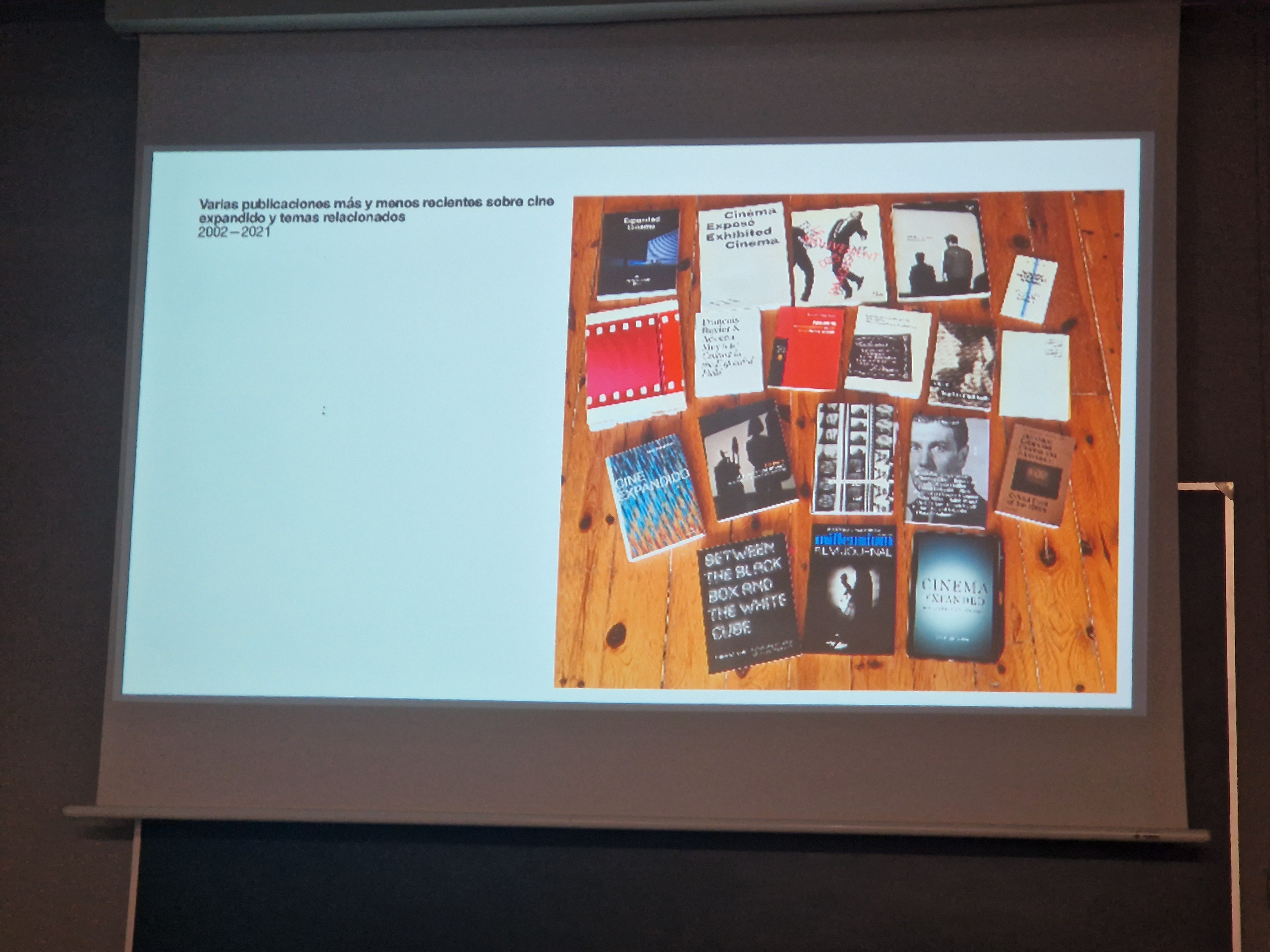
The primary focus of his research has been “expanded cinema,” which refers to moving image works that radically alter or abandon the familiar materials, forms, and spaces of conventional filmmaking. These include film and video installation, live performances using film projection, and moving image works that cross boundaries between cinema and other art forms. His book on the subject, Cinema Expanded: Avant-Garde Film in the Age of Intermedia, was published in 2020 by Oxford University Press.
His current research is on the concept of the sublime, and the ways in which experimental moving image works might uniquely elicit or evoke the sublime. A related line of new research involves the idea of a “non-anthropocentric” or “post-humanist” moving image aesthetic, in which human intention, artistic personality, and ego are de-emphasized in favor of an approach to film and video making that embraces automaticity and contingency.
Anthony McCall – Line Describing a Cone | TateShots
Anthony McCall http://www.anthonymccall.com/
Anthony McCall lives and works in Manhattan. Occupying a space between sculpture, cinema and drawing, his work’s historical importance has been recognized in such exhibitions as “Into the Light: the Projected Image in American Art 1964-77,” Whitney Museum of American Art (2001-2); “The Expanded Screen: Actions and Installations of the Sixties and Seventies,” Museum Moderner Kunst, Vienna (2003-4); “The Expanded Eye,” Kunsthaus Zurich (2006); “Beyond Cinema: the Art of Projection,” Hamburger Bahnhof, Berlin (2006-7); “The Cinema Effect: Illusion, Reality and the Projected Image,” Hirshhorn Museum, Washington DC (2008); and “On Line,” Museum of Modern Art (2010-11).
Anthony McCall: Solid Light Works at The Hepworth Wakefield
McCall talks about his work process, which I found very insightful, interesting and helpful in understanding the expanded cinema.
Landscape for Fire – Anthony McCall
A video of three people walking in the fields at dusk, lighting up fires in prepared bowls.
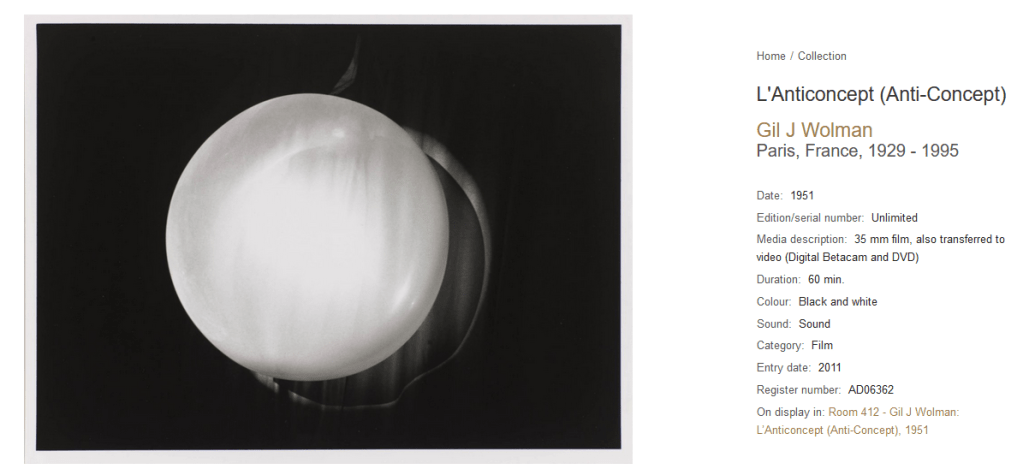
Gill J Wolman – L’Anticoncept
Art At Home | Joyce Wieland’s Stuffed Movie
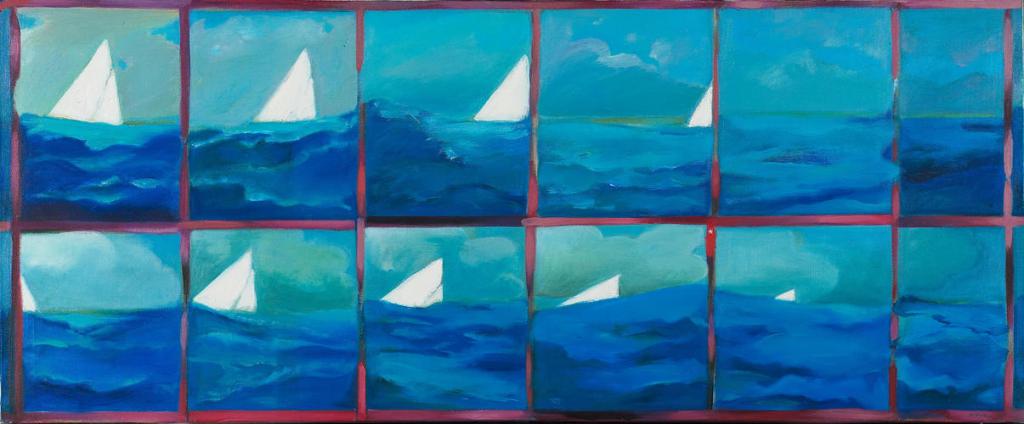
Joyce Wieland – Boat Tragedy (’64)
Oscilaciones – Visión Táctil José Val del Omar – FDA UNLP 2020
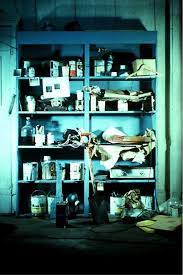
Michael Snow – A Casing Shelved (’70)
The film combines a projection of a 35mm slide showing a bookcase in Snow’s studio with a tape-recorded narration by the artist that discusses various objects within the image. Not only addressing viewers directly, Snow’s narration attempts to direct our eyes toward specific portions of the image.
https://mubi.com/films/a-casing-shelved
Michael Snow 1983
Interview and profile of experimental filmmaker Michael Snow from 1983. Includes extracts from ‘Back and Forth’, ‘Wavelength’, ‘La Region Central’, ‘So Is This’ and gallery piece ‘Two Sides To Every Story’. Made for Channel 4 ‘Visions’ and broadcast 19 January 1983. Interview: Simon Field; Director: Keith Griffiths
Wochenende – Walter Ruttmann (1930)
Hans Scheugl zzz: hamburg especial (’68)
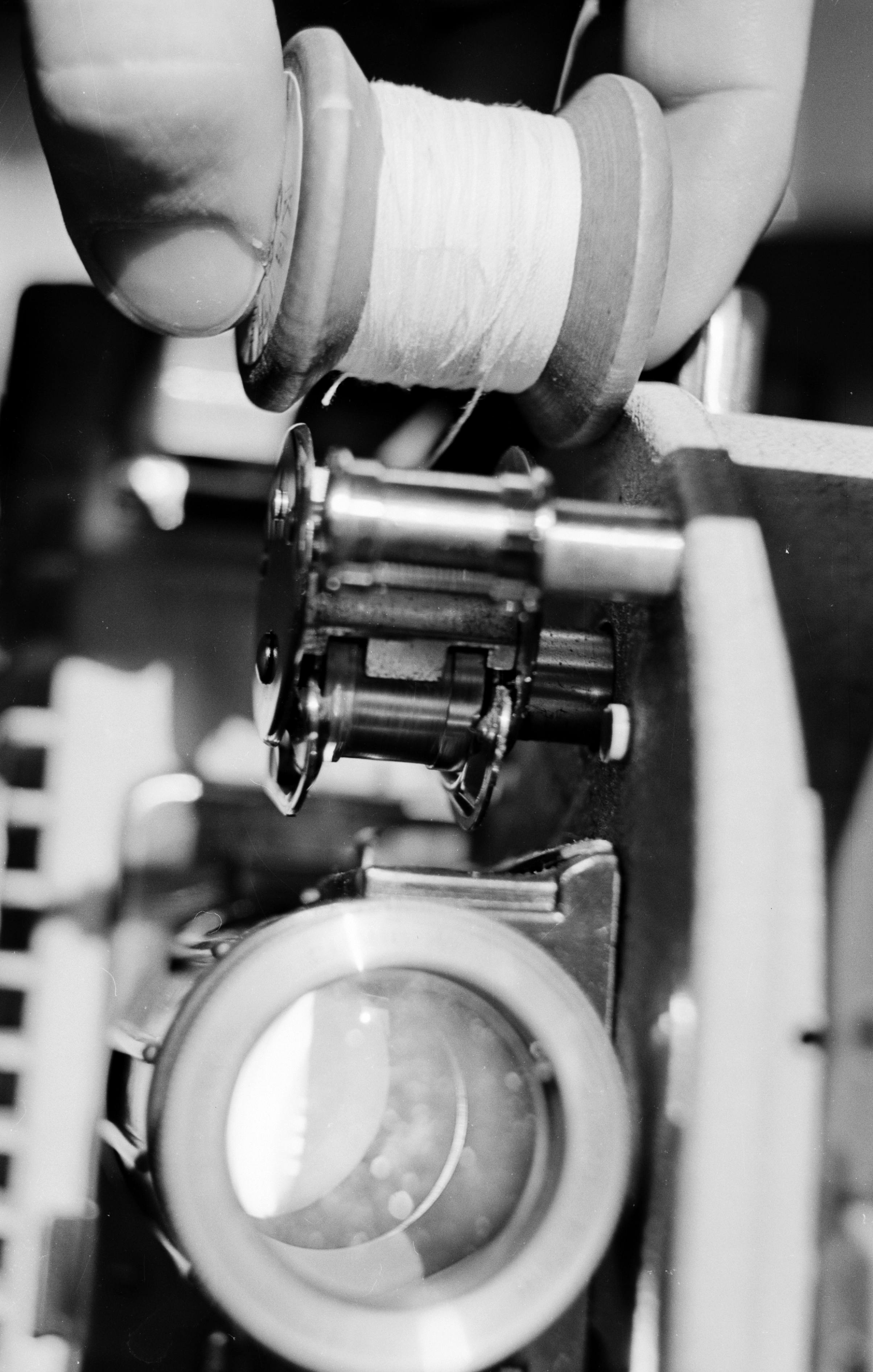
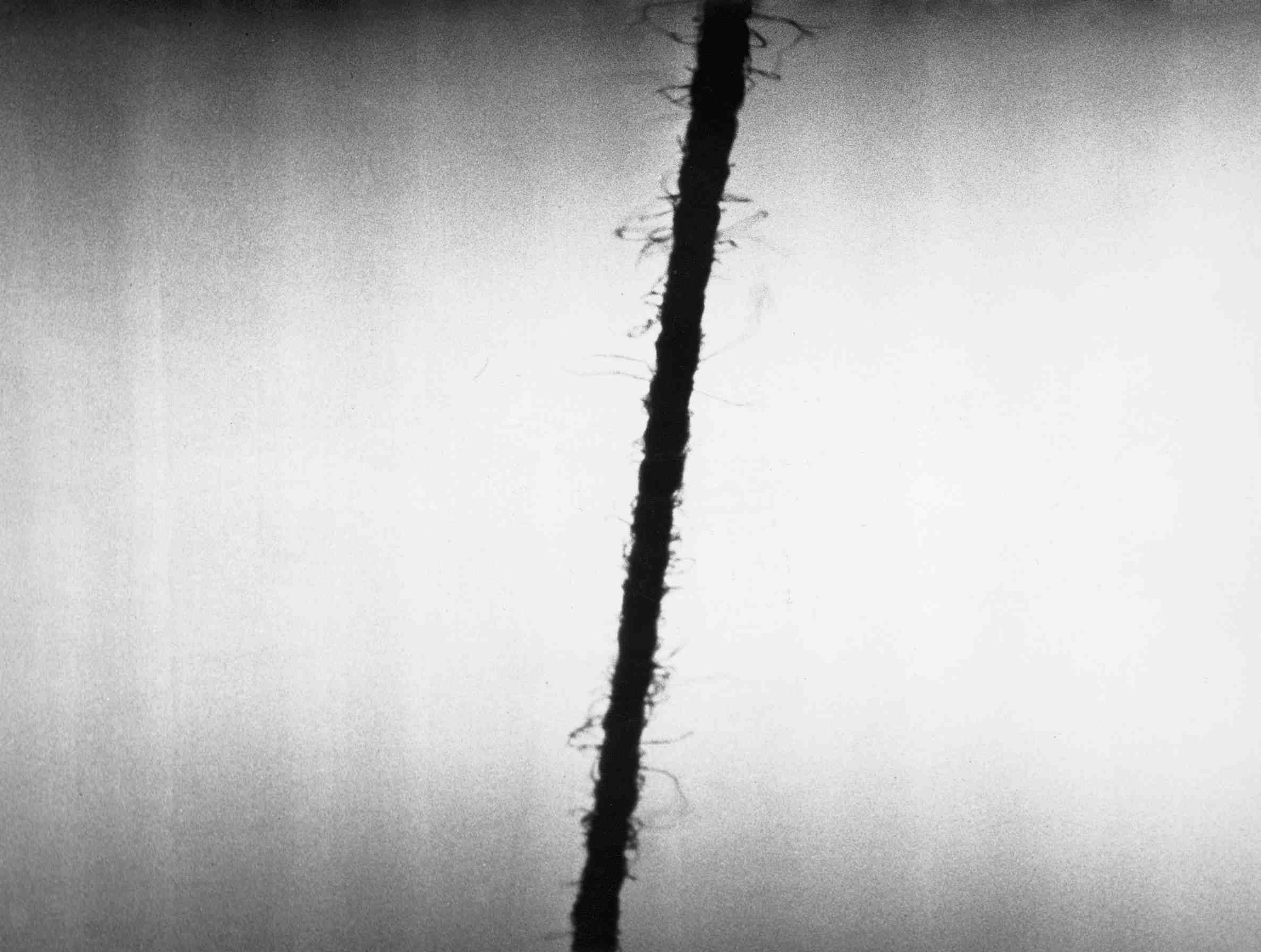
Hans Scheugl’s hamburg special consists of a spool of thread that runs through the projector instead of a film. On the bright empty screen appears a vertical line that is moved to both sides by the projectionist. At the Filmschau in Hamburg the thread was moved quickly. The audience was thus brought to the consideration whether the thread was on a film or real. At a screening in Hannover the thread was pulled at only now and then, inviting us to contemplate the beauty of the „fine structure“ of the thread. An essential condition of this intermedium was thereby fulfilled: the creative co-operation of the projectionist.
Rosa Barba – Registros de tránsito solar (’17)
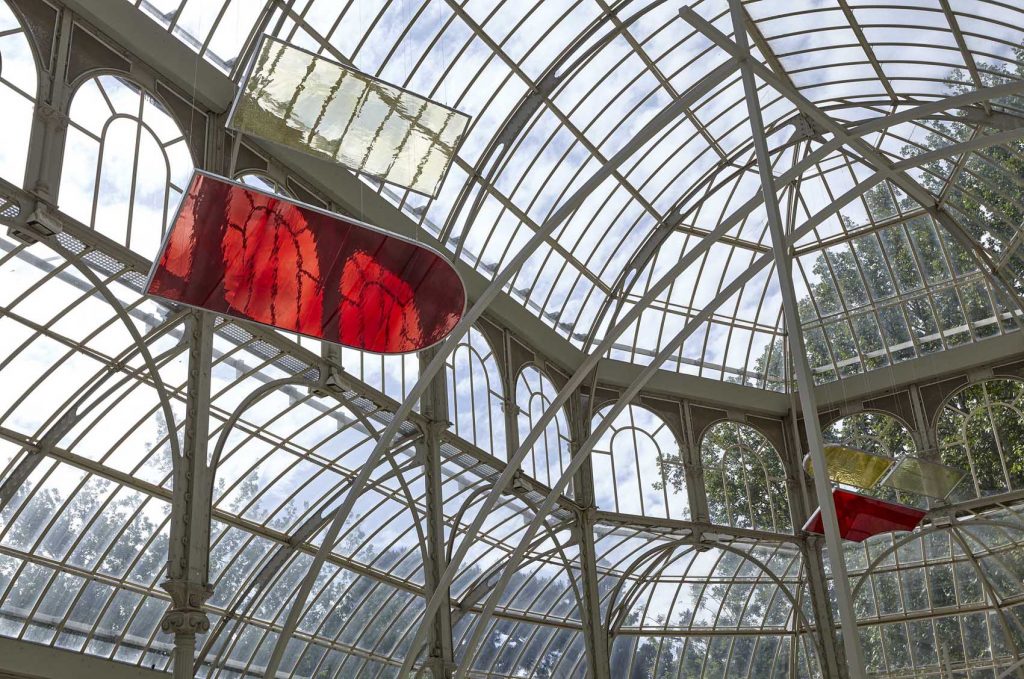
The Museo Reina Sofía hosts at its headquarters in the Palacio de Cristal in Parque del Retiro a project created specifically for this space by Rosa Barba , (Agrigento, Italy, 1972), a visual artist and filmmaker based in Berlin, titled Solar Transit Records ( Solar Flux Recordings) and curated by Manuel Borja-Villel.
For his intervention at the Palacio de Cristal, Barba has conceived an installation that responds to the strategy of contextualizing the works in the environment and architectures where they are located.
The exhibition, hence its title, records the incidence of sunlight on architecture, in each specific place and moment. For this, the artist has arranged quadrants made of steel where the movements of the sun are recorded, and she has made a partial replica of the building. Windows, columns and arches have an equivalent in her intervention.
However, a closer examination reveals that we are, in reality, before a cinematographic device. Although its panels maintain the lines and dimensions of the windows, its colors refer us to the filters typical of the cinema. However, the light does not come from a lamp, but is natural, revealing how nature works as a machine, and us as its gears.
Tony Conrad – Yellow Movie (’73)
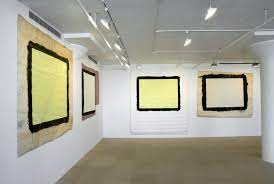
Artist, Tony Conrad: I’m Tony Conrad. Well, practically from the beginning I was interested in work that seemed to engage with people in a way that implied long spaces of time. And I guess it came naturally to me to be a filmmaker, a musician, a painter, a sculptor, a conceptualist, whatever the occasion called for.
When I got to New York in the early ’60s, I was skeptical about art, but the film community seemed exciting because it was institutionally unattached. And at that time, I wanted filmmakers to pay a little attention to all of the things that had been going on in painting.
Well, it didn’t exactly work, but a classic strategy was to make a film that would last a long time. Warhol made one that lasted 24 hours. This one was going to last 50 years. So this was made using the idea that cheap paint automatically changes color over time. I selected something particularly cheap. Gull White, flat, interior latex, by Magicolor. And this is just painted on the paper, and outlined to form the area of a movie. There’s no way to measure the change that takes place in the Yellow Movie. Except that movies always happen and take place in your imagination.
What kind of movie could it possibly be? Well, it doesn’t look exactly like a comedy, but I think of it that way.
The Language of Less: Tony Conrad
Tony Conrad – Pickled Films (’74)
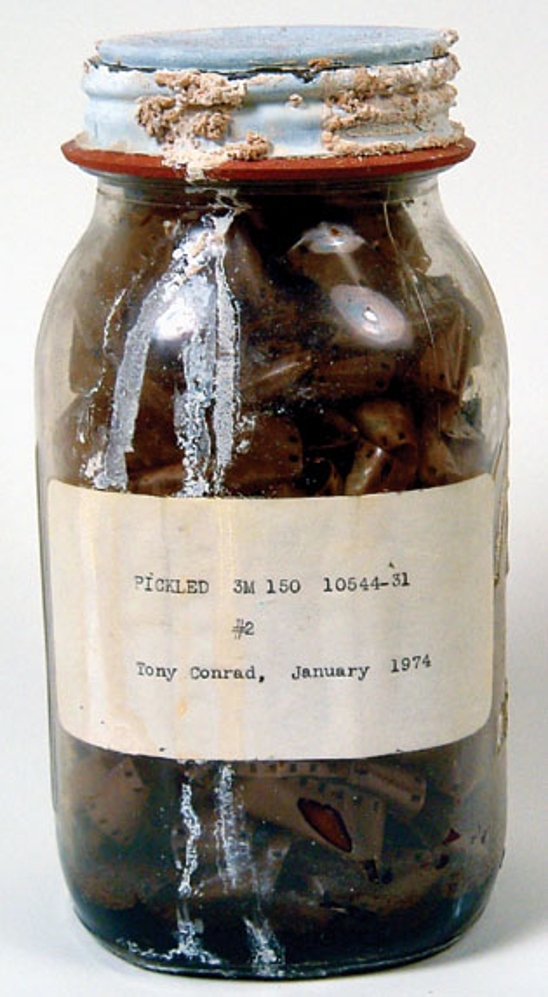
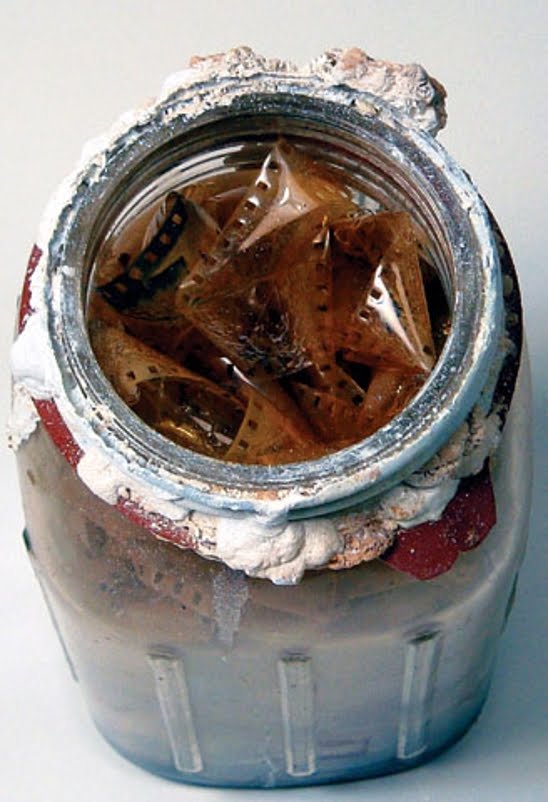

JS: It’s amazing to see how far things are pushed with your work from that period—in the Yellow Movies from ’73, which are films that can basically go on forever but utilize no projectors and no film, and also the film objects that you made around that time, where film itself is treated and transformed chemically, and is often fully unprojectable. I know you gave a recent talk at the Guggenheim and you called some of that work “pathological.” Citing this work specifically, could you elaborate on some of those projects?
TC: Well, if you take a roll of film and instead of making pictures on it, you process it by pickling it in vinegar and putting it in a jar and presenting it for people to look at that way, projected through the lens of the fluid around it, this is so distorted and such a monstrous disfigurement of the normal way in which you are “supposed to use” film, that it is a kind of pathology; it’s a sickness in the sense of a virus being inserted in the system. I think wellness and change are measured by comparison to potential for extremes of illness or death. I was trying to kill film. I wanted to let it lay over and die.
The Flicker (1965) by Tony Conrad, Clip: ‘Warning card’/Title card – plus, well – flickering…
The Flicker is a 1966 American experimental film by Tony Conrad. The film consists of only 5 different frames: a warning frame, two title frames, a black frame, and a white frame. It changes the rate at which it switches between black and white frames to produce stroboscopic effects. Conrad spent several months designing the film before shooting it in a matter of days. He produced and distributed The Flicker with the help of Jonas Mekas. The film is now recognized as a key work of structural filmmaking. https://en.wikipedia.org/wiki/The_Flicker
Sandra Gibson and Luis Recorder – Light Spill (’05)
“[…] a 16mm projector without a takeup reel spills thousands of feet of celluloid – films recently de-commissioned by local schools and libraries – onto the floor. The size of the pile depends on the duration of the installation, but it gets big quickly, unspooling in long, graceful loops around the legs of the table on which the projector sits.” (Walley 2011: 241)
“Light Spill, which spills the film onto the floor, creating a mound of celluloid, is about the failure of projection, the uselessness of film. The movement of a reel of celluloid through the projector is what is compelling, not any projected image. The film is not held by the gate or lined up with the projector’s beam of light; rather it turns that light into ‘available light’ that spills onto the screen as the celluloid itself falls to the ground, where it accumulates as reel after reel are run through the projectors. Light Spill negates the power of the cinematic through its codified languages and returns us to the elemental experience of light and celluloid. Like ancient linotype machines that sit in museums, or vacant factories that once produced and developed films, Gibson and Recoder’s work is a reflection of what something was but is barely anymore. The film spills and shafts of light emanate from silenced projectors, reminding us of what our world once was. Like the lost art of medieval stained glass, the cinema lives on in the imagination and in its magical apparatus. The cinema’s ‘dream factory’ is closing and reopening as something else.” (Hanhardt 2016: 101–102)
Sandra Gibson, Luis Recoder & Daniel Menche
A new collaborative work developed along with US musician Daniel Menche, using four projectors to envelope the gallery space in light and darkness. Luis Recoder and Sandra Gibson create films and performed film installations of gracefully shifting abstractions, flickering geometry and real, honest beauty.
Looped film, created without the use of a camera, is gently coaxed by hand through investigations of pure colour and form with the aid of water, glass and mist. For KYTN they developed a new collaborative work, using four projectors to envelope the gallery space in light and darkness. The piece has been developed with Daniel Menche, a US musician whose approach to sound shares startling similarities to Luis and Sandra’s approach to light and film; pure sound is born of and mediated by the body and its interaction with objects, creating music with real human and emotional depth and some pretty wild performances. Sourcing sound live from his own heart, lungs or larynx, or from contact with natural elements, a stone on glass, wind or water, Daniel can create a towering vortex of noise, fizzing with dynamic thrills and produced with a post-Iggy raw physical intensity.
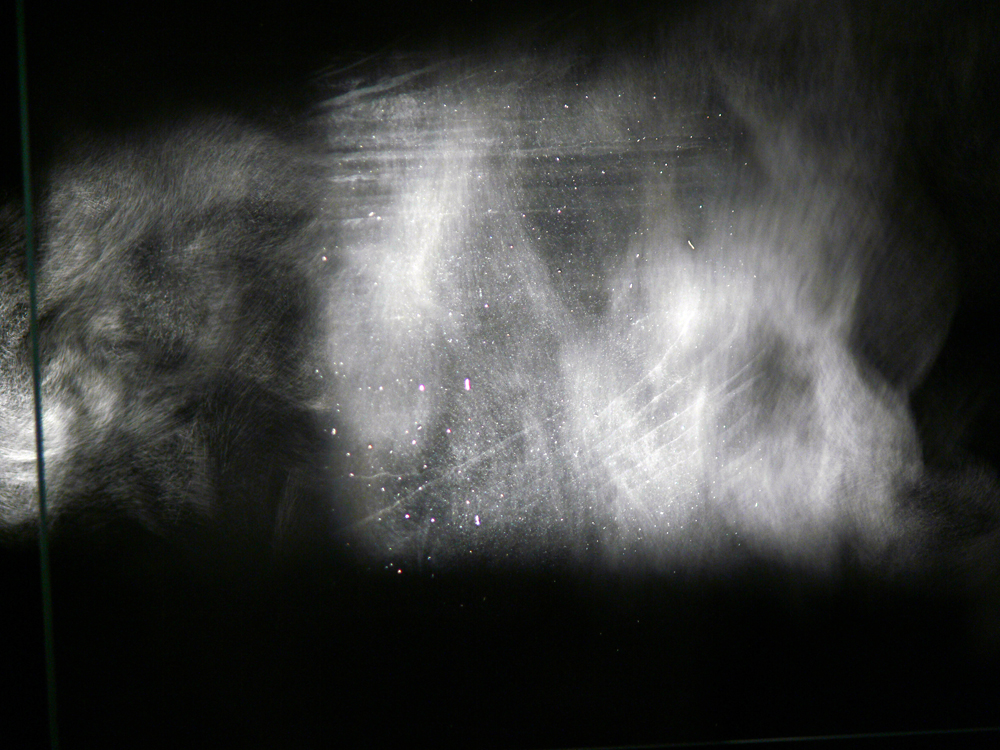
Sandra Gibson (born 1968) and Luis Recoder (born 1971), live and work in New York, USA.
Weils – Film as Sculpture
Film as Sculpture looks at a new generation of artists and the ‘problem’ that a number of them seem to be insistently grappling with: how to create works that either sit between or somehow address two seemingly contradictory mediums: one of art history’s most classical forms, sculpture, and its apparent opposite, film (or video).
With : Rosa Barba, Zbyněk Baladrán & Jiří Kovanda, Ulla von Brandenburg, João Maria Gusmão & Pedro Paiva, Rachel Harrison, Žilvinas Kempinas, Elad Lassry, Karthik Pandian and Bojan Šarčević
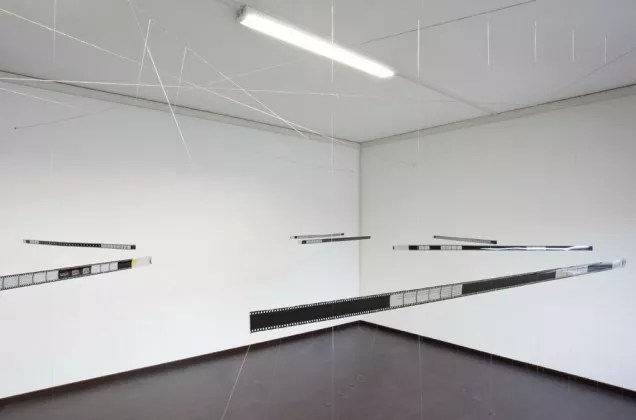
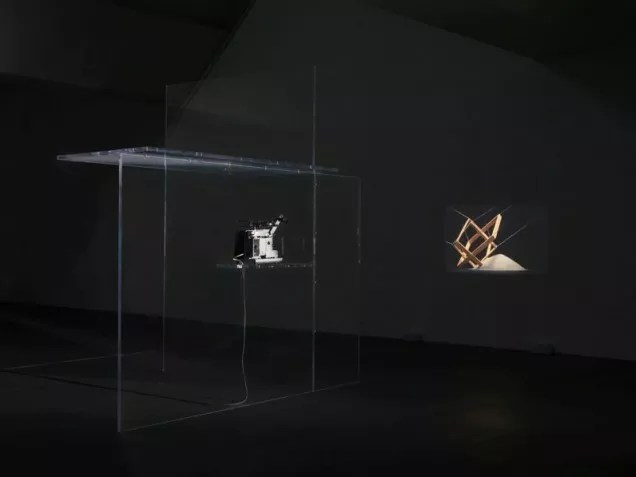
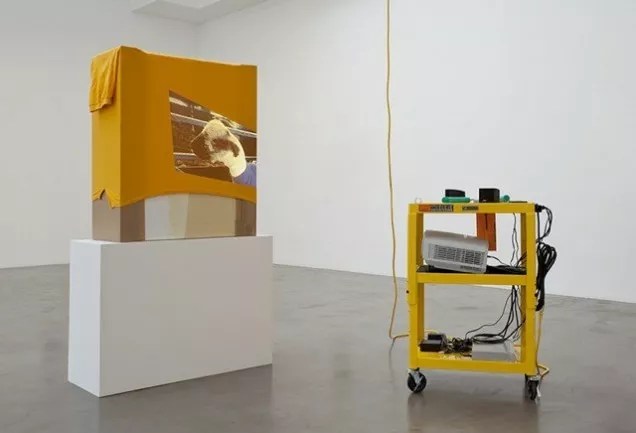
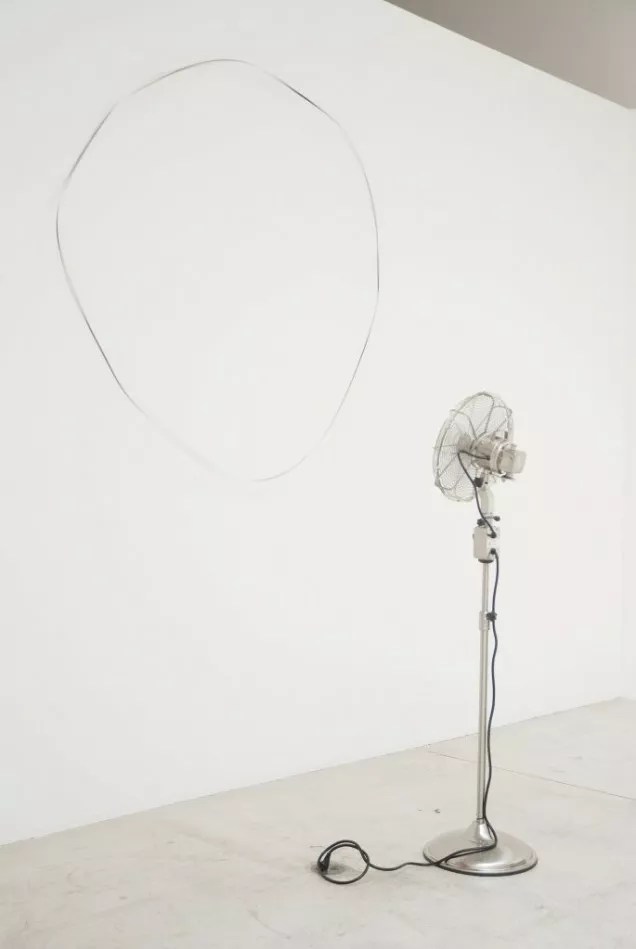
For while film is typically thought of as being essentially moving, temporal and immaterial, an infinitely reproducible collection of fleeting images and flickering light (or, in the case of video, pixels and equally immaterial digital code), sculpture, almost by definition, is a solid, obdurate thing, nothing if not the literal attempt to give lasting form to matter. This group show investigates the growing interest among young artists to think through the specificities of sculpture and film by creating hybrid objects that respond to, inhabit, and question both traditions at once. Indebted to the legacy of 1970s expanded cinema, and resurgent at a moment when the 16 mm celluloid that many of them use is itself facing extinction, the fantastic constructions on view at WIELS foreground the slippery relations between the moving image and the sculptural object.
The response of these visual artists to what we might call ‘film’ or ‘sculpture’ varies considerably from case to case. The selection represents a sampling of some of the most interesting examples from around the world by artists who have seized the task of thinking through both mediums and made it the very centre of their practice. Neither merely filmic nor only sculptural, each of these projects, however different they may be from each other, achieve the critical effect of shifting film from its traditionally conceived (temporal) image-producing function to its (spatial) sculptural possibilities, and vice versa. The consequence is that neither medium remains pure, calcified or unquestioned, instead, they become building blocks to be used in new ways and given new meaning.
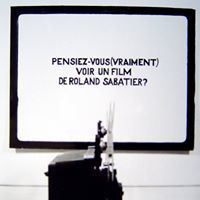
Ronald Sabatier (1942) is a French artist, member of the lettrist group since 1963. Active in the fields of painting, novels, photography, poetry, music and theater, it is in the field of cinema that he distinguished himself with the greatest singularity. Placed under the sign of the destruction of cinema announced in 1951 by Isidore Isou (founder of lettrism), his film work strives through various strategies to suppress or deny the very characteristics of the medium. Freed from the technical means of cinema to explore the limits beyond which a film no longer resembles a film, from the years 1960 his works are often no more than conduits, scores intended to be implemented (or not), or “films to be exhibited” offering disturbing similarities with the proposals formulated at the same period by artists such as Marcel Broodthaers and Tony Conrad.
Roland Sabatier – Pensiez-vous (vraiment) voir
LECTURE 23.11.22
Cinema as action, the dialectical relationship between dematerialization and the body.
Stan VanDerBeek’s Movie-Drome shown in Arsenal, Venice Biennale 2013
Andy Warhol – Exploding Plastic Inevitable (High quality) (66-67)
Robert Rauschenberg Open Score 1966 Art Documentary
In Open Score, Robert Rauschenberg derived the content of his performance from the characteristics of the performance venue. The tennis racquet suggested both the idea of the ready-made (at other times tennis was played at the Armory) and that of a dance improvised in accordance with specific rules. The lighting, however, which dimmed each time a racquet hit a ball, conferred on the player’s actions a function bound up with a complex technological system. During the second part of the performance, which took place in total darkness, a crowd on stage, which was filmed with infrared cameras, appeared to mirror the viewers assembled on the bleachers that served as seats. As close as the onstage crowd was, it could be seen, paradoxically, only on the screens.
text: la imagen-tiempo (’86) Gilles Deleuze
Peter Miller – forever film (’06)
Performance art
Artworks that are created through actions performed by the artist or other participants, which may be live or recorded, spontaneous or scripted.
While the terms ‘performance’ and ‘performance art’ only became widely used in the 1970s, the history of performance in the visual arts is often traced back to futurist productions and dada cabarets of the 1910s.
Throughout the twentieth century performance was often seen as a non-traditional way of making art. Live-ness, physical movement and impermanence offered artists alternatives to the static permanence of painting and sculpture.
In the post-war period performance became aligned with conceptual art, because of its often immaterial nature.
Now an accepted part of the visual art world, the term has since been used to also describe film, video, photographic and installation-based artworks through which the actions of artists, performers or the audience are conveyed.
More recently, performance has been understood as a way of engaging directly with social reality, the specifics of space and the politics of identity. In 2016, theorist Jonah Westerman remarked ‘performance is not (and never was) a medium, not something that an artwork can be but rather a set of questions and concerns about how art relates to people and the wider social world’.
Expanded cinema map
Benshi Performance in the Japanese Silent Film Era
Silent film era Japan was characterised by a peculiar cinematic element in the form of Katsudo shashin benshi (abbreviated to benshi). The benshi were ‘silent film narrators’, who helped spectators understand what was happening on the movie screen through vocal narrative known as setsumei. While in the West, there was an emphasis on recapturing the form and style of screening as closely to the first release as possible, there was less concern with a film’s authenticity in Japan. Thus, the benshi had control over film in a way that reshaped the experience of film screenings in Taisho Japan (1912–1926); they could alter the speed of the projection, remove intertitles, and even modify the storyline of the film for the sake of their performance. Attitudes toward the benshi in the histories of cinema have diverged over time, with an increased foreign interest in the profession. Many Japanese scholars have expressed disdain for the practice, such as Sato Tadao, who attributed their ‘nonsensical explanations’ to their education levels, which were generally low. Others have described benshi as an obstacle to Japan’s cinematic evolution since directors used them to ‘fill the gaps’ in their films rather than create narratively self-sufficient scenes. However, recent defences of the benshi have arisen, with Noel Burch, for instance, arguing that they enabled Japanese cinema to evolve independently from the dominant Hollywood style. This article will assess the role of the benshi in a positive light, as an important feature of film presentation in the history of Japanese film.
Full article: https://retrospectjournal.com/2021/11/14/benshi-performance-in-the-japanese-silent-film-era/
Nam June Paik – zen for film (’63)
Film Walk by Lee Hangjun with Hong Chulki
Film Walk, quadraphonic version by Lee Hangjun and Hong Chulki at Atelier de Bitche, Nantes, France on 22 February 2014 for Festival Cable#7, filmed by Guy Sherwin.
Rara avis ENRIQUE DEL CASTILLO
Book: Gene Youngblood – Expanded Cinema (’70)
Book:
Don Quixote by Miguel de Cervantes Saavedra:
“The truth may be stretched thin, but it never breaks, and it always surfaces above lies, as oil floats on water.”
“When life itself seems lunatic, who knows where madness lies? Perhaps to be too practical is madness. To surrender dreams — this may be madness.”
LECTURE 14.12.22
Cinema as action, the dialectical relationship between dematerialization and the body.
Esperanza Collado – The Gas Works
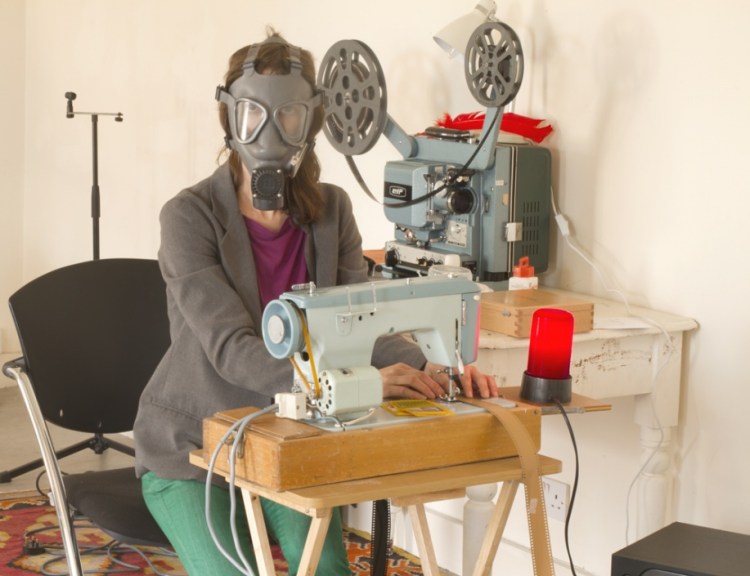
The Gas Works abarcan una serie de películas únicas concebidas como performances inestables de luz sónica. Realizadas y proyectadas a mano, su autora -Esperanza Collado- las describe como “collages efímeros en movimiento o esculturas de luz gaseosa en las que el cine es descarrilado y objeto de pespunte.” El proyecto explora aspectos performativos de la proyección mecánica, como la plasticidad del espacio lumínico, la lectura del sonido óptico y las micro-estructuras del intervalo.
ENG: The Gas Works encompass a series of unique films conceived as unstable performances of sonic light. Made and projected by hand, its author -Esperanza Collado- describes them as “ephemeral collages in motion or gaseous light sculptures in which cinema is derailed and backstitched.” The project explores performative aspects of mechanical projection, such as the plasticity of light space, the reading of optical sound and the micro-structures of the interval.
Other works:
The Gas Thus Cuts in Bits, Esperanza Collado, 2012. Película 16mm y Super16, color y b/n, sonido óptico, 8min 40seg.
The Illuminating Gas, Esperanza Collado, 2012. Película 16mm y Super16, color y b/n, sonido óptico, 9min 6 seg.
Annabel Nicolson – Reeltime (1973)
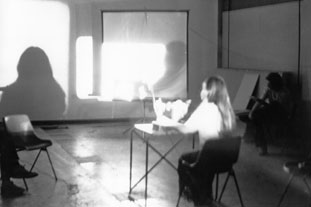
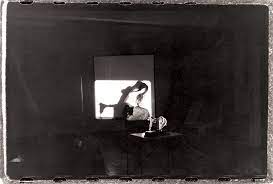
| Reel TimeAnnabel Nicolson 1973 Variable Duration<br> Black & White 16mm A performance with sewing machine and projections.  Performance with sewing machine, projectors, long loop of film and two readers. ‘we were sitting in a small room at the i.c.a., hot as a turkish bath, that is what they offer the avant garde film people.in the middle of the room she sat at a sewing machine, annabel nicolson. onto the wall in front of her, her shadow with the sewing machine was projected, at its side a film with a woman at a sewing machine in silhouette. a huge loop sliding along the floor, along the wall, under the roof and through her sewing machine. she did her job with the needle and holes deflorated the silhouette image in closer and closer succession.that is how she works, annabel nicolson, dives into an action and fills out its aspects.’Quote from Helge Krarup (Denmark). London, September 197 Performance with sewing machine, projectors, long loop of film and two readers. ‘we were sitting in a small room at the i.c.a., hot as a turkish bath, that is what they offer the avant garde film people.in the middle of the room she sat at a sewing machine, annabel nicolson. onto the wall in front of her, her shadow with the sewing machine was projected, at its side a film with a woman at a sewing machine in silhouette. a huge loop sliding along the floor, along the wall, under the roof and through her sewing machine. she did her job with the needle and holes deflorated the silhouette image in closer and closer succession.that is how she works, annabel nicolson, dives into an action and fills out its aspects.’Quote from Helge Krarup (Denmark). London, September 197 | ||
Annabel Nicolson – Reel Time (1973)
Expanded film performance with sewing machine, 16mm projectors and a long loop of film. Black and white, variable duration.
Reel Time is a complex choreography of live actions and pre-recorded representations that fuse the technologies of film with those of (feminine) domestic labor. Seated in the middle of the room with her shadow cast onto the wall opposite, the artist threads a loop of film containing images of a woman in the act of sewing through an actual sewing machine. The machine hammers holes into the celluloid and projects it back to the audience until the film eventually deteriorates and the performance ends. The performance “draws attention to the projection situation as material event” (Le Grice 2001: 165), complicating the relationship between the live and the recorded. Like much expanded cinema of the period, emphasis is also placed as much on the physical presence of the filmmaker as the material presence of the film apparatus. (Kim Knowles)
“The shadow that Annabel Nicolson casts in her 1973 film performance Reel Time […] asserted an unwavering presence in contrast to the slow disintegration of her adjacent projected self, a result of the systematic destruction of the celluloid film image beneath the needle of her sewing machine over the course of the performance” (Reynolds 2011: 153-4).
Peter Miller – Forever Film (2006)
Morgan Fisher – Screening Room (2016)
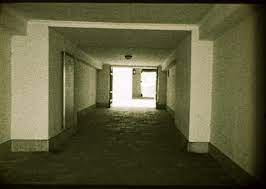
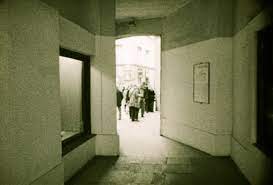
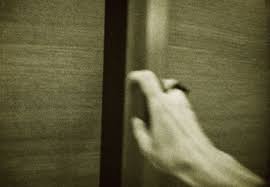
16 mm, black and white, silent, 5 min. USA 1968 (Vienna 2012 version)
“Screening Room is, on the one hand […] a ‘site-specific’ film that Fisher (or a cameraman he has instructed) shoots in an empty movie theater (or gallery space) as well as on the way to it and that must be screened only for an audience at the same theater (or gallery); on the other hand, the artist emphasizes that every version shot in accordance with this rule constitutes the same film.” (Bellenbaum and Buchmann 2012: 214–215).
The version, or more precisely the “state” that Fisher made for the Austrian Filmmuseum in 2012, can – as with all the other “states” – only be seen projected at the very place it was made, a strategy that refuses the universal availability of the moving image, which has become the norm. We see a five-minute shot that represents the subjective view of a visitor – his or her advance up Augustinerstraße, through the passageways of Hofburg Palace, past the Filmbar, turning off into the foyer and the “Invisible Cinema”, and taking a seat in front of the projector-lit screen. The concept of Screening Room uses one of the main characteristics of film to highlight another. Fisher revokes the film copy’s “right” to be shown everywhere in the world and focuses on an inherent momentum in every all so “illusionary” film screening: A projection is a reality and therefore a unique event. This is precisely what the viewer realizes when the projectionist follows Fisher’s accompanying instructions: The lamp of the projector should cast another 20 seconds of white light onto the screen after the copy (which has no lead out) has been shown. The filmic image of the illuminated screen, a white image that fills the complete frame at the end of Screening Room, merges with the filmless, illuminated screen itself: the same screen that was just seen in the film. A virtual image becomes material reality. (Alejandro Bachmann)
Esperanza Collado – Evenly Balanced, Almost (2017)
Bruce McClure – Ventriloquent Agitators (’11)
Colectivo Crater – Reels and Light (’12)
https://old2018.s8cinema.com/portal/en/tag/colectivo-crater/
The fifth edition of Peripheral Film Festival brings to A Coruña the newest of Spanish expanded cinema from the hand of Esperanza Collado and Colectivo Crater, Jodie Mack’s recent work -the queen of filmic collage- and a selection of films from the famous Canadian film festival Media City to celebrate its twentieth anniversary. The programme is completed with a wide range of parallel activities. For professionals, there are conferences and workshops from the hand of Zemos98 and its European Souvenirs project at Contemporary Art Museum Gas Natural Fenosa; for kids, the Mini (S8) with the Action! Film Workshop; and the exhibition Lost&Found. Arquivos (Re)Colectados (never before exhibited in Spain) to be installed at NORMAL University of Coruña. The final touch will be a meeting of film laboratories such as LaborBerlin, L’Abominable from Paris, Double Negative from Canada and Worm-Filmwerkplaats from Rotterdam.
(S8) 2014 Vídeo Presentación
William Raban – Take Measure (’73)
Ernst Schmidt Jr. – Hell’s Angels (1969)
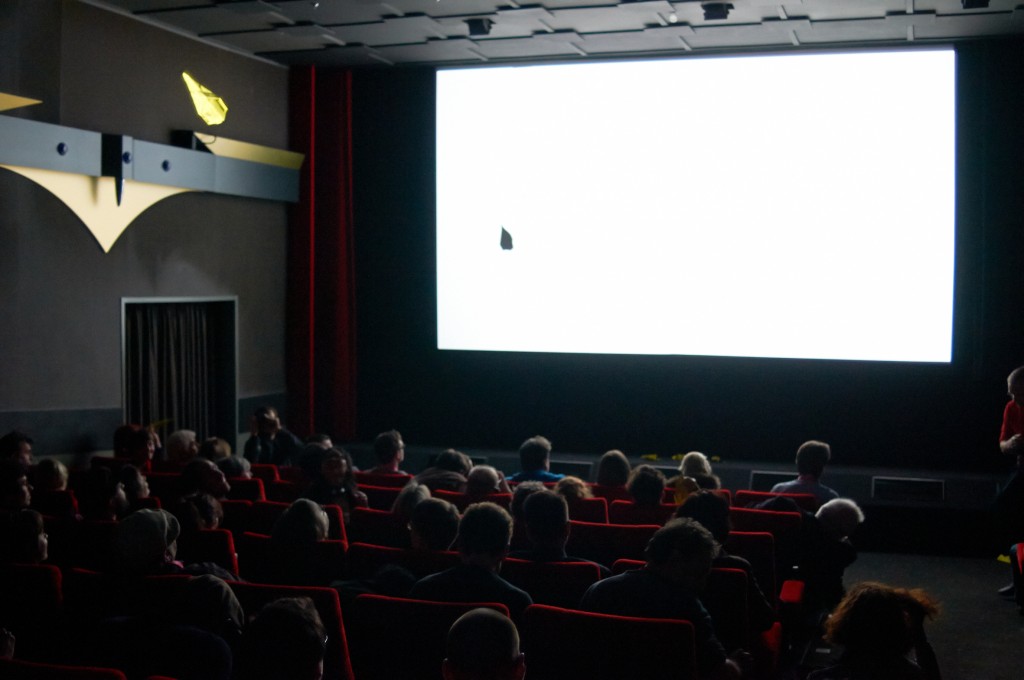
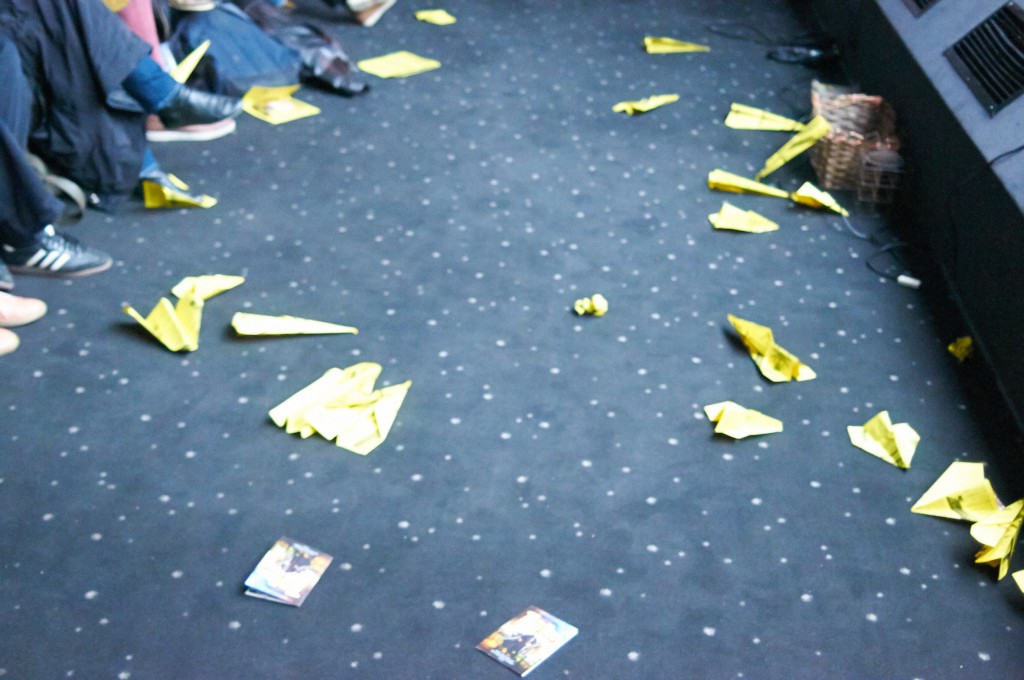
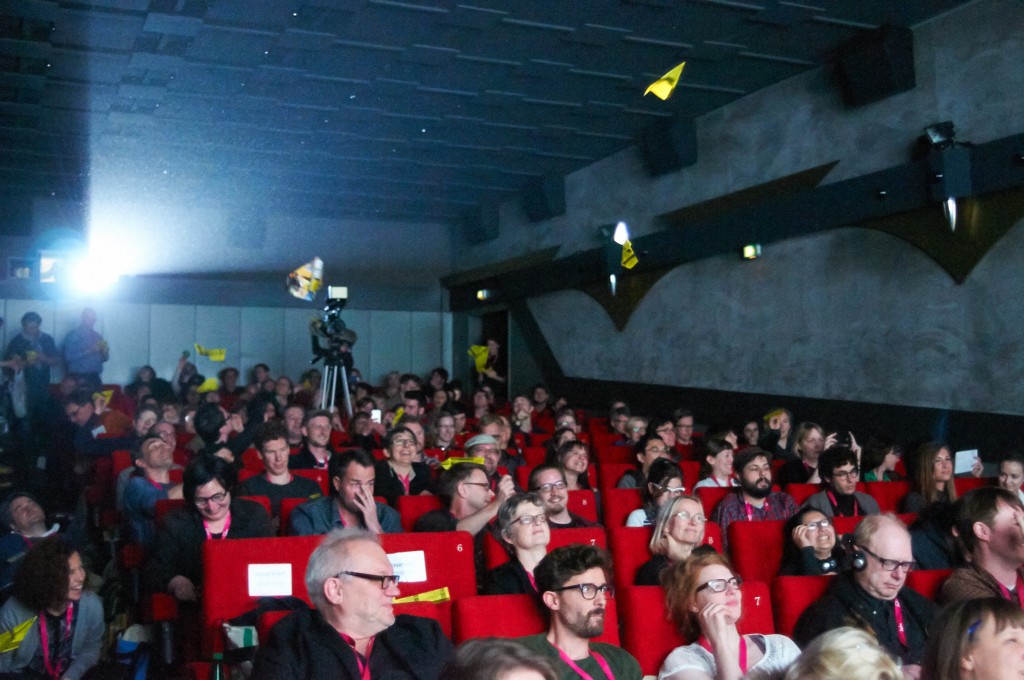
Tony Hill – Point Source (’73)
Point Source
Performance piece, 8 mins, First Performed 1973
A small bright light is the projector, several objects are the film and the whole room is the screen. A spatial exploration of the objects with the light projects them as big as the room encompassing the audience.
We Only Guarantee the Dinosaurs
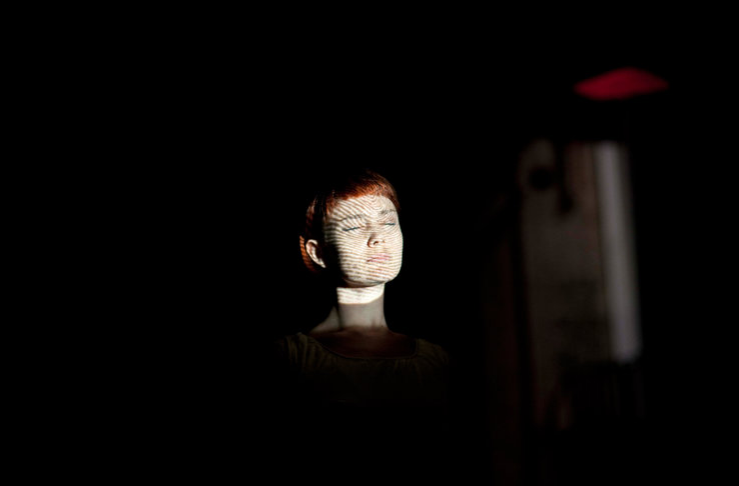
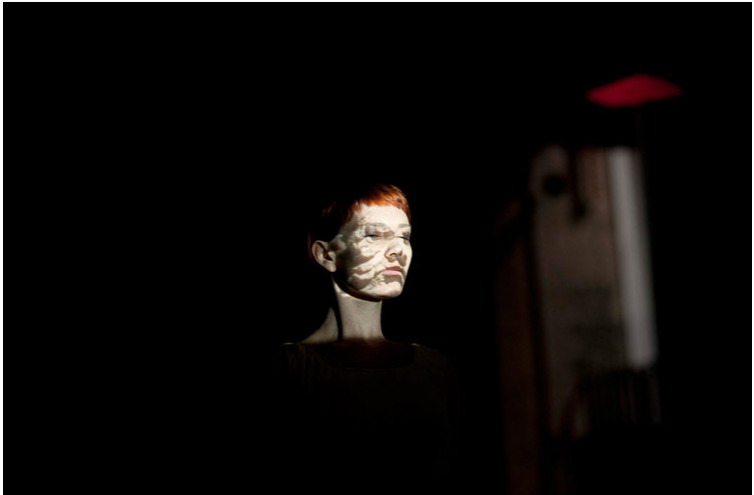
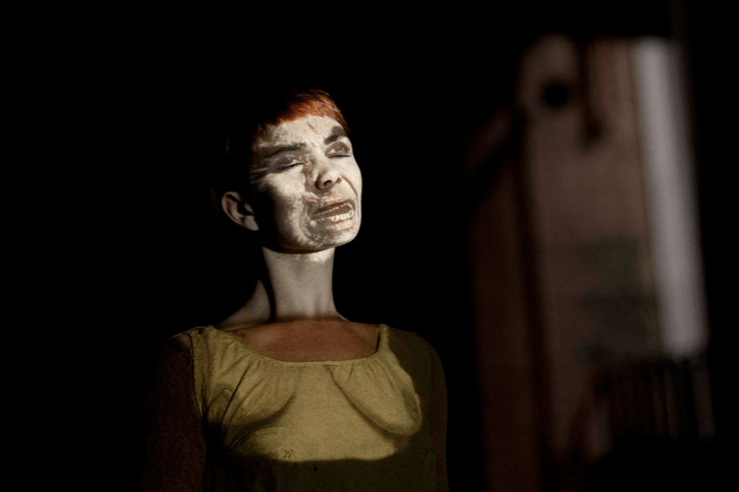
Sally Golding – Face of an Other (’12)
Dieter Meier – Paperfilm (’69)
At the box office every visitor receives a sheet of blank paper together with his admission card. A film is projected showing the following text: Paperfilm by Dieter Meier. Instructions: hold the sheet of paper close to your eyes.
The film lasts 20 minutes. The projection stops. The lights turn up and remain lit during 20 minutes.
Jose Val del Omar – esquemas sobre el desbordamiento panorámico de la imagen (’57)
: desbordamiento de VAL DEL OMAR
The work of José Val del Omar (Granada, 1904-Madrid, 1982) exceeds the limits of cinema and technique, developing a particular relationship between poetry, mysticism, experience and moving images throughout his career.
Faced with cinema as a merely contemplative spectacle, Val del Omar theorizes and puts physical and expanded cinema into practice, summed up in concepts such as panoramic overflow and diaphonic sound.
Maurice Lemaître – Le Film est déjà commencé ?
Heir to the dadaist, surrealist and abstract filmmakers of the 1920s, Lemaître was able to combine equally aesthetics with politics — no easy task and one that fully justifies the current recognition of his work. Gérard Courant, Libération
One of the founding works of letterist cinema, Le Film est déjà commencé? (Has the Feature Started Yet?) became a major event during its first screenings in Paris in 1951. Despite the critics’ lack of consideration, this film’s undeniable influence — direct or hidden — on the New Wave as much as on today’s cinema makes it a landmark in film history.
This film must be projected under special conditions: on a screen of new shapes and material and with spectacular goings-on in the cinema lobby and theatre (disruptions, forced jostling, dialogues spoken aloud, confetti and gunshots aimed at the screen…). This is not just a projection, but a true film show, the style of which Maurice Lemaître is the creator.
Maurice Lemaître 1951
Valie export y peter weibel – tapp und tastkino ’68 check them out as tehy have a loyt of interesting works
Ania Dordienen y juan david gonzalez ojoboca
Takashi Makino: Space Noise
[Space Noise] is a performance in which the double 25 FPS award winner confronts high-resolution video images and 16mm live projection. A duel between the all-dominant immaculate digital and the irregular organic material dissolves in multiple layers of chaos. Enormous quantities of light movements from film loops capture the screen in thousands of pixels of digital projection and create new images in constant change and enhancement. The sound accompanying them live only repeats and spreads the noise, developing images by whirling speed. Noise, located on the tape as a constituent part of the film, becomes the aim of Makino’s quest – Noise-Image. This quest for a new film experience intensifies with additional effects – a smoke curtain reveals the fullness of the light beams’ rainbow spectrum, while a neutral single-eye ND filter creates a three-dimensional illusion.
Performed at 25 FPS Festival on the 27th of September 2013.
Guy Sherwin ‘Man With Mirror’
The performance involves Sherwin holding up a mirror which is painted white on the back, acting as a screen. The image is projected from a Super 8 projector onto the screen/mirror. The projected image, which shows Sherwin holding a similar mirror/screen in a park was shot in 1976. The intention was to perform the piece later in the year it was made. However as time has passed and Sherwin has been asked to repeat the performance, it has taken on new meaning as the performer has aged and time has moved on. For more information about Guy Sherwin, visit his Lux profile here, http://www.luxonline.org.uk/artists/g…
Guy Shervin – Paper Landscape (’75)
Paper Landscape #1
Expanded film performance with transparent screen and white paint, Super 8mm projector, color, silent, Super 8, 10 minutes.UK 1975
Paper Landscape is one of a series of self-portrait performances that see Sherwin as a kind of film magician interacting in the live moment with a pre-recorded version of himself. Here, the artist stands behind a transparent screen onto which he applies white paint. This white surface makes visible an image of the same artist tearing up a paper screen to reveal a landscape behind. The performance progresses until the screen is entirely covered yet simultaneously uncovered, as the live action gives way to a filmed representation. Finally, the filmed figure disappears into the distance and the live performer cuts through the screen to reappear in front of the audience. (Kim Knowles)
“The most vivid portrayal of […] paradoxical space must be Guy Sherwin’s film-performance ‘Paper Landscape’ (1975/2003). Here, for one magical moment, we believe that the filmed protagonist (the artist himself), after slowly tearing away the paper screen obscuring the view, has transgressed the surface of the image and entered the great beyond, running into an English pastoral idyll, only to be shattered when the back-painted projection screen is slashed by the present day artist, bringing us back into our dislocated present” (Hays 2007).
Paper Landscape #2
Expanded film performance with transparent screen and white paint, video projector, Super 8mm projector, color, video (sound), Super 8 (silent), 20+ minutes. Japan 2016
Forty years later, Guy Sherwin has re-worked the idea for digital video and sound – recorded in the rice fields of Itoshima, Japan. So far, Paper Landscape #2 has been performed together with Paper Landscape #1, the newer version preceding the earlier one.
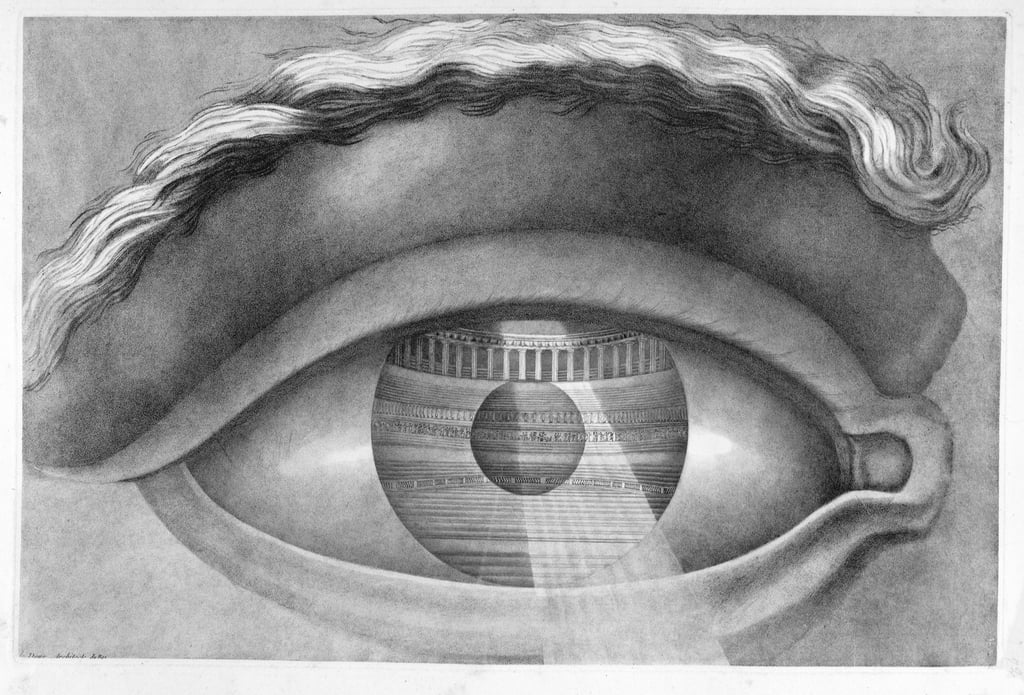
Eye enclosing the theatre at Besancon, France, 1847
CONCEPT 1
First, I made a video through which I wanted to speak about how anything that comes from the screen is a story, poetry, and how we can sometimes get misled and confused by the stories that are told to us. We ought to be careful in what we believe in but also relax into the storytelling and appreciate it for what it is. It’s a tricky relationship, but one which we can make work.
For that purpose I used a video of Bjork, who talks about the TV.
Björk Teardown of Sony Trinitron TV & PCB (1988) 4K A.I. Remaster Upscale HD
My start up project:
Elzbieta Skorska – some sort of electrical light (’22)
CONCEPT 2
Following my reflections of cinema/tv as a tool to tell tales I came up with this second idea.
CINEMA AS ONE OF THE STORY TELLING DEVICES/FORMS OF CINEMA.
Here, I wanted to ask a question:
How old are you, how old is your cinema?
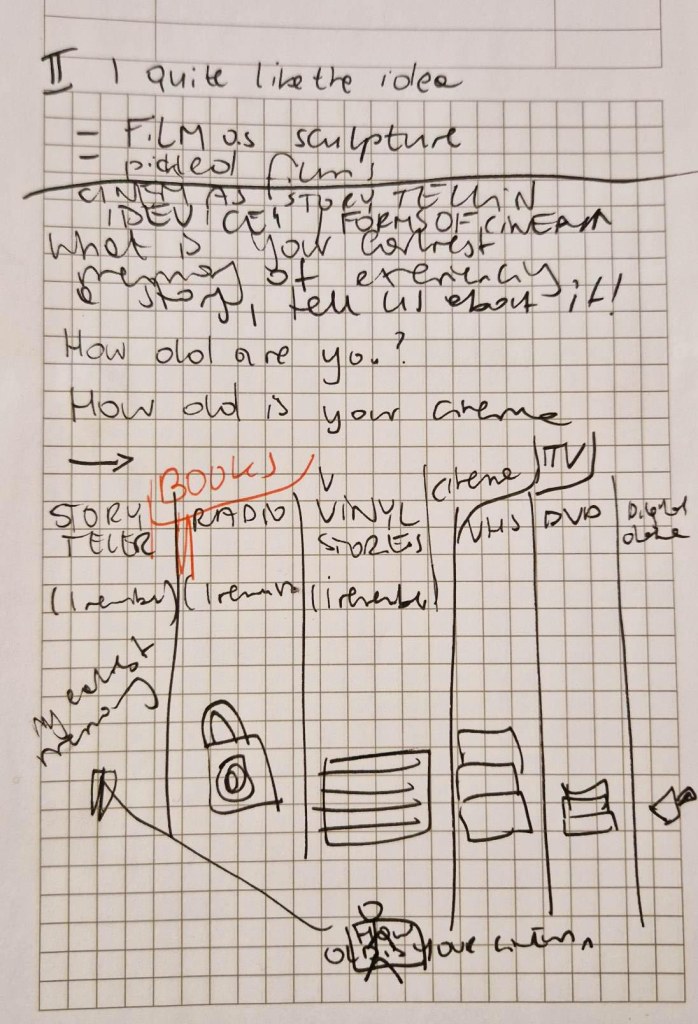
This is an unfinished project that I can’t fully express yet as I am having some financial difficulties, and am unable to get all the props and equipment to make it happen.
THE IDEA IS: to place a variety of what I consider storytelling devices through the ages, from a person representing storytelling in the beginning of humanity to a pile of books, radio, vinyl, cinema screen, TV, VHS, DVD and digital data.
I would then invite people/viewers to go into the room, and ask themselves a question – what is my earliest memory of storytelling and through which medium I experienced it?
I would like each station to have a simple recording device, that people could push and record that memory.
After a few days of recording I would like to then take those stories and project them on a big screen, in the same room, in the form of sound wavelengths instead of sound itself.
I would keep collecting the stories and keep adding wavelengths throughout the time of my installation lasting.
The final product would be a video installation of digital data in the form of sound waves, which tell the stories based on many different mediums that for them were the first cinema experience.
REFERENCES
Afrika. Sandra Gibson, Luis Recoder & Daniel Menche. [Online] [Accessed on 11/11/22]. https://arika.org.uk/sandra-gibson-luis-recoder-daniel-menche/
Andy Warhol – Exploding Plastic Inevitable (High quality). Agustin Javier. https://youtu.be/HsR4ghMfq0U. Available through YouTube. [Accessed on 10/11/22]
Anthony McCall – Line Describing a Cone | TateShots. Tate. https://youtu.be/1-HWsxPnNNY. Available through YouTube. [Accessed on 11/11/22]
Anthony McCall: Solid Light Works at The Hepworth Wakefield. HepworthWakefield. https://youtu.be/86rUPcMZ2dU. Available through YouTube. [Accessed on 10/11/22]
Art At Home | Joyce Wieland’s Stuffed Movie. Vancouver Art Gallery. https://youtu.be/eKXL6OS8gKI. Available through YouTube. [Accessed on 10/11/22]
Artsy. Sandra Gibson and Luis Recorder Light Spill, 2005. [Online] [Accessed on 11/11/22]. https://www.artsy.net/artwork/sandra-gibson-and-luis-recoder-light-spill
Björk Teardown of Sony Trinitron TV & PCB (1988) 4K A.I. Remaster Upscale HD. Retro Recipes. https://youtu.be/SNQtQWjX-sA. Available through YouTube. [Accessed on 20/11/22]
Centre Pompidou. Pensiez-vous (vraiment) voir un film de Roland Sabatier ?. [Online] [Accessed on 13/11/22]https://www.centrepompidou.fr/fr/ressources/oeuvre/7NFgXsE
Classic Cinemas. About Paracinema. https://www.classiccinemas.com.au/about-paracinema. [Online] [Accessed on 11/11/22]
: desbordamiento de VAL DEL OMAR. Museo Reina Sofía. https://youtu.be/zadZRu5kOv4. Available through YouTube. [Accessed on 20/11/22]
Dieter Meier. Paperfilm. [Online] [Accessed on 25/11/22]. https://www.dietermeier.com/1969/film_and_video
Elzbieta Skorska – some sort of electrical light (’22). Elzbieta Skorska. https://vimeo.com/790160328. Available through Vimeo. [Accessed on 18/11/22]
Film Walk by Lee Hangjun with Hong Chulki. Balloon & Needle. https://vimeo.com/88081197. Available through Vimeo. [Accessed on 18/11/22]
Guy Sherwin ‘Man With Mirror’. BD. https://youtu.be/DX1-xuCNIeg. Available through YouTube. [Accessed on 20/11/22]
Landscape for Fire – Anthony McCall. Erica Gonsales. https://youtu.be/3mqtMVE8Tvs. Available through YouTube. [Accessed on 15/11/22]
Luxonline. Reel Time. [Online] [Accessed on 19/11/22]. https://www.luxonline.org.uk/artists/annabel_nicolson/reel_time.html
Luxonline. Take Measure. [Online] [Accessed on 25/11/22]. https://lux.org.uk/work/take-measure/
Michael Snow 1983. Large Door. https://youtu.be/nir7aNK5794. Available through YouTube. [Accessed on 10/11/22]
MoMA. Tony Conrad. Yellow Movie 2/16-26/73. 1973. [Online] [Accessed on 11/11/22]. https://www.moma.org/audio/playlist/220/2854
Museo Reina Sofia. L’Anticoncept (Anti-Concept). [Online] [Accessed on 20/11/22]. https://www.museoreinasofia.es/en/collection/artwork/lanticoncept-anti-concept
Museo Reina Sofia. Pink Beard. Solar transit records. [Online] [Accessed on 20/11/22]. https://www-museoreinasofia-es.translate.goog/prensa/nota-de-prensa/rosa-barba-registros-transito-solar?_x_tr_sl=es&_x_tr_tl=en&_x_tr_hl=en&_x_tr_pto=sc
MAV/VAL documentation of the performance: Forever Film. petermiller.info. https://vimeo.com/161984893. Available through Vimeo. [Accessed on 15/11/22]
Oscilaciones – Visión Táctil José Val del Omar – FDA UNLP 2020. Melanie Espitia Diossa. https://youtu.be/4flB90BaR7A.
Peter Gidal – Room Film 1973. Efraim42191. https://youtu.be/axucqo_SNLo. Available through YouTube. [Accessed on 10/11/22]
Point Source. Tony Hill. https://vimeo.com/481979872. Available through Vimeo. [Accessed on 18/11/22]
Rara avis ENRIQUE DEL CASTILLO. Adrián Cecilio. https://vimeo.com/466199043. Available through Vimeo. [Accessed on 18/11/22]
Reset the Apparatus. Light Spill Gibson + Recorder. [Online] [Accessed on 11/11/22]. http://www.resettheapparatus.net/corpus-work/lightspill.html.
Reset the Apparatus. Paper Landscape. [Online] [Accessed on 20/11/22]. http://www.resettheapparatus.net/corpus-work/paper-landscape.html
Reset the Apparatus. Reel Time. [Online] [Accessed on 11/11/22]. http://www.resettheapparatus.net/corpus-work/reel-time.html
Reset the Apparatus. Screening Room. [Online] [Accessed on 11/11/22]. http://www.resettheapparatus.net/corpus-work/screening-room.html
Retrospect Journal. Benshi Performance in the Japanese Silent Film Era. [Online] [Accessed on 19/11/22]. https://retrospectjournal.com/2021/11/14/benshi-performance-in-the-japanese-silent-film-era/
Robert Rauschenberg Open Score 1966 Art Documentary. MonosonicJukeJoint. https://youtu.be/IGdcEJSKfoM. Available through YouTube. [Accessed on 18/11/22]
Sally Golding. Face of Another. [Online] [Accessed on 19/11/22]. https://sallygolding.com/face-of-an-other/angiuq47rtu9rp99yw1r2bktrt7t9d
Scheugl. Hans Schegul zzz: hamburg special. [Online]. [Accessed on 11/11/22]. https://scheugl.org/zzz-hamburg-special/
(S8) 2014 Vídeo Presentación. s8cinema. https://www.youtube.com/watch?v=825WYlqAEIA. Available through YouTube. [Accessed on 18/11/22]
Takashi Makino: Space Noise. 25 FPS. https://vimeo.com/75707470. Available through Vimeo. [Accessed on 18/11/22]
Tate. Expanded cinema. [Online]. [Accessed on 11/11/22]. https://www.tate.org.uk/art/art-terms/e/expanded-cinema
Tate. Performance art. [Online]. [Accessed on 11/11/22]. https://www.tate.org.uk/art/art-terms/p/performance-art
The Flicker (1965) by Tony Conrad, Clip: ‘Warning card’/Title card – plus, well – flickering…. The aesthetic of the Image: [world] cinema clips. https://youtu.be/_y0l3yVN6vo. Available through YouTube. [Accessed on 15/11/22]
The Language of Less: Tony Conrad. The Language of Less: Tony Conrad. https://youtu.be/2Uh-SF4Z7AI. https://youtu.be/2Uh-SF4Z7AI. Available through YouTube. [Accessed on 15/11/22]
Wavelength (1967. Michael Snow). veryoldstereo. https://www.youtube.com/watch?v=963PSjAHo48. Available through YouTube. [Accessed on 15/11/22]
We Only Guarantee the Dinosaurs. Images Festival. https://vimeo.com/166118203. Available through Vimeo. [Accessed on 15/11/22]
What is Expanded Cinema?. Tate. https://youtu.be/lDJqA6jOXYw. Available through YouTube. [Accessed on 10/11/22]
Wiels. Group Show Film as Sculpture. [Online] [Accessed on 11/11/22]. https://www.wiels.org/en/exhibitions/film-as-sculpture.
Wikipedia. Paracinema. [Online] [Accessed on 11/11/22]. https://en.wikipedia.org/wiki/Paracinema.
Wikipedia. Video installation. [Online] [Accessed on 19/11/22]. https://en.wikipedia.org/wiki/Video_installation
Xcentric. Proyecciones “The Gas Works” y performance “Threaded Cocktails” de Operation Rewrite / The Consecutive Impostors. http://xcentric.cccb.org/es/programas/fitxa/proyecciones-the-gas-works-y-performance-threaded-cocktails-de-operation-rewrite-the-consecutive-impostors/218823
 Ela Skorska