
Index in photography
“Any reflection of any medium of expression must raise the fundamental question of the specific relationship that exists between the external referent and the message produced by that medium. It is the question of modes of representation of the real or, if you like, the question of realism.” (Philippe Duboise, The photographic act).
In this unit we discussed the topic of an index in Photography.
What is the index in photography?
”As a photographic trace or impression, the index seems to harbour a fullness, an excessive- ness of detail that is always supplemental to meaning or intention. Yet, the index as deixis implies an emptiness, a hollowness that can only be filled in specific, contingent, always mutating situations.” (from Indexicality: Trace and Sign – Duke University Press)
RESEARCH
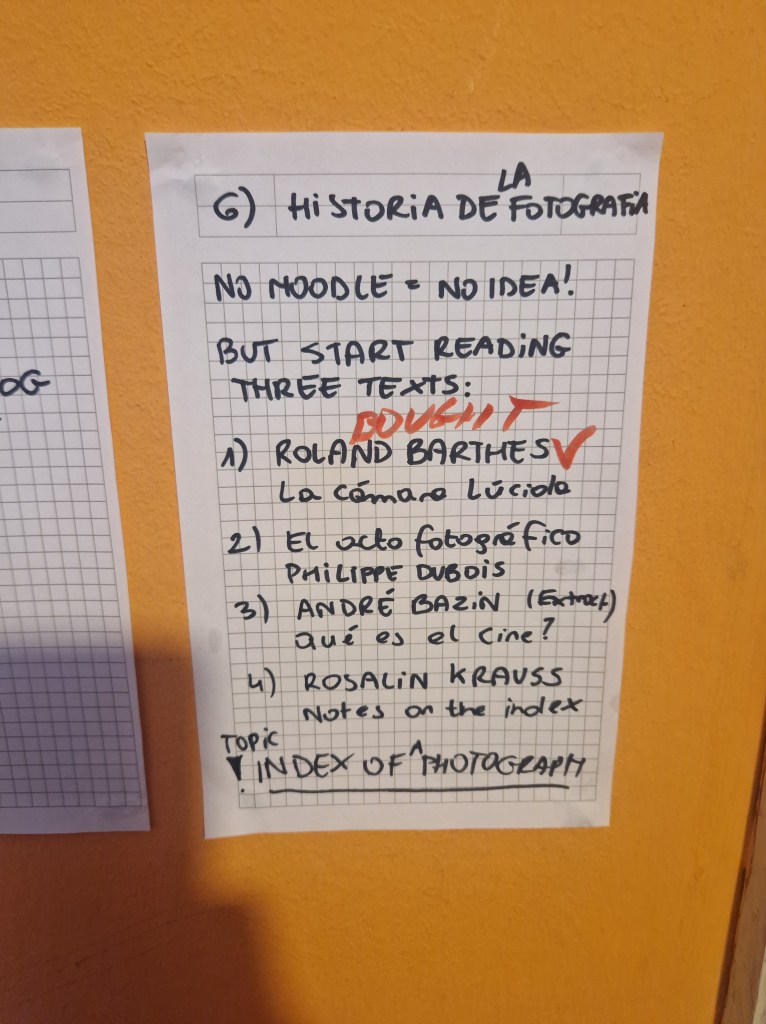
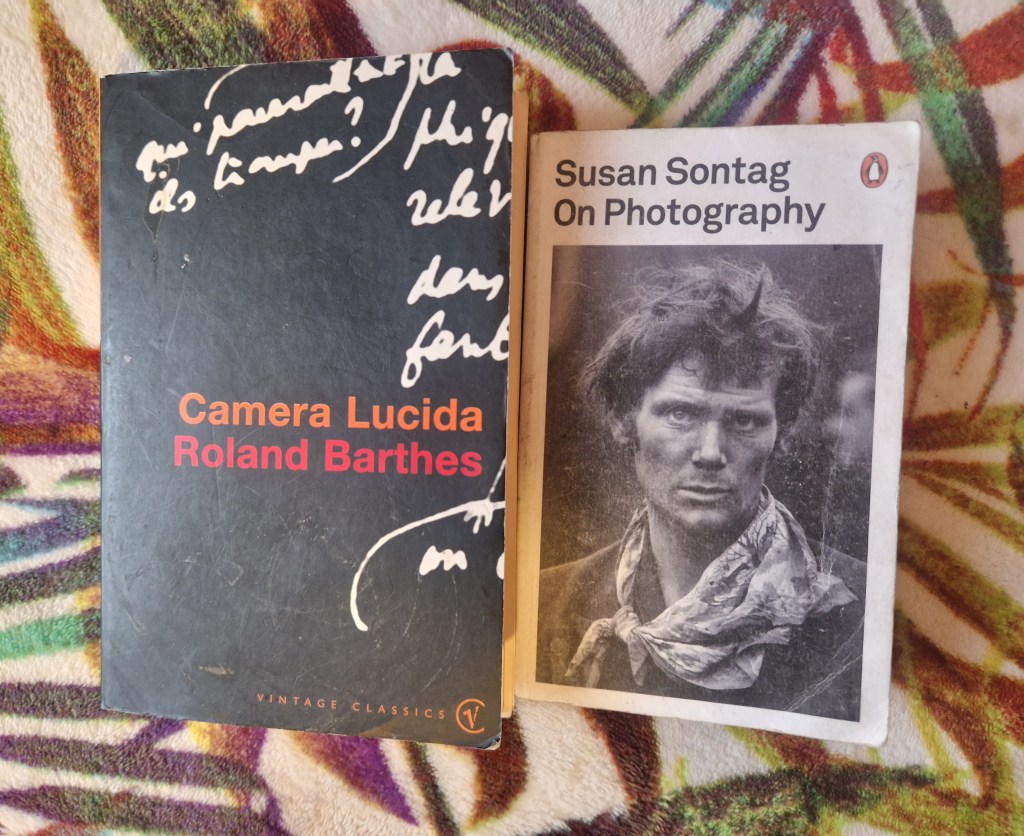
I started my research by making a plan of action, watching videos on the index in photography, and reading online articles and books recommended for the unit (anything I could find in English), like Rosalind Krauss’s Notes on the index and Susan Sontag On Photography. I wanted to read (and I will do in the future, as it has been on my list for a while) Roland Barthes’s Camera Lucida, but I only got it in English a few days ago, when my partner came to visit and brought it with him.
Indexicality: Trace and Sign – Duke University Press
Rosalind Krauss Notes on Index
Rosalind Krauss Notes on Index Part 2
Semiotics: Making Meaning from Signs, Symbols, Icons, Index | LittleArtTalks
An excellent video that, in a nutshell, explains what index in photography is.
I read a concise and interesting article which explains the differences between indexicality and representation titled Indexicality vs. Interpretation (https://cphmag.com/i-vs-i/)
”At the heart of these troubles lie two different aspects of photography, indexicality and interpretation. In a nutshell, indexicality means that what’s in the picture was actually in front of your camera.”
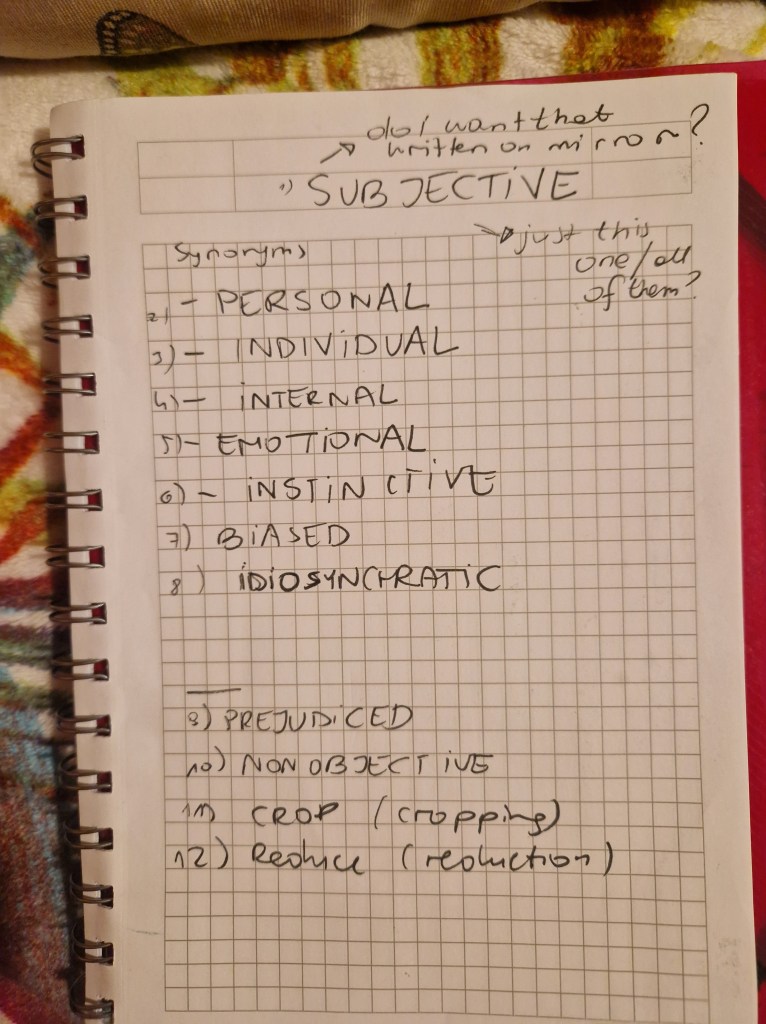
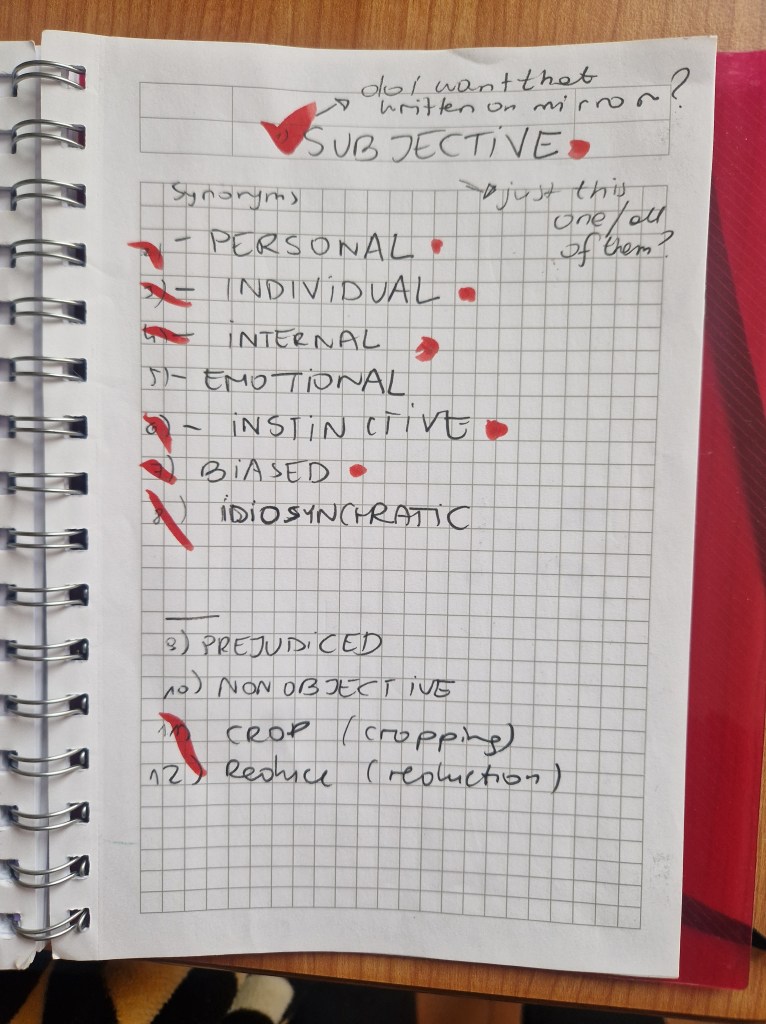
NOTES
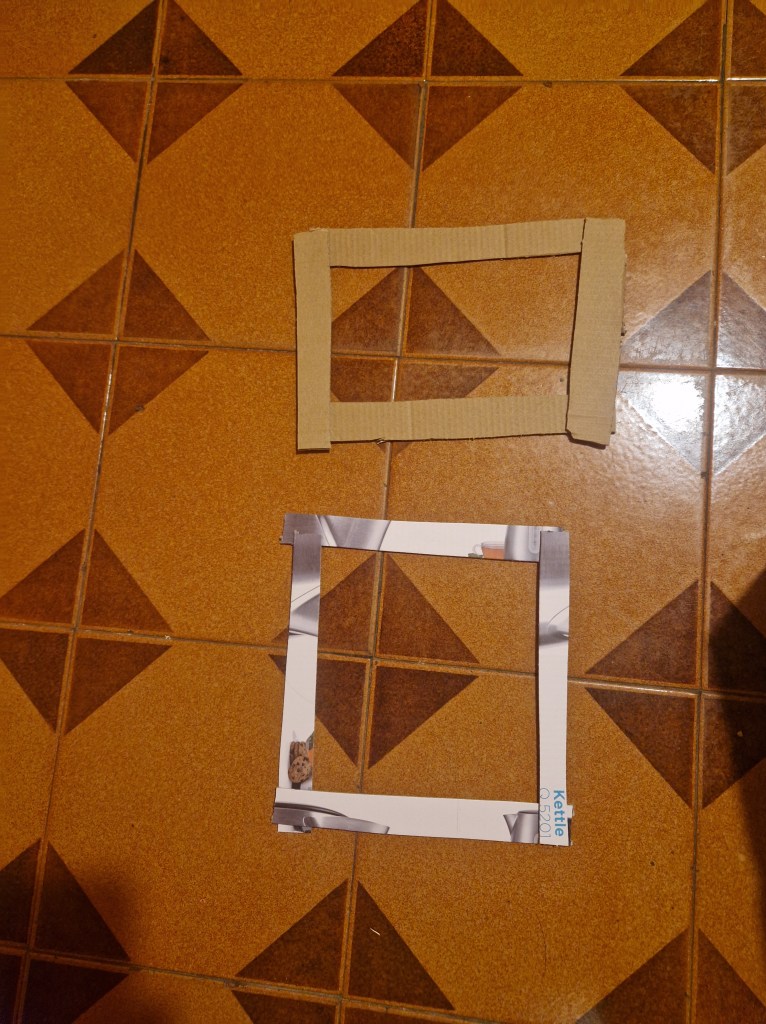
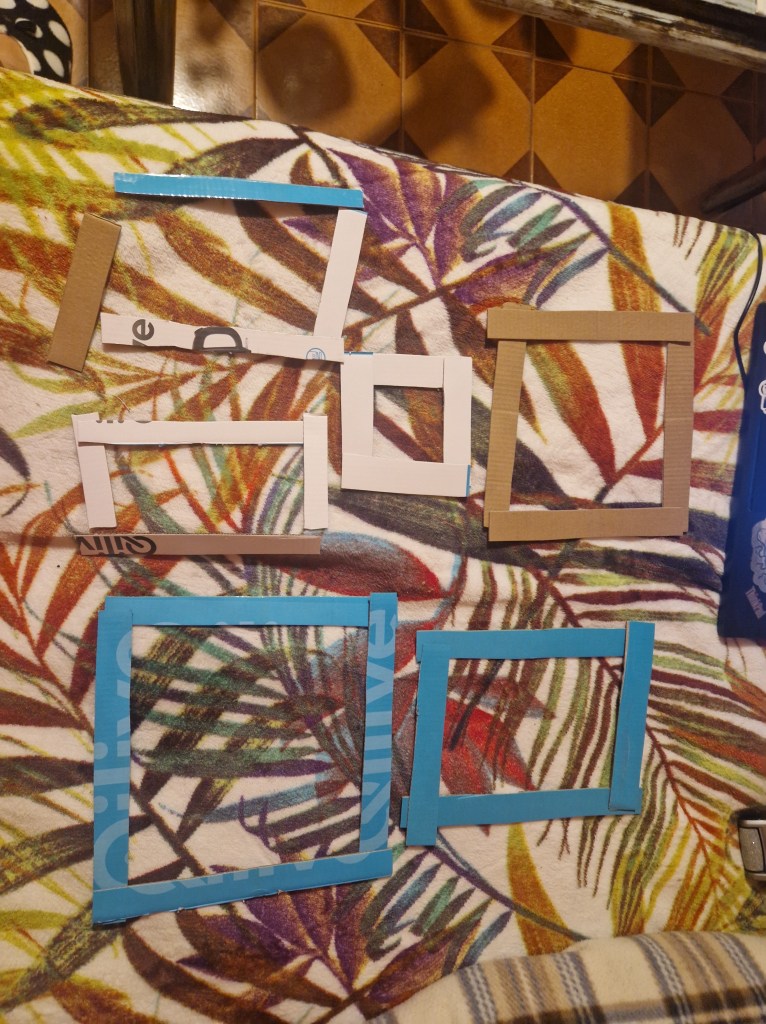
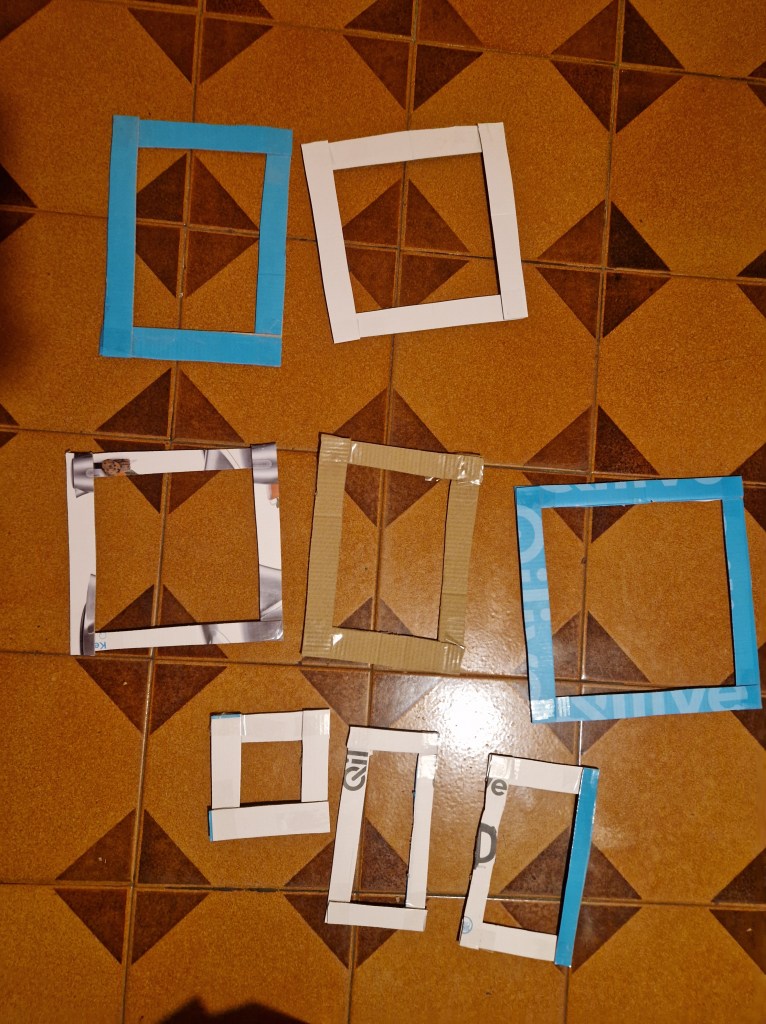
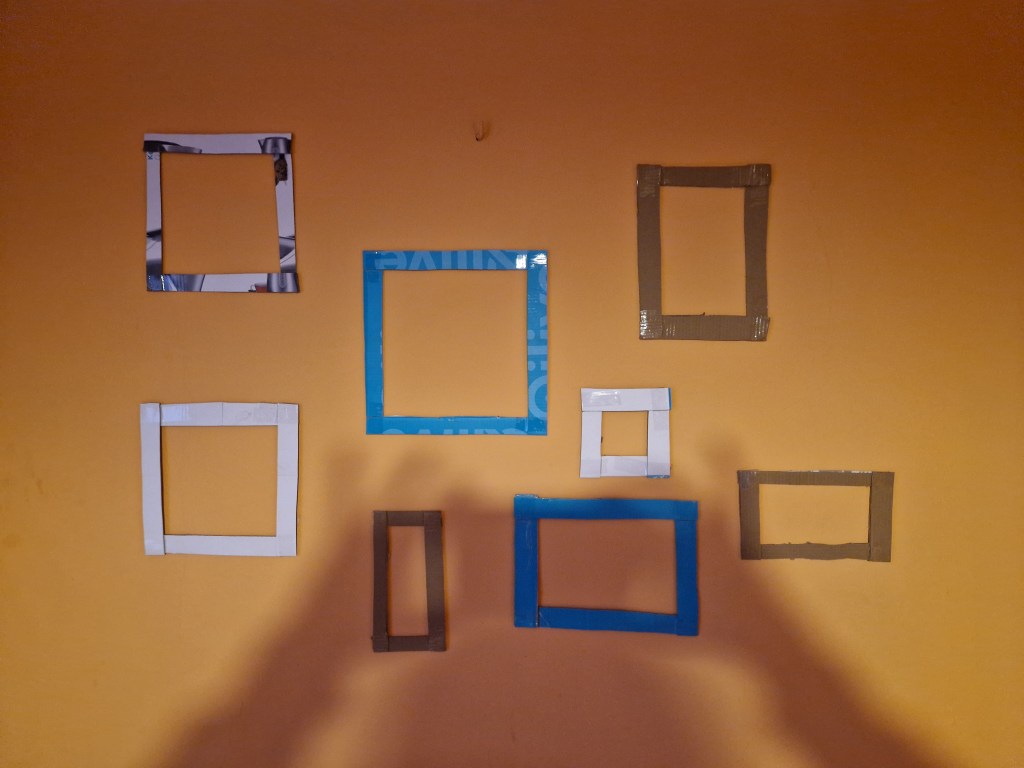
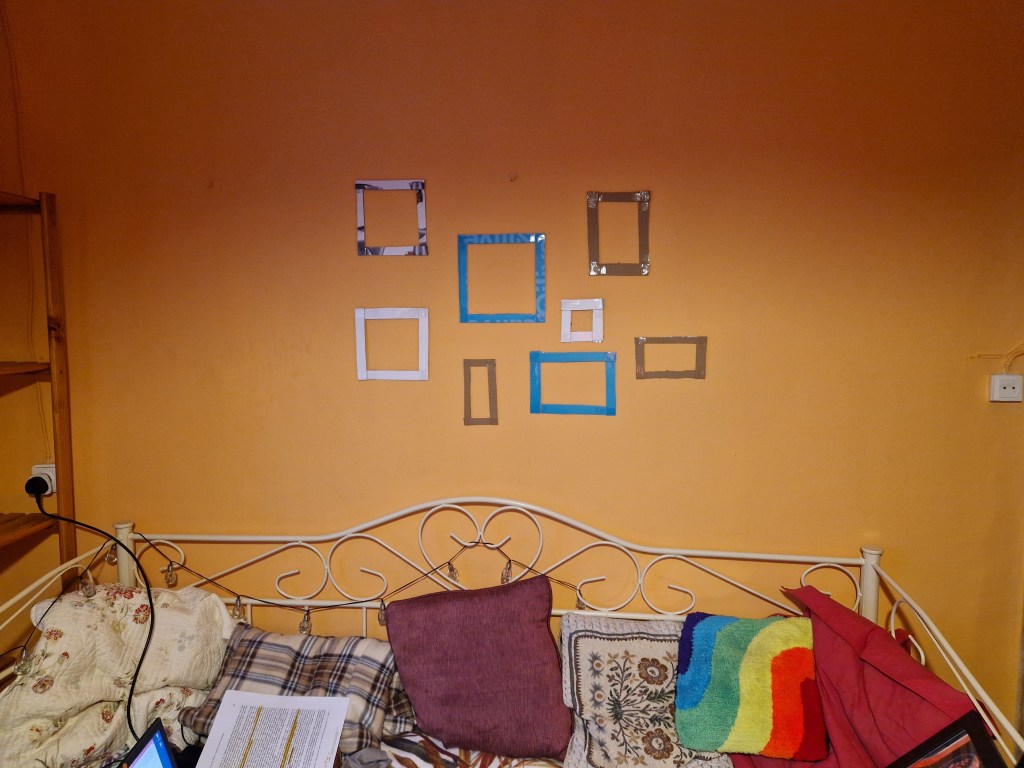
MAKING MOCK-UP FRAMES – TESTING THE IDEA AT HOME


CONCLUSIONS
Based on the reading and my reflections, I created a conceptual piece of art for my final project.
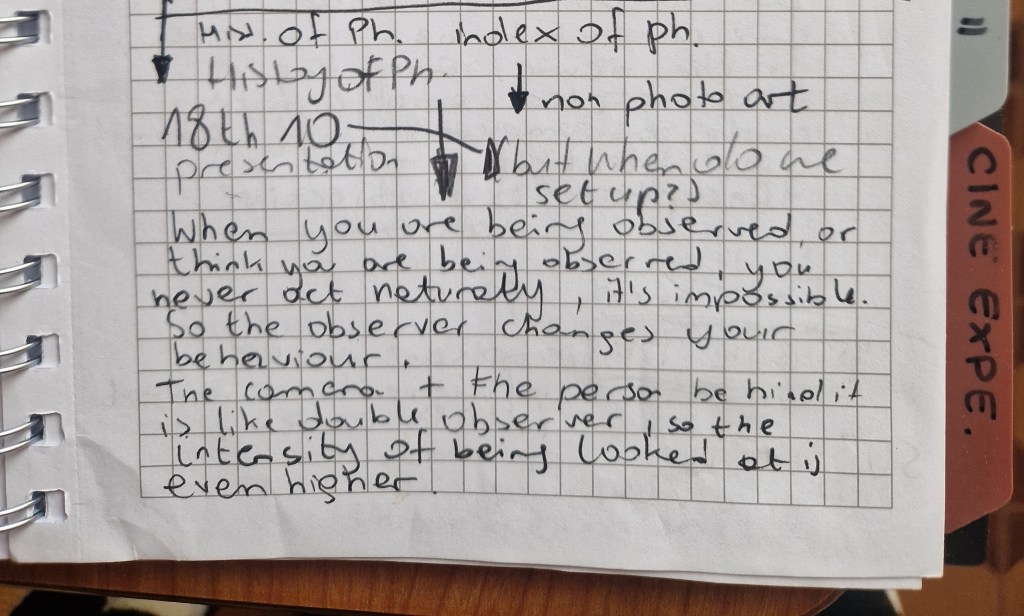
I started with this thought: when you are being observed, or you think you are being looked at, you never act naturally – it’s impossible! So the observer changes your behaviour. Besides the cameraman, the camera also observes you, which intensifies and doubles the feeling of being examined.
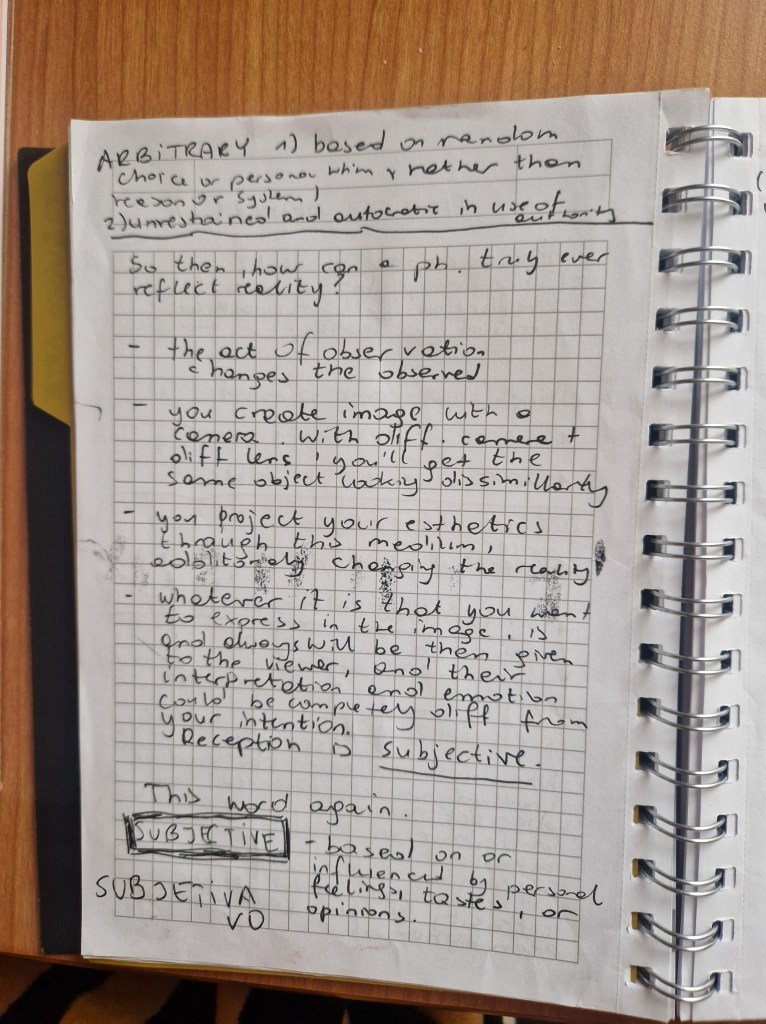
So then, how can a photograph ever truly reflect reality if:
- the act of observation changes the observed
- you create image with a camera, and for that simple reason, when using various lenses, you will get the same object looking differently
- you project your aesthetics through this medium, additionally affecting and changing reality
- whatever you want to express in the image is, and always will be, eventually presented to the viewer. Their interpretation and emotion could be completely different from your intention
RECEPTION IS ALWAYS SUBJECTIVE.
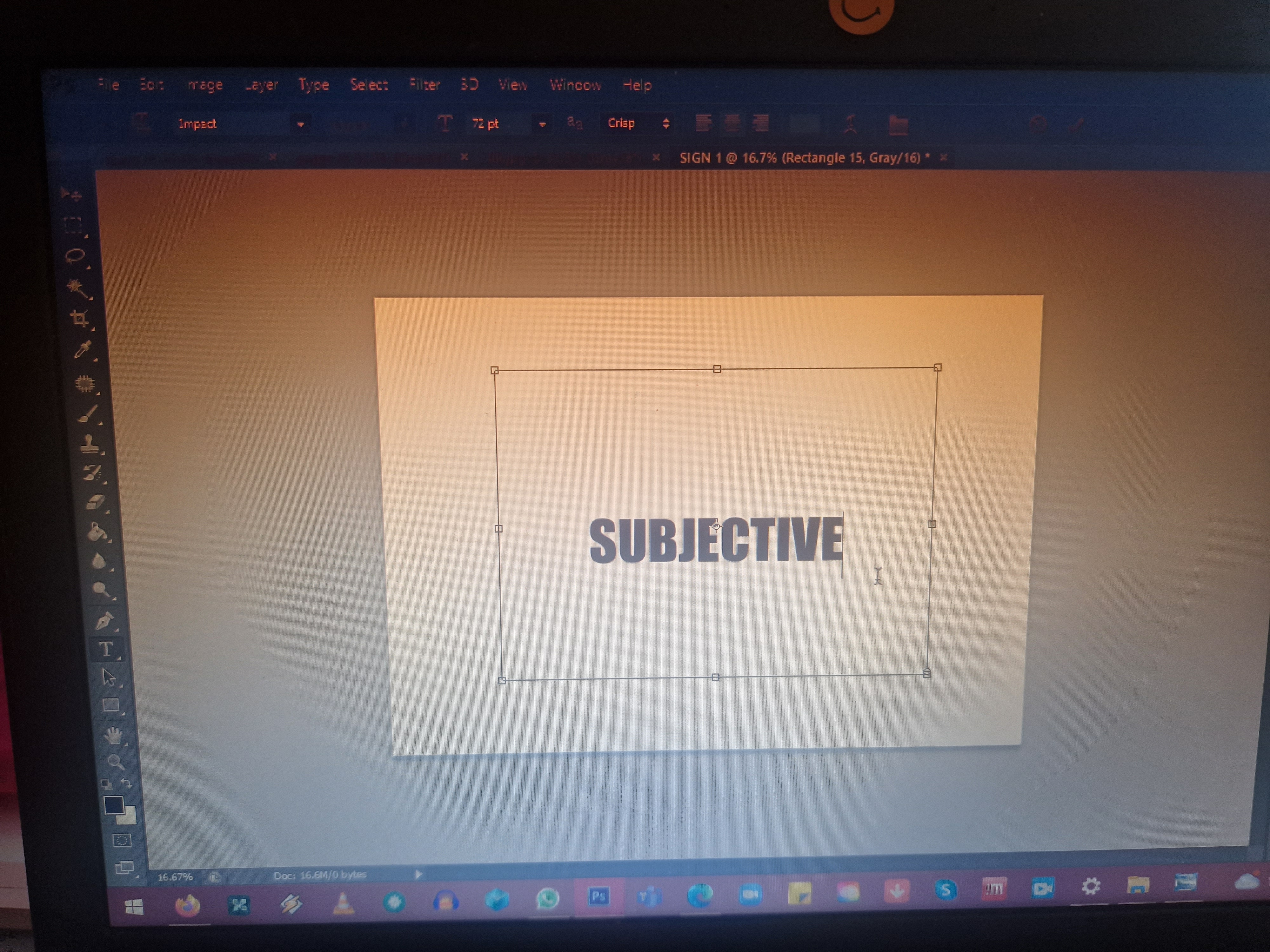
SUBJECTIVE – based on or influenced by personal feelings, tastes or opinions.
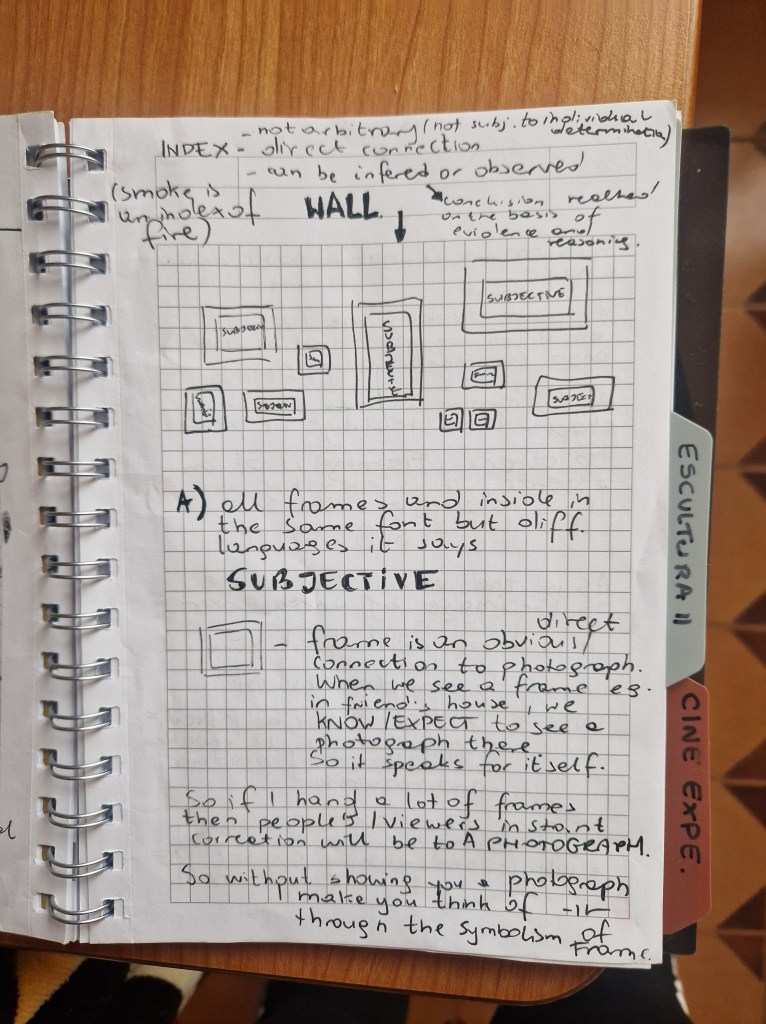
I thought about how INDEX – not arbitrary (not subjected to individual determination)/ direct connection/can be inferred or observed (e.g. smoke is an index of fire), is not as flawless as it seems. Because, at the end of the day, the OBSERVATION that we count on so much when assessing reality is SUBJECTIVE to each individual.
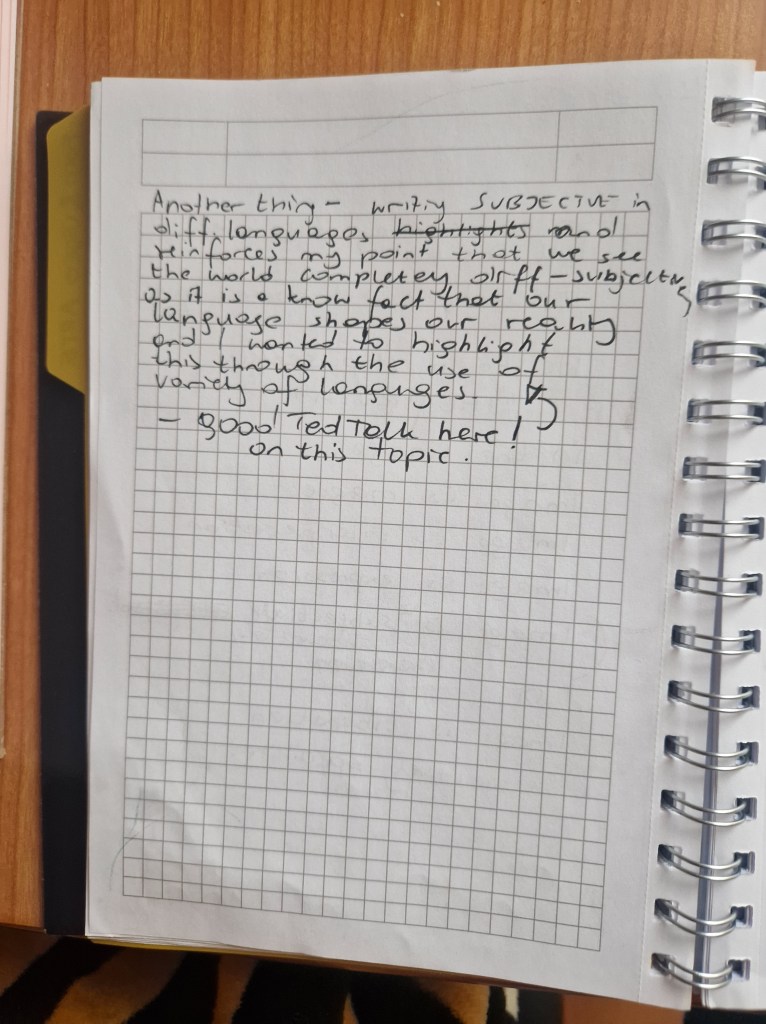
I came up with the concept of framing the word SUBJECTIVE in multiple frames (after a tutorial with my professor, I made some improvements to the idea, instead of repeating the word subjective, I used synonyms of that word.)
Using FRAME is powerful symbolism. The frame has an obvious and direct connection to a photograph. When we see a frame, we KNOW/EXPECT to see an image in it. It speaks for itself. If I hang a lot of f frames, then a viewer looking at it will have an instant connection/feeling to seeing a photograph. Without showing a photograph to the viewer, I make them think of it through the symbolism of a frame.
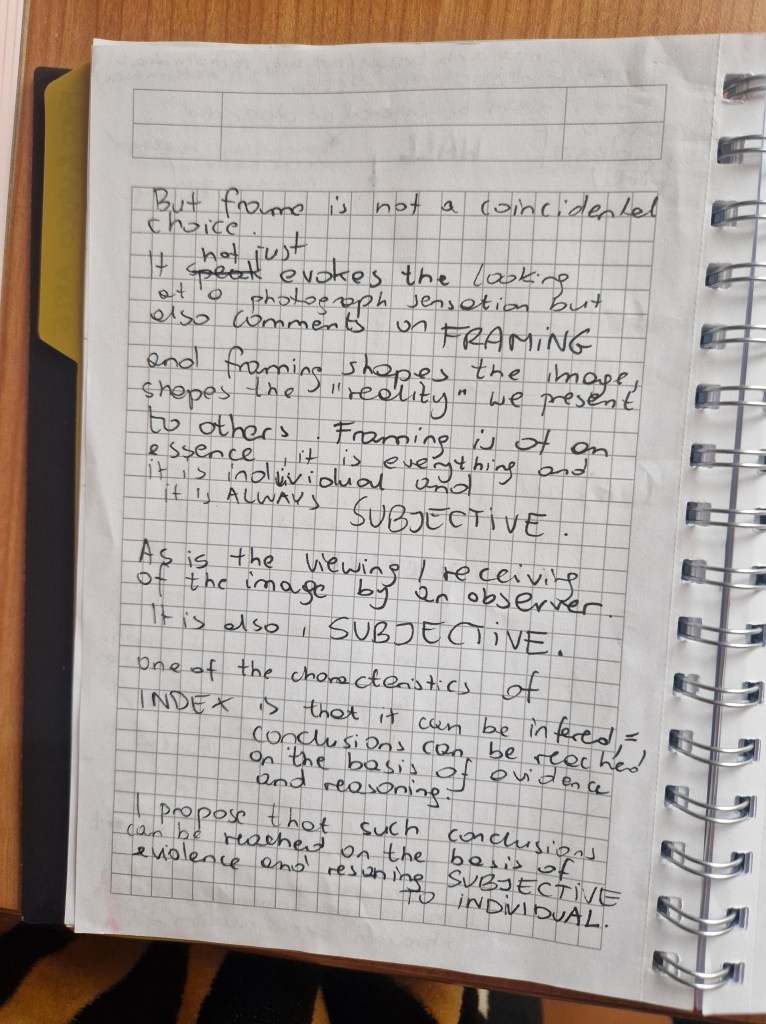
But the frame is not a coincidental choice. It not just evokes the sensation of looking at the photograph but also comments on the framing of an image.
Framing shapes the image, shapes the ”reality” we present to others. Framing is of an essence, it is everything, it is individual and it is SUBJECTIVE. As is the viewing /receiving of the image by the observer.
One of the characteristics of the index is that it can be inferred – conclusions can be reached on a basis of evidence and reasoning. I propose that such conclusions can indeed be reached but they are always based on evidence and reasoning subjective to the individual.
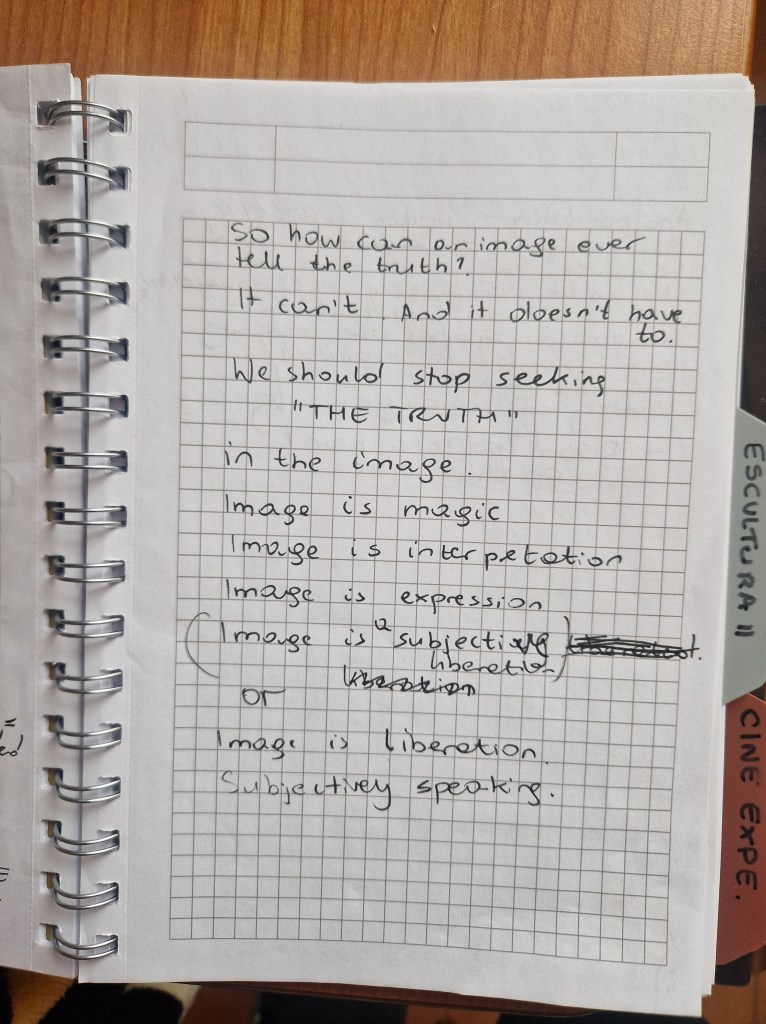
So how can an image ever tell the truth? It can’t, and it doesn’t have to. We should stop seeking THE TRUTH in the image.
THE IMAGE IS MAGIC.
IMAGE IS INTERPRETATION.
IMAGE IS EXPRESSION.
IMAGE IS A SUBJECTIVE LIBERATION.
RESULTS

The final work, hanged on a wall and presented to my tutor.
REFERENCES
‘Indexicality vs. Interpretation’. Conscientious Photography Magazine. [Online] January 11 2016. [Accessed on 19/09/22]. https://cphmag.com/i-vs-i/
Semiotics: Making Meaning from Signs, Symbols, Icons, Index | LittleArtTalks. LittleArtTalks. [Online video] https://youtu.be/aGYOHKCigAo. . Available through YouTube. [Accessed on 01/10/22]
 Ela Skorska